AI Image
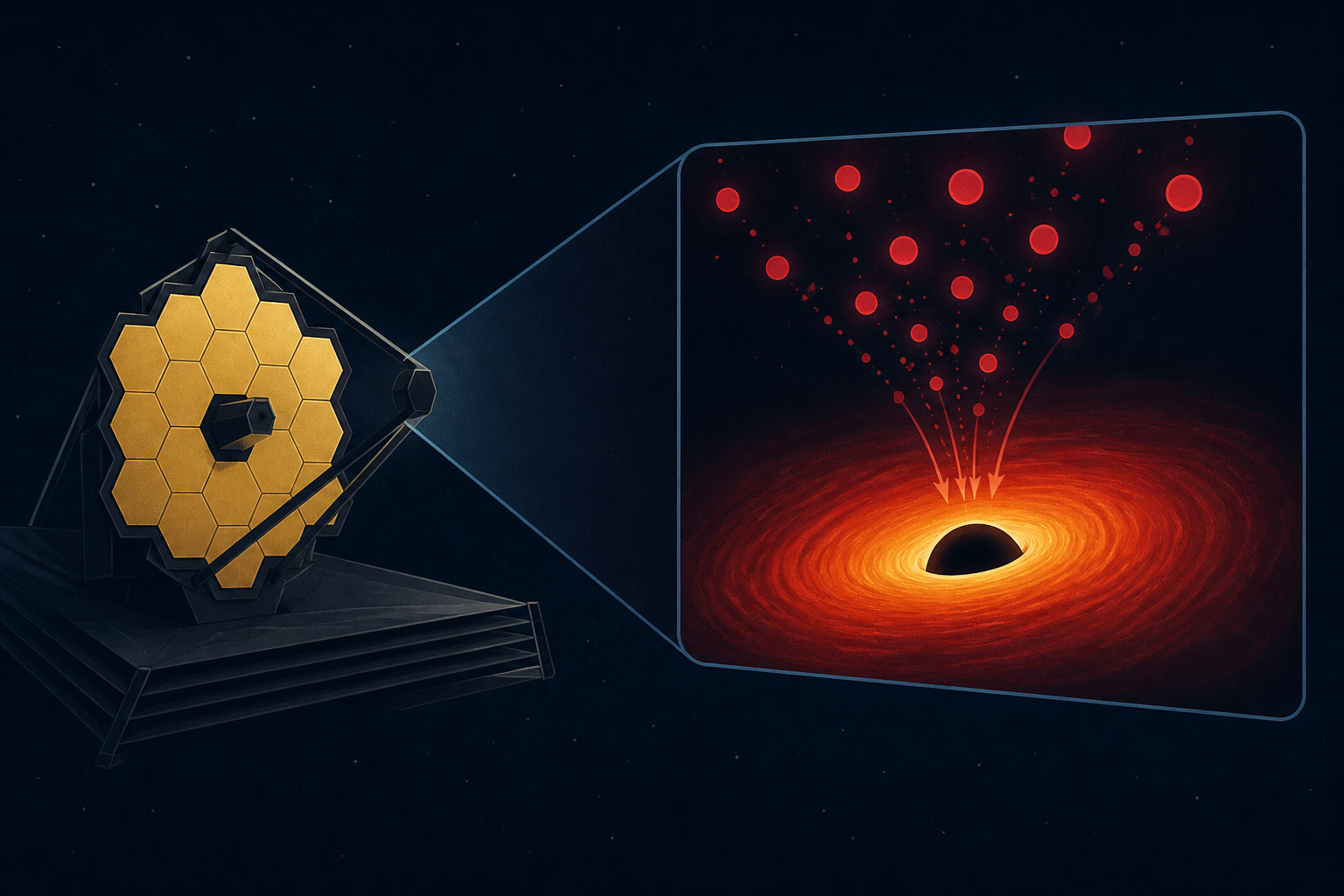
The James Webb Space Telescope's mysterious Little Red Dots may be overfeeding black holes
Yahoo Tech • • science
Key Points:
- New research suggests that "Little Red Dots" observed in the early universe are actually supermassive black holes overfed with dense gas, causing them to glow with a very red spectrum and broad hydrogen emission lines.
- Simulations by a team led by Sunmyon Chon show that these black holes form rapidly from supermassive stars in gas-rich environments, explaining how black holes grew to billions of solar masses within the universe's first billion years.
- The early universe's abundant gas supply and radiation from nearby star-forming galaxies suppressed star formation nearby, allowing massive black-hole seeds to grow quickly and become surrounded by dense gas envelopes, producing the observed Little Red Dots.
- While the simulations explain the formation and properties of Little Red Dots, the reason why these objects disappear after about 1.5 billion years remains an open question for future research.
- The team's next steps involve testing variations in early universe conditions in simulations and making detailed predictions to compare with ongoing observations from the James Webb Space Telescope to better understand these enigmatic objects.


