AI Image
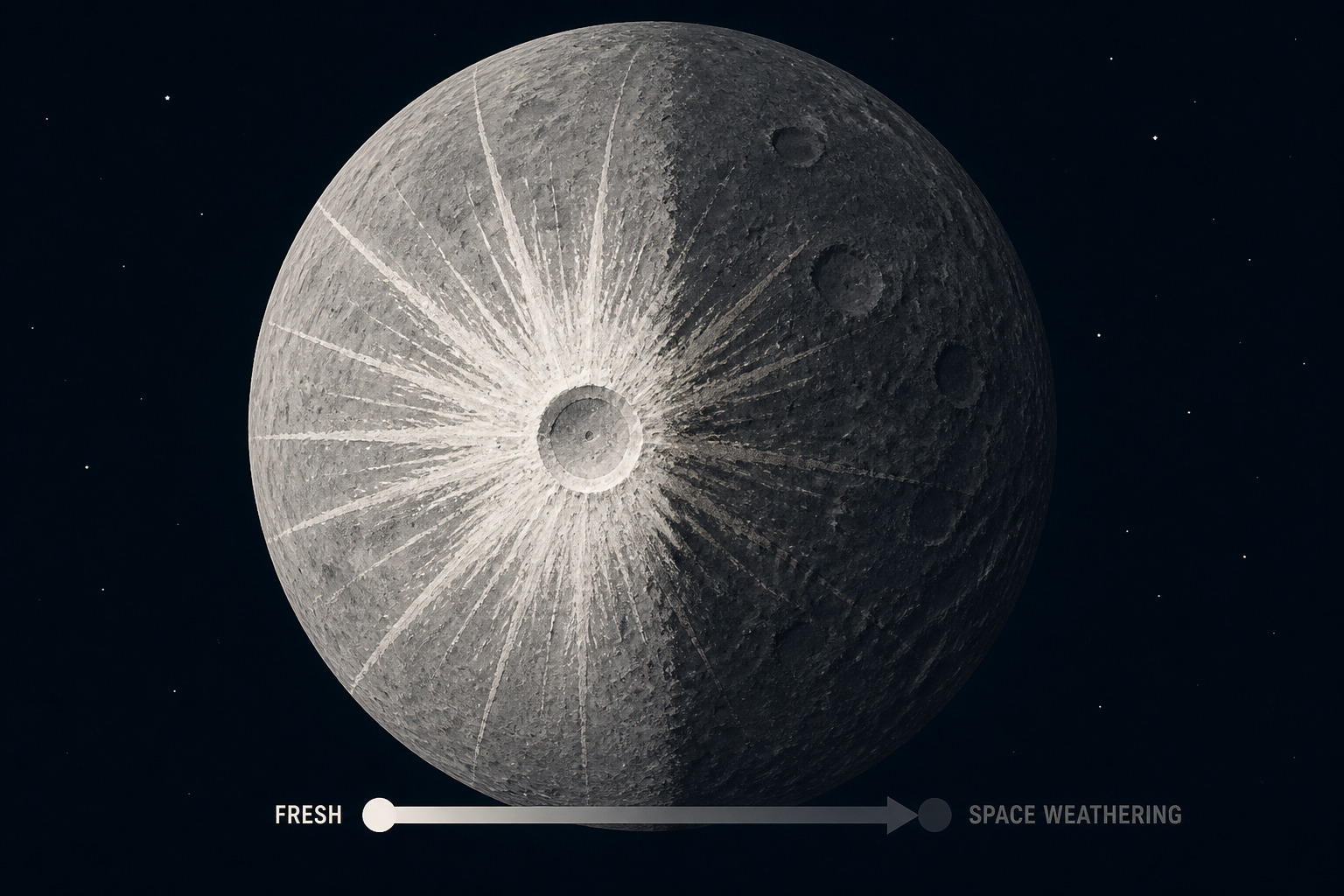
The Moon’s freshest craters are recognisable by bright rays of newly excavated rock and dust, which space weathering gradually darkens—and the new 222-metre McGetchin crater is so fresh that its eject
Space Daily • • science
Key Points:
- In 2024, a new lunar crater named McGetchin, measuring 222 meters wide and 43 meters deep, was formed by an asteroid or comet impact on the Moon's near side, identified through Lunar Reconnaissance Orbiter (LRO) images taken before and after the event.
- The crater's bright ejecta rays, caused by freshly exposed subsurface material, provide rare insight into the immediate effects of impacts before space weathering darkens the surface; this brightness is a key indicator of the crater's youth, constrained to a seven-week interval in 2024.
- McGetchin formed at the boundary between dark mare basalt and brighter highland crust, excavating material from over 20 meters deep and disturbing terrain up to 100 kilometers away, revealing complex ejecta patterns and layered deposition.
- Thermal data from LRO's Diviner instrument detected a cold spot around the crater, attributed to loosened, more porous regolith that cools faster at night, indicating impact-induced physical changes extending beyond visible ejecta.
- The crater's discovery underscores that large impacts occur unpredictably (estimated once every 132 years on average), emphasizing the need for lunar infrastructure to withstand debris and regolith changes caused by distant impacts; the crater was named in 2026 after planetary scientist Thomas R. McGetchin.


