AI Image
The Number of Teeth in Your Mouth Could Be a Major Warning Sign of Dementia
ScienceAlert • • health
Key Points:
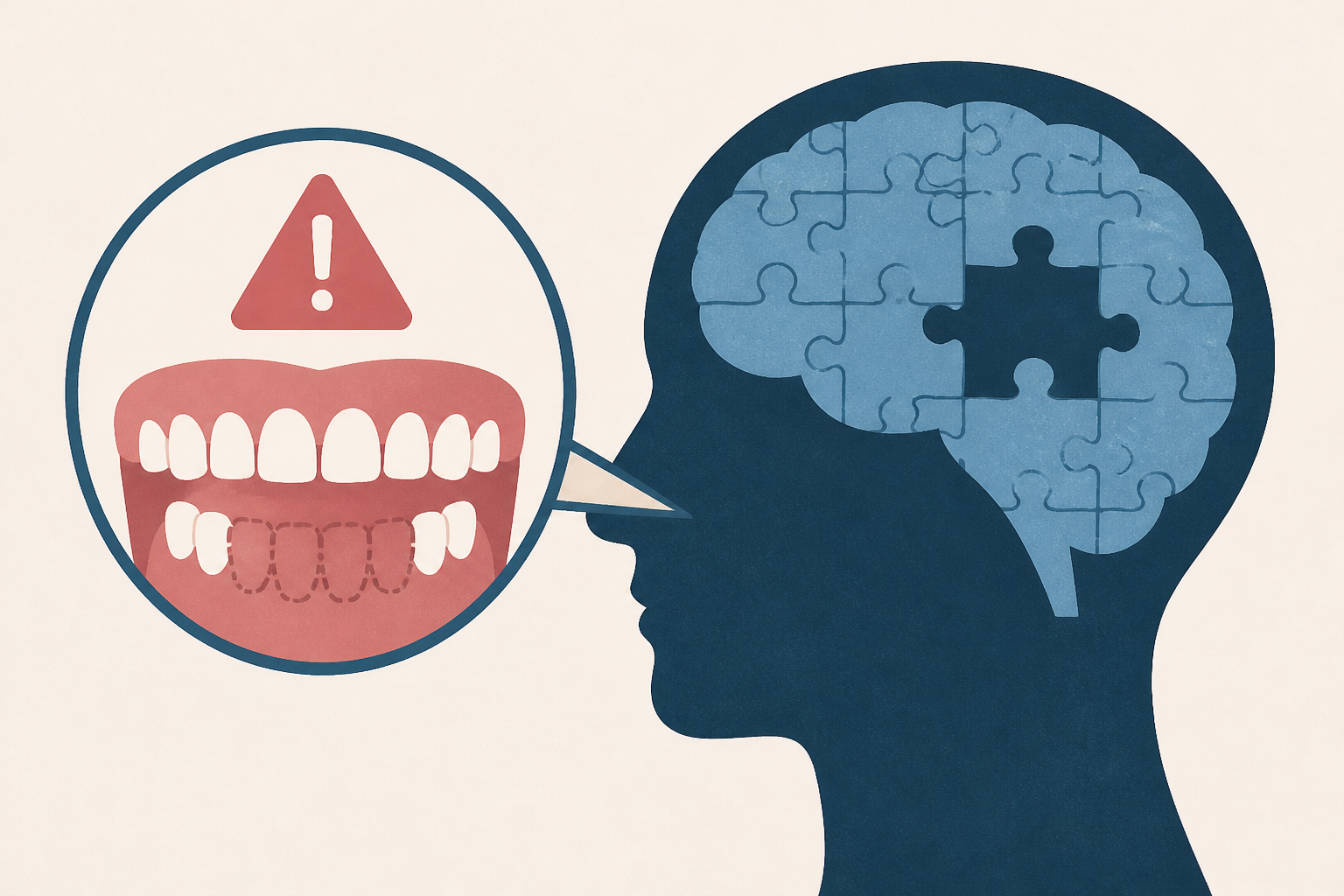
- A new study from Japan suggests poor oral health, measured by tooth loss, may be a significant and previously underrecognized risk factor for dementia, potentially accounting for 7.2% of dementia cases in the elderly population studied.
- The research, involving over 47,000 adults aged 65 and older followed for nine years, found that dementia risk increased substantially as the number of remaining teeth decreased, with those having no teeth facing a 27% higher risk compared to those with 20 or more teeth.
- When compared to other modifiable risk factors identified by the Lancet Commission, tooth loss ranked third overall in its contribution to dementia risk and was the leading risk factor among men, surpassing factors like physical inactivity and smoking.
- The study highlights possible mechanisms linking tooth loss to dementia, including poor nutrition due to chewing difficulties, social isolation, and systemic inflammation from oral disease, though it does not establish a direct causal relationship.
- Researchers call for oral health to be integrated into dementia prevention strategies and for its inclusion in future updates of major dementia risk factor guidelines, while acknowledging limitations such as reliance on self-reported data and the speculative nature of population attributable fractions.


