The Paradox of Medical AI Implementation
Ground Truths | Eric Topol • • business
Key Points:
- Since 2012, AI has made significant advances in medical image interpretation, with deep learning models demonstrating superhuman accuracy in analyzing X-rays, CT scans, retinal photos, and more, yet widespread clinical adoption remains limited.
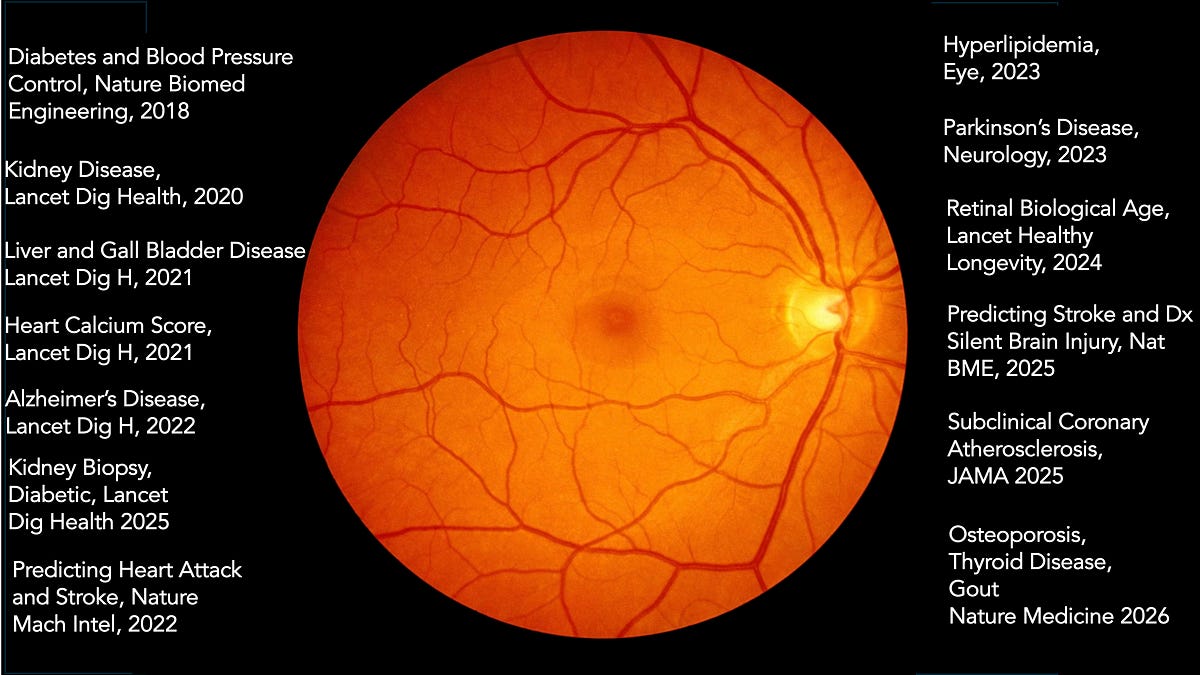
- Retinal imaging AI, capable of predicting risks for multiple diseases including heart disease, Parkinson’s, and thyroid conditions, has shown great promise but is rarely integrated into routine medical practice despite availability from several companies.
- AI tools have proven effective in early detection of diseases like pancreatic cancer and adenomatous polyps in colonoscopy, but these validated technologies have not been universally implemented in healthcare systems.
- In contrast, large language models (LLMs) and generative AI tools are rapidly adopted by millions of patients and physicians for administrative and informational tasks, though there is a lack of rigorous clinical evidence supporting their use for diagnosis or treatment decisions.
- Experts call for prospective, randomized clinical trials and real-world studies to validate the safety, accuracy, and impact of generative AI in medicine, emphasizing the need to bridge the paradox between proven medical image AI and the unproven but widespread use of LLMs.


 { path { fill: %23EEEFE9 } })