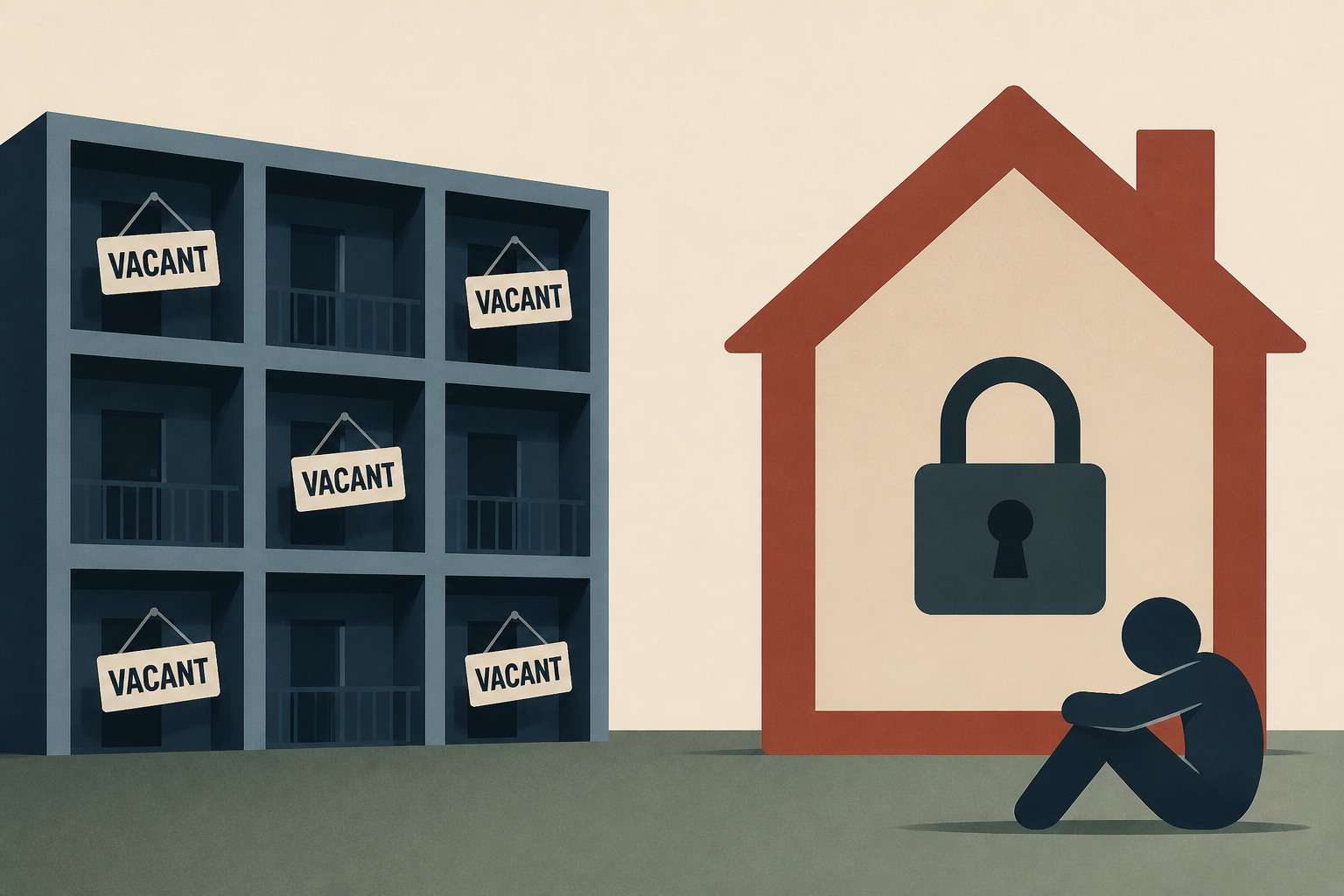
AI Generated Image
The poorest in the U.S. can’t find housing even as low-income units sit empty
nbcnews.com • • business
Key Points:
- The poorest Americans face severe shortages of affordable housing, with many units financed for those earning at least 50% of the area median income (AMI), leaving extremely low-income individuals unable to afford them.
- In cities like Austin, Denver, and Portland, affordable housing units targeted at 60% AMI are nearing market-rate rents, causing vacancies as renters opt for easier-to-access market-rate apartments despite higher costs.
- Federal programs like the Low-Income Housing Tax Credit have primarily funded housing for moderate low-income groups, while housing vouchers that could assist the poorest have significant funding shortfalls and long waitlists.
- Developers highlight that creating units for extremely low-income renters is often financially unfeasible without substantial subsidies, contributing to the limited supply of such housing.
- Cities like Austin have fallen short of their goals to build housing for extremely low-income residents, exacerbating homelessness and housing insecurity for individuals like Mathew Davis, who struggle to find affordable, stable housing.


