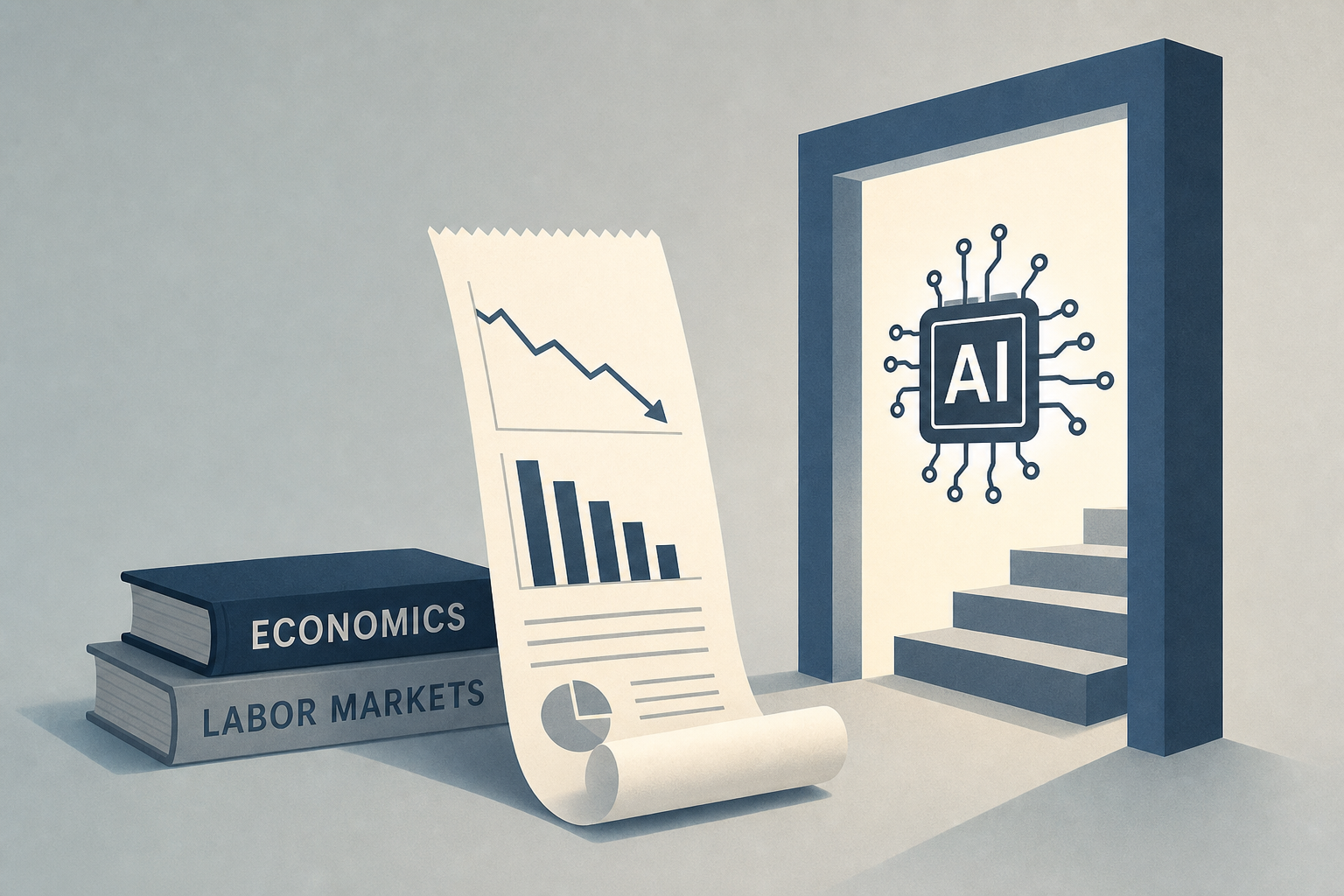
AI Generated Image
The Stanford economist who called the AI entry-level jobs crisis early has the receipts
Fortune • • business
Key Points:
- Research from Stanford Digital Economy Lab and ADP Research reveals a significant decline in employment among workers aged 22 to 25 in occupations highly exposed to AI, with a 3.8% annual shrinkage since the adoption of generative AI, despite overall muted employment changes across all workers.
- The decline disproportionately affects early-career workers performing automatable tasks such as scheduling and summarizing, while mid-career and older workers in less AI-exposed roles are experiencing employment growth, highlighting AI’s task-level disruption rather than broad job elimination.
- Extensive analysis has ruled out alternative explanations like interest rates, tech-sector hiring trends, and remote work effects, confirming the persistent and growing impact of AI on early-career employment through April 2026.
- Economists Erik Brynjolfsson and Daron Acemoglu continue to debate AI’s productivity effects, with Brynjolfsson forecasting a transformative impact comparable to the Industrial Revolution, while Acemoglu remains skeptical about the magnitude and timeline of AI-driven productivity gains.
- The Canaries Dashboard, tracking real-time AI labor market effects on millions of workers, serves as an early warning system indicating that AI is reshaping employment dynamics, particularly disadvantaging young workers entering the workforce.


