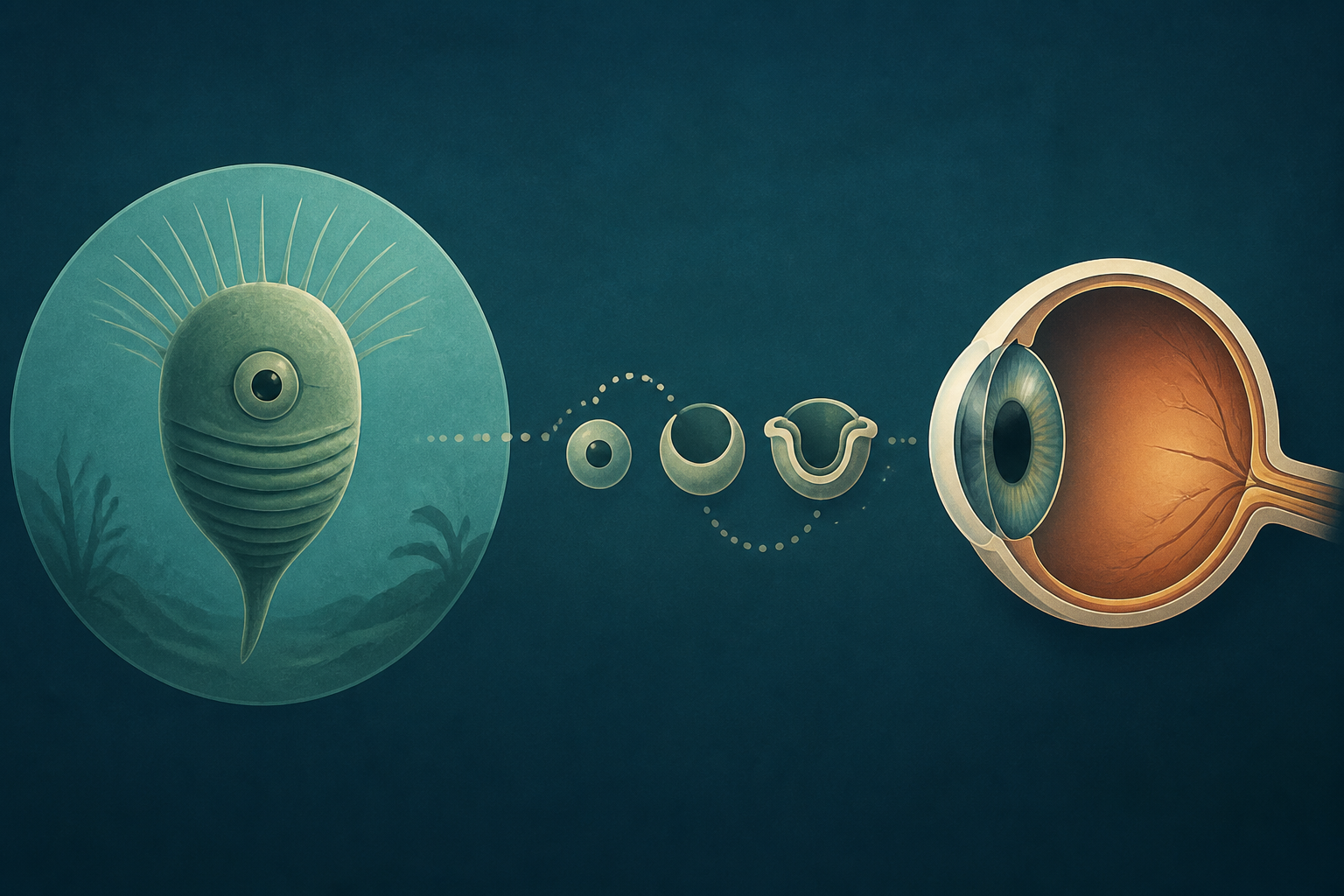
AI Generated Image
The Strange Origin of The Human Eye May Trace Back to a 600-Million-Year-Old 'Cyclops'
Yahoo • • science
Key Points:
- A new evolutionary model suggests that the paired retinas of humans and other vertebrates originated from a single median eye in a worm-like ancestor living around 600 million years ago.
- This ancient median eye may have also given rise to the pineal system in the brain, which regulates the sleep-wake cycle.
- The model, based on comparisons of light-sensitive cells and neural circuits across species, proposes that vertebrate eyes evolved by repurposing and reorganizing existing cells from this median eye.
- Unlike vertebrate eyes, which develop as outgrowths of the brain, insect and squid eyes arise from surface tissues, indicating different evolutionary paths.
- While no fossils of the one-eyed ancestor exist, recent studies support the presence of complex retinal cell types early in vertebrate evolution, reinforcing the model's plausibility.


