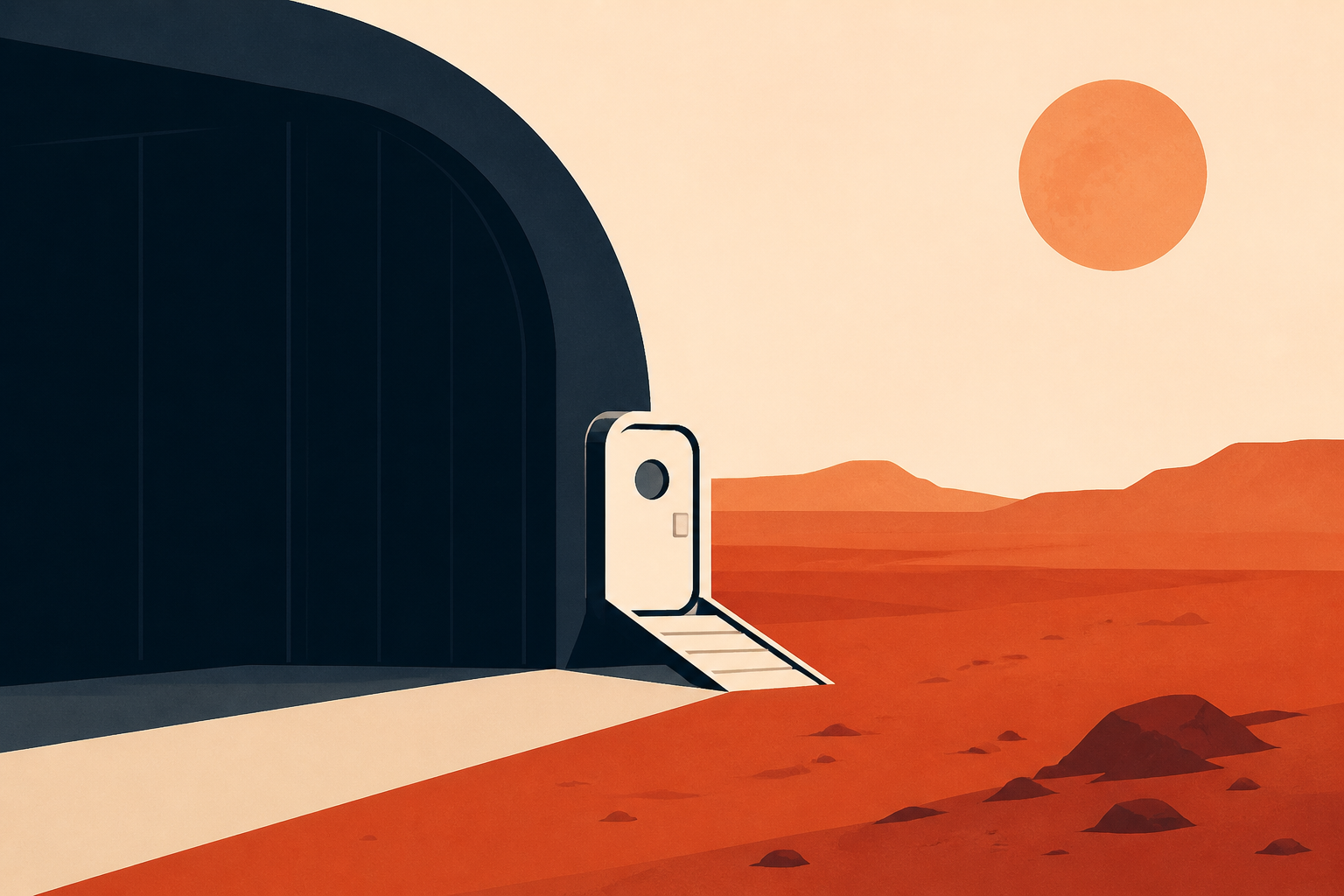
AI Image
They spent more than a year inside a NASA hangar in Houston simulating life on Mars. Now, they’re finally out
Houston Public Media • • general
Key Points:
- Four crew members of NASA's CHAPEA mission spent 378 days living and working inside a 1,700-square-foot Mars-like habitat at Johnson Space Center, simulating conditions for human exploration of Mars.
- The crew conducted research on robotics, habitat maintenance, physical exercise, and crop cultivation while experiencing communication delays of up to 44 minutes, mimicking real Mars-Earth communication challenges.
- During the mission, the crew endured sensory deprivation by remaining inside the confined habitat without outside contact for extended periods, including a simulated two-week communication blackout.
- Post-mission, the crew will undergo two weeks of evaluations to provide data and recommendations for future deep space exploration, with NASA planning to expand the program into the Moon and Mars Exploration Analog (MMEA) starting as early as August 2027.
- NASA emphasizes the importance of these analog missions to prepare for long-duration space exploration, including establishing a permanent Moon Base and maintaining U.S. leadership in space.


