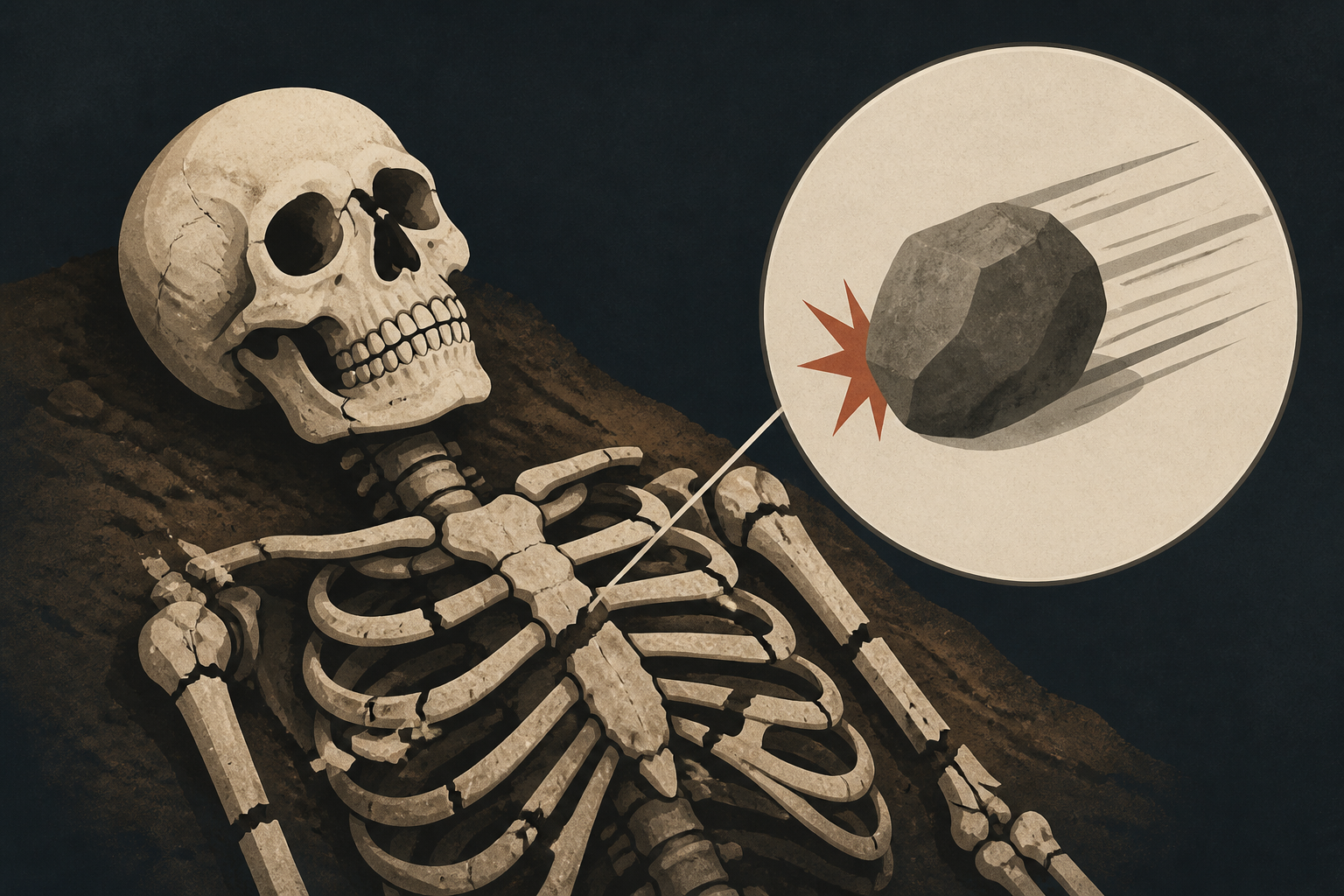
AI Generated Image
This Medieval Skeleton Had 160 Broken Bones, and Scientists Just Figured Out What Hit Him
Gizmodo • • world
Key Points:
- The “War Wolf,” possibly the largest trebuchet ever built, was constructed in 1304 CE by King Edward I of England during the siege of Stirling Castle in the First War of Scottish Independence, capable of hurling massive stones through castle walls.
- Archaeologists have uncovered what they believe to be the first confirmed evidence of a human death caused by a trebuchet: the remains of a young Scottish man, labelled Skeleton 150, found beneath Stirling Castle’s chapel with over 160 peri-mortem blunt-force injuries.
- Detailed forensic analysis using 3D X-ray imaging and microscopic techniques revealed that the injuries, including a skull fractured in 61 places and multiple rib fractures, resulted from a single, high-velocity impact consistent with a trebuchet projectile strike.
- Researchers highlight the brutality of medieval warfare and note that this discovery is significant due to the rarity of documented cases of trebuchet trauma in the archaeological record, though further research is needed to confirm similar cases.
- Forensic experts outside the research team have described the findings as convincing evidence of a high-speed, high-force impact injury rarely seen in ancient skeletal remains, underscoring the lethal power of siege engines like the War Wolf.


