AI Generated Image
Total eclipse watchers test theories on why shadow bands occur
CNN • • health
Key Points:
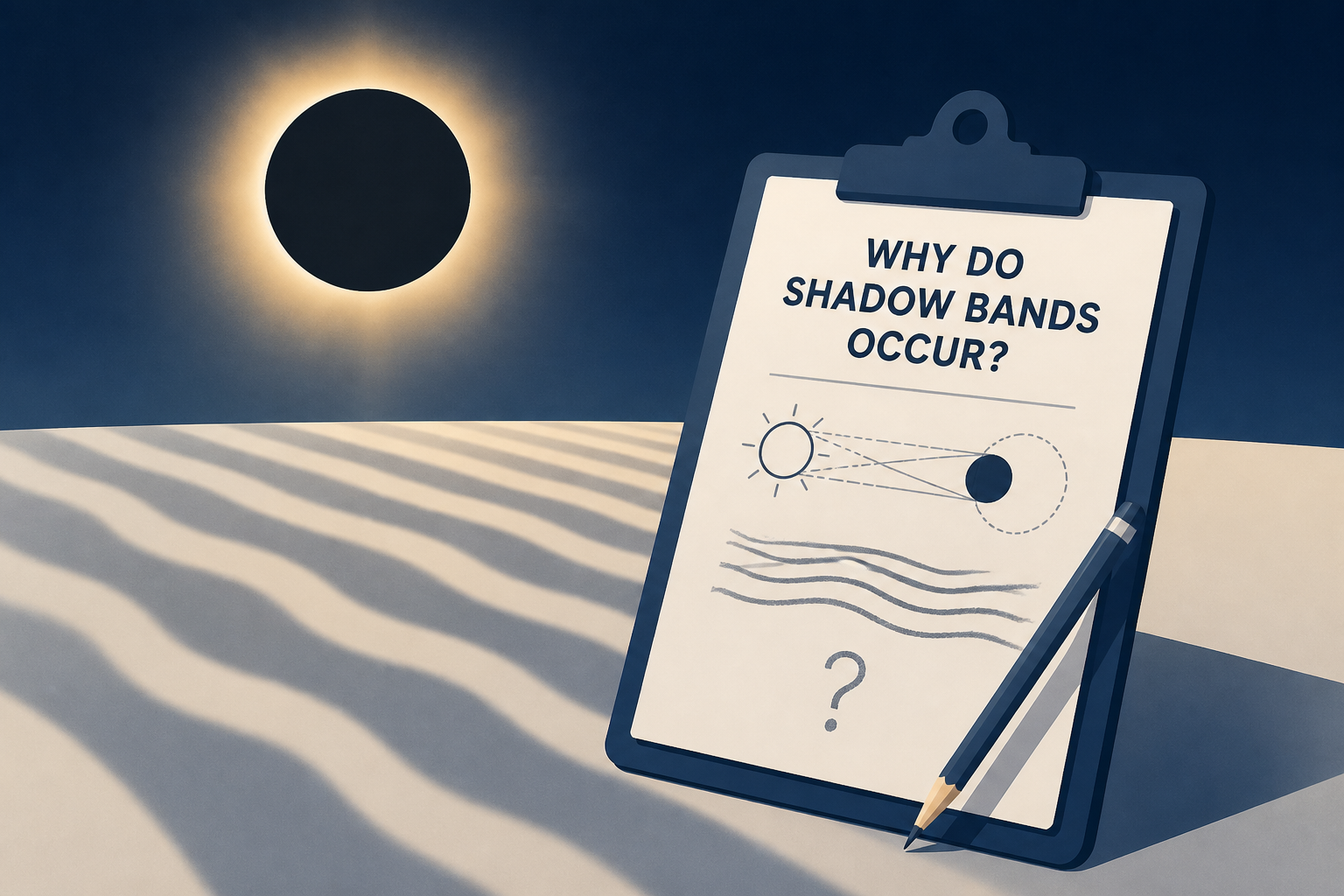
- Shadow bands are an eerie light phenomenon seen just before and after totality during a solar eclipse, characterized by racing dark and light lines across surfaces, but their exact cause remains scientifically unresolved.
- David Turnshek and his team’s 2017 research challenged the prevailing theory that atmospheric turbulence alone causes shadow bands, finding similar light wave patterns both on the ground and at 25 km altitude, suggesting diffraction-interference effects may also play a role.
- Attempts to replicate these findings during the 2024 eclipse were inconclusive due to cloud cover and lack of consistent signals, leaving the phenomenon’s explanation open and prompting calls for further observations.
- During the April 8, 2024, eclipse, researchers used balloons, aircraft, and ground sensors but failed to detect shadow bands clearly, highlighting the difficulty of studying this subtle effect and the need for coordinated efforts with aerial measurements.
- Eclipse watchers in Spain and Iceland are encouraged to observe and record shadow bands, with experts advising to look for faint, row-like patterns on smooth, light-colored surfaces just before totality, ideally away from clouds and mountains for best visibility.


