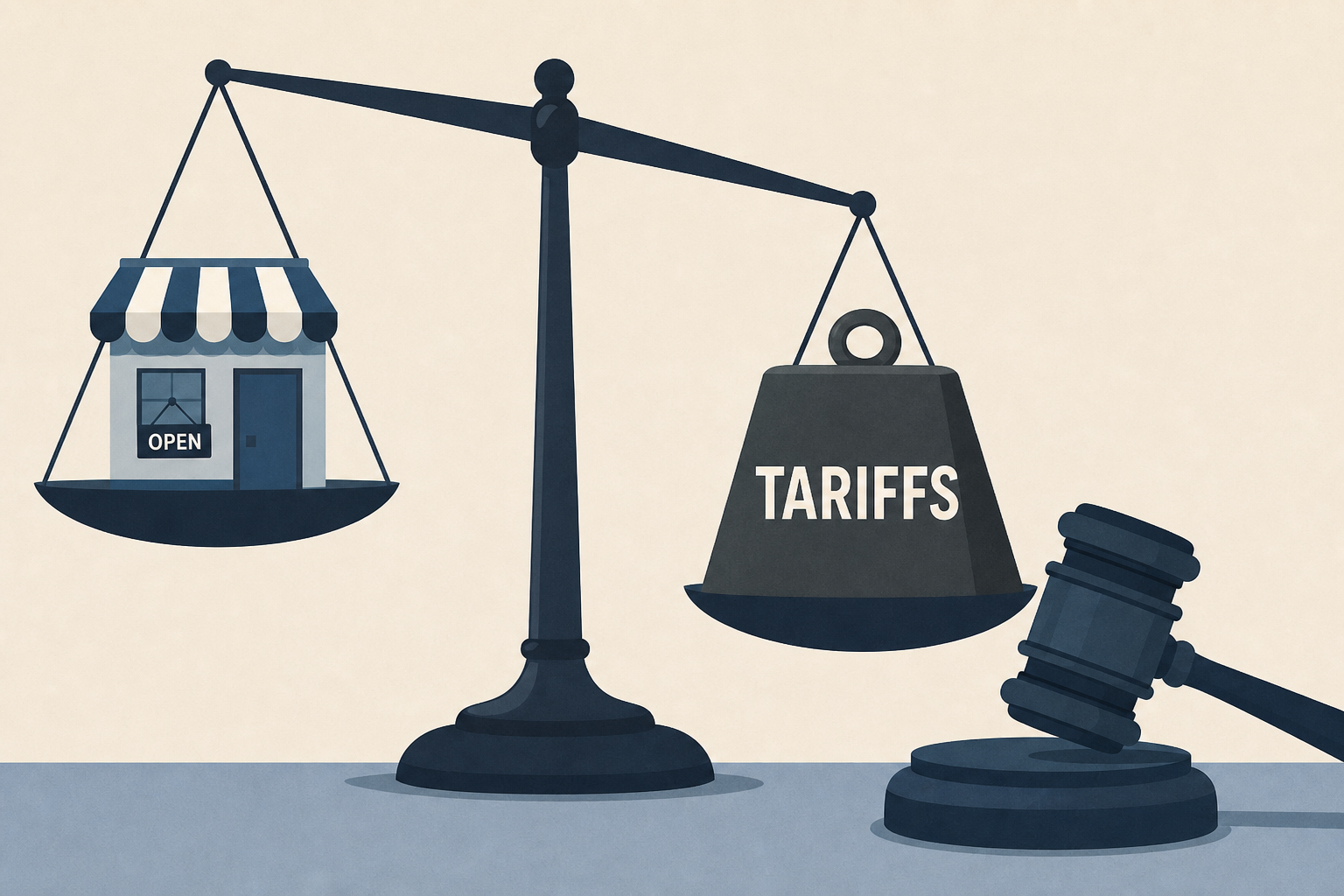
AI Generated Image
Trump's tariffs face new court challenge from small businesses
AP News • • nation
Key Points:
- Two lawsuits filed by small businesses are challenging the new tariffs announced by the Trump administration, which impose double-digit levies on imports from 60 trading partners under Section 301 of the Trade Act of 1974.
- The tariffs, covering 99% of U.S. imports, are justified by the administration as a measure against forced labor in foreign imports, but critics argue they are a replacement for previously struck-down worldwide tariffs.
- Educational toy company Learning Resources and two other businesses, Burlap and Barrel and Collective Horology, filed suits claiming the government failed to adequately justify the tariffs for each specific country or demonstrate how they would eliminate forced labor as required by law.
- Legal experts suggest it may be more difficult to overturn these new tariffs compared to previous ones, as Section 301 tariffs imposed on China during Trump's first term survived court challenges and the current tariffs are intended to remain long-term.
- Even if targeted countries implement the demanded policies, they must prove enforcement to U.S. satisfaction before tariffs can be lifted, indicating no immediate relief for affected economies.


