AI Image
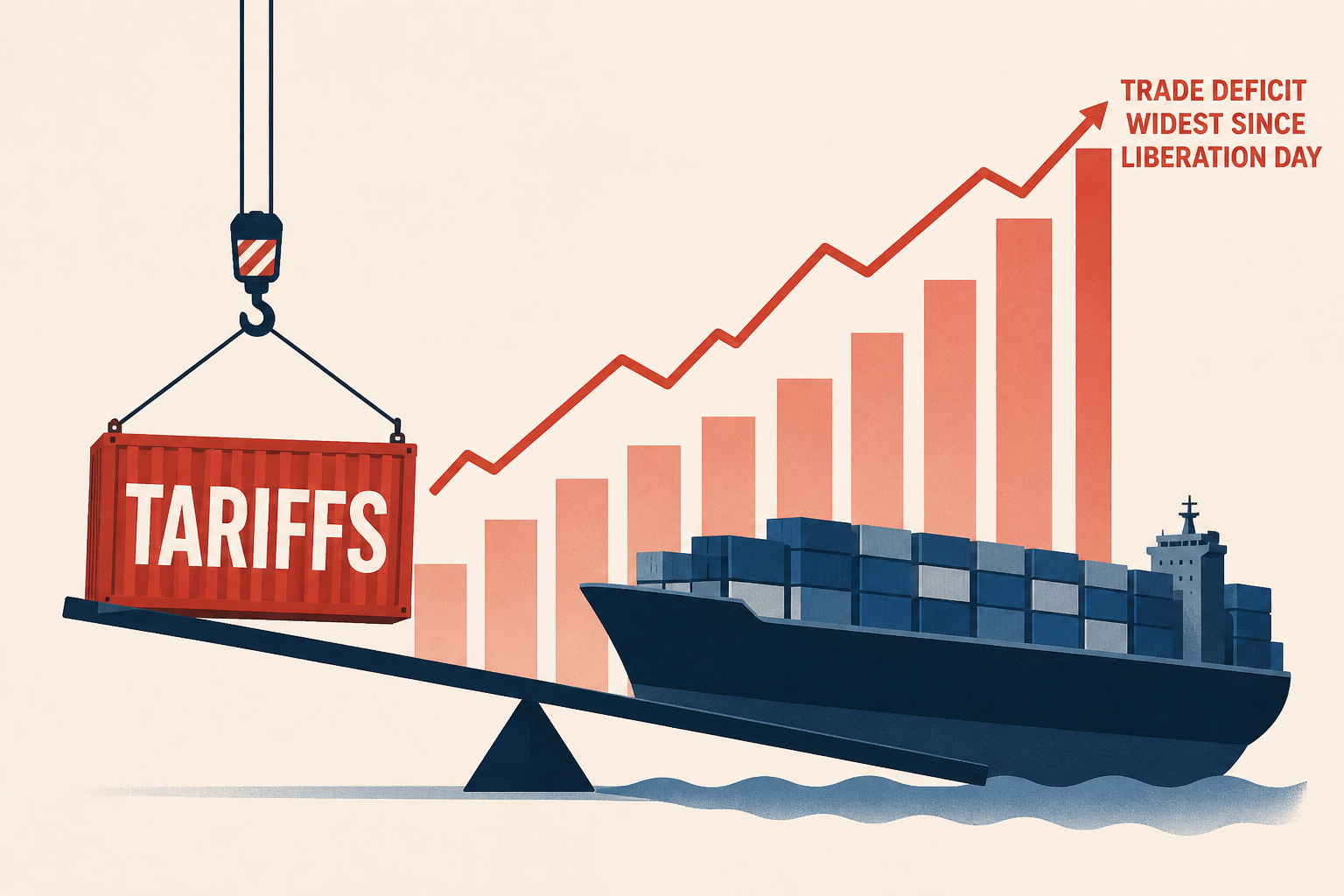
Trump’s tariffs were meant to shrink the trade deficit-but it’s now the widest since Liberation Day
Fortune • • business
Key Points:
- Despite President Trump's tariffs aimed at reducing the U.S. trade deficit, the deficit has grown to its largest level since the tariffs were implemented, reaching $105.6 billion in August, driven mainly by increased imports outpacing exports.
- Economists attribute the widening trade deficit largely to the AI boom, which has spiked U.S. demand for foreign hardware and intermediate goods, adding an estimated $200 billion to the deficit in April alone.
- The fluctuating and unpredictable nature of tariffs has undermined their effectiveness, as companies hesitate to alter supply chains amid uncertainty, leading to continued reliance on imported goods despite higher costs.
- Some experts argue that a growing trade deficit can be positive, reflecting strong foreign investment in the U.S. economy and signaling optimism about future productivity, contrary to the administration's view of the deficit as a national threat.
- Closing the trade deficit could reduce foreign investment and cheap credit inflows, potentially increasing bond yields and complicating debt financing, suggesting that the deficit's persistence may be economically beneficial rather than harmful.


