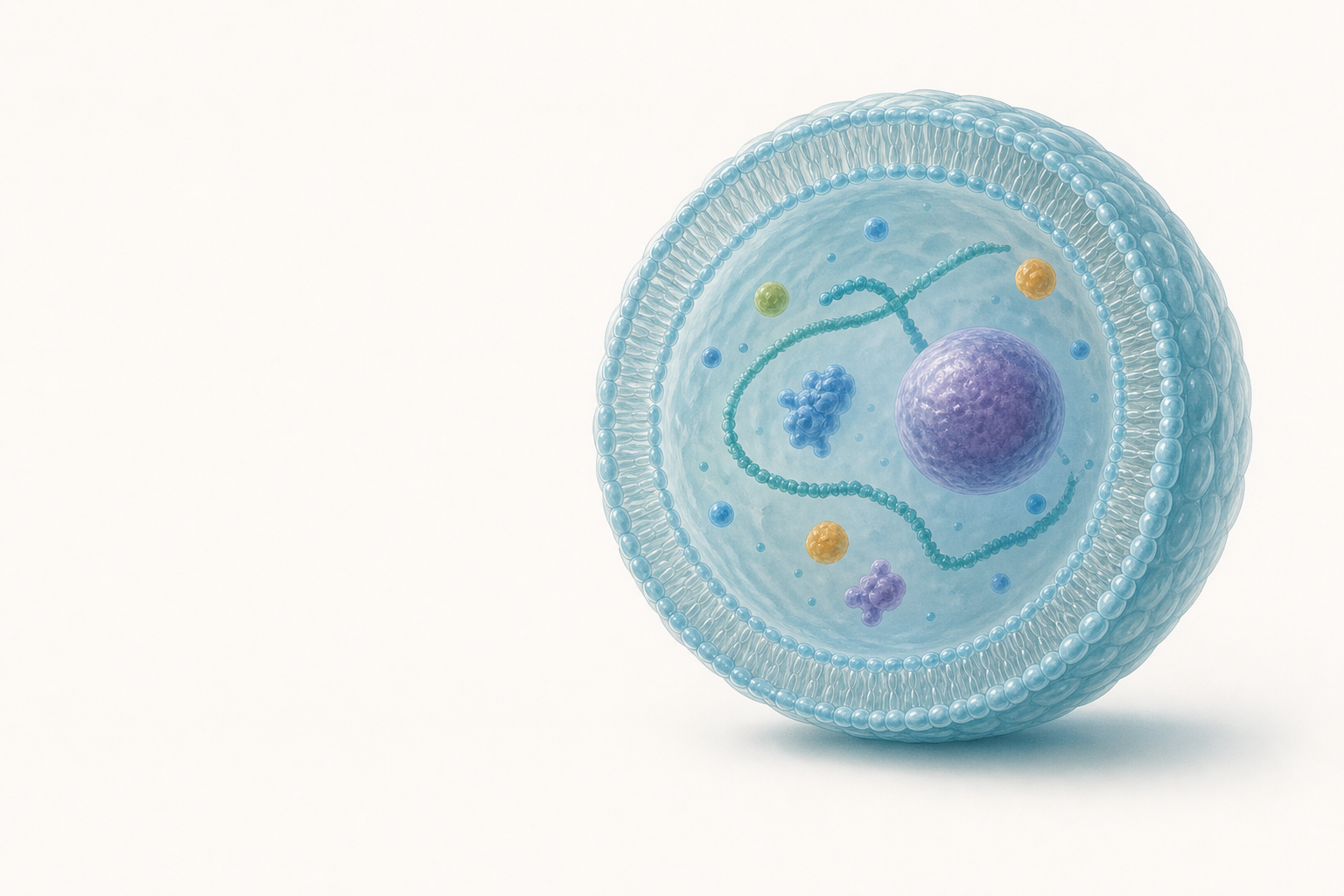
AI Generated Image
University of Minnesota scientists build most life-like synthetic cell
Fox News • • general
Key Points:
- Scientists at the University of Minnesota have created "SpudCell," the most life-like synthetic cell to date, assembled entirely from nonliving components that can grow, replicate DNA, divide, and pass beneficial traits to offspring.
- SpudCell's 90,000-base-pair genome enables protein production and genetic replication, and researchers introduced mutations that allowed natural selection-like processes, with faster-growing cells becoming more common over generations.
- Despite these advances, the synthetic cells cannot survive outside controlled lab conditions, require external nutrients and components, and only about 30% of daughter cells inherit the complete synthetic genome after five generations.
- The research marks a major step toward artificial life and biotechnology applications but raises biosafety and biosecurity concerns, prompting calls for developing safety frameworks for future synthetic cell engineering.
- Future research aims to enhance synthetic cells' self-sufficiency by enabling them to regenerate molecular machinery, improve genome distribution during division, and allow natural mutation processes.


