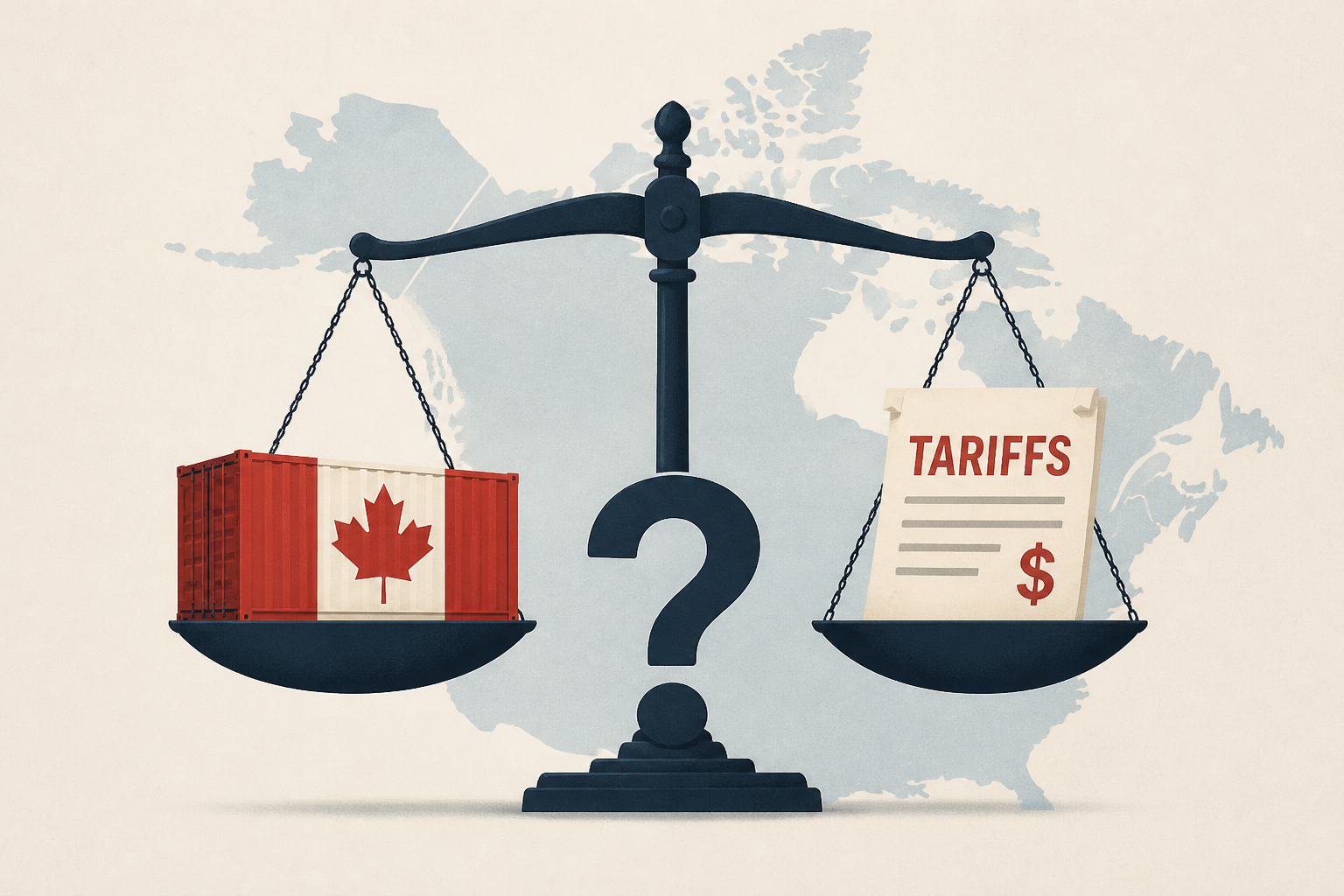
AI Generated Image
Untested in court, Trump's new tariffs on Canada raise legal questions
PBS • • nation
Key Points:
- The Trump administration has invoked the rarely used Section 338 tariff authority from the 1930 Smoot-Hawley Act to impose tariffs on Canadian imports, marking the first time this law has been actively applied.
- Legal experts question the validity of these tariffs, arguing that Section 338 may be obsolete due to newer trade laws and that the tariffs do not properly calculate or directly address the alleged harm caused by Canadian trade practices.
- Critics highlight inconsistencies, noting that the U.S. previously agreed to Canada’s dairy import restrictions under the USMCA trade pact, making the current tariffs appear contradictory.
- The Section 338 tariffs are smaller in scale (5%) compared to previous Trump tariffs, resulting in fewer affected businesses and no current legal challenges, as potential plaintiffs are hesitant to sue the government.
- There remains a possibility that the U.S. and Canada will resume negotiations to resolve the trade dispute, potentially ending the tariff standoff without further litigation.


