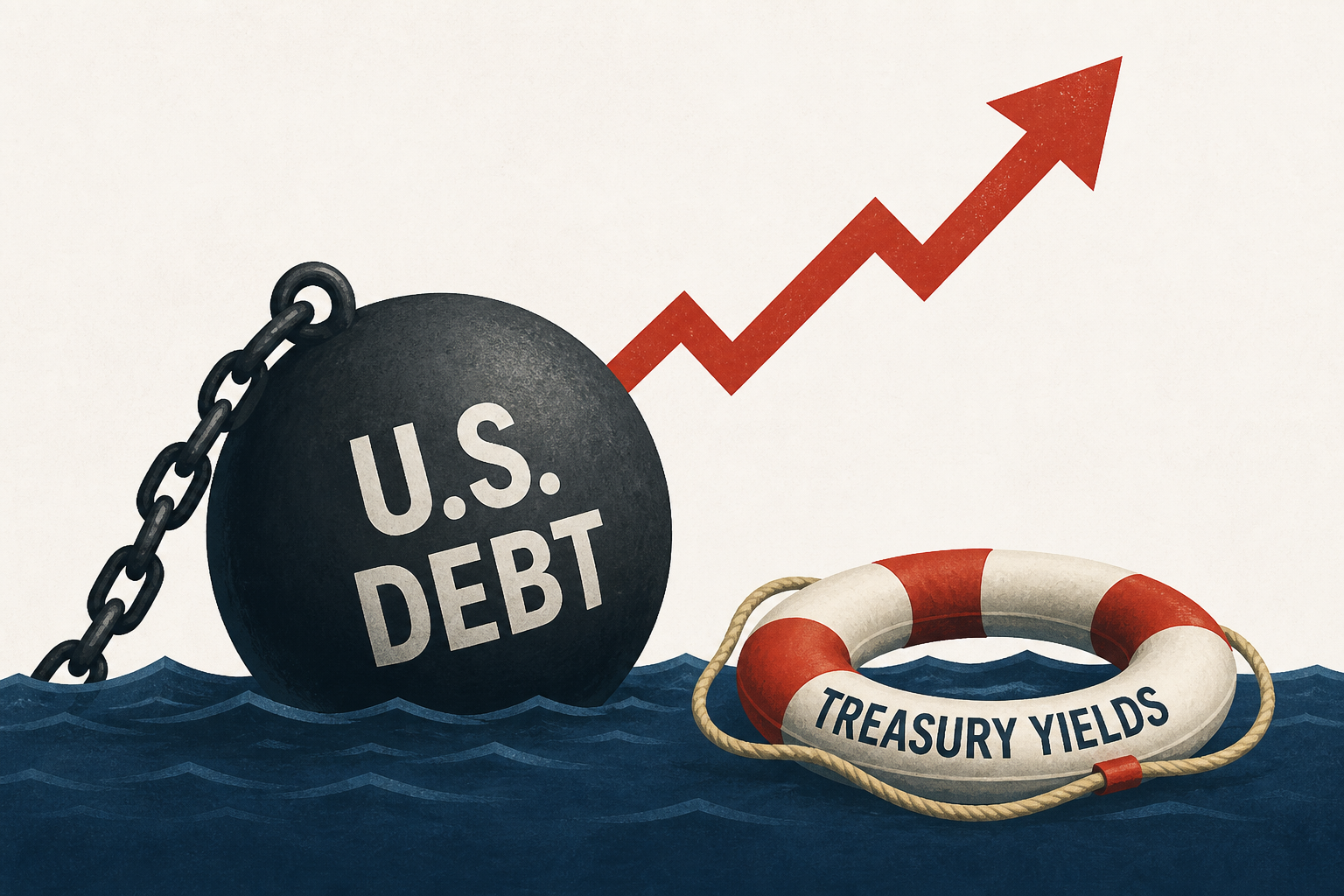
AI Generated Image
US debt is even worse than it seems, and Treasury yields are now an 'all-hands-on-deck situation'
Fortune • • general
Key Points:
- U.S. policy is currently aimed at preventing long-term borrowing costs from rising sharply, with Treasury Secretary Scott Bessent working to double debt buybacks amid persistent upward pressure on long-term yields despite weaker economic data.
- The unusual rise in 10-year Treasury yields, despite slower economic activity, suggests weaker demand for U.S. debt and growing market concerns about the sustainability of the $40 trillion U.S. debt, a trend mirrored in other major economies.
- Changes in debt buyers, with foreign central banks reducing their Treasury holdings and hedge funds becoming more prominent, have increased market volatility and forced the Treasury to offer higher yields to attract investors amid a rising budget deficit nearing $2 trillion annually.
- While some experts warn that the Treasury market’s dynamics indicate growing financial instability, others, like Wall Street veteran Ed Yardeni, view rising yields as a return to normal levels consistent with a healthy economy, though the long-term debt trajectory remains unsustainable.


