AI Image
U.S. infant bleeding episodes jump as vitamin K refusals rise, two studies find
NBC News • • general
Key Points:
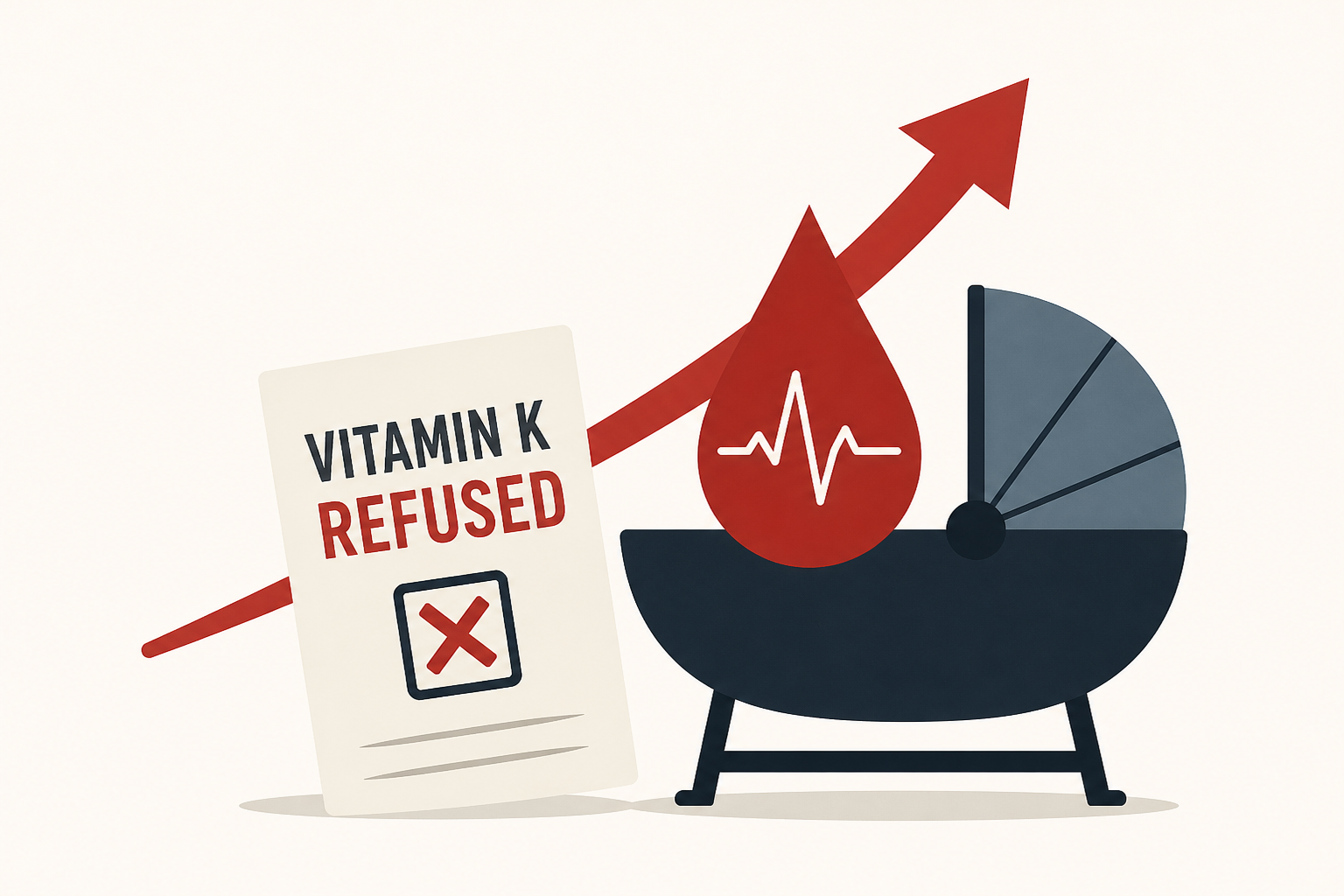
- Rates of life-threatening bleeding in U.S. infants have sharply increased since 2017, coinciding with a rise in parental refusals of newborn vitamin K injections, which are essential for blood clotting.
- Studies published in JAMA and JAMA Pediatrics show that vitamin K refusal rates more than doubled from 3.1% in 2017 to 6.8% in 2025, with bleeding events nearly quadrupling during the same period.
- Babies who do not receive vitamin K shots face a 47% higher risk of bleeding within six months, including more than double the risk of brain bleeding and higher mortality during hospital stays.
- The trend of increasing refusals and bleeding events accelerated after the COVID-19 pandemic and amid growing vaccine hesitancy linked to mixed messages from public health officials, including changes under Health Secretary Robert F. Kennedy Jr.
- Health experts urge clear, consistent public health messaging on the importance of vitamin K at birth, while calls grow for the CDC to begin tracking vitamin K refusal and related bleeding events to better address the issue.


