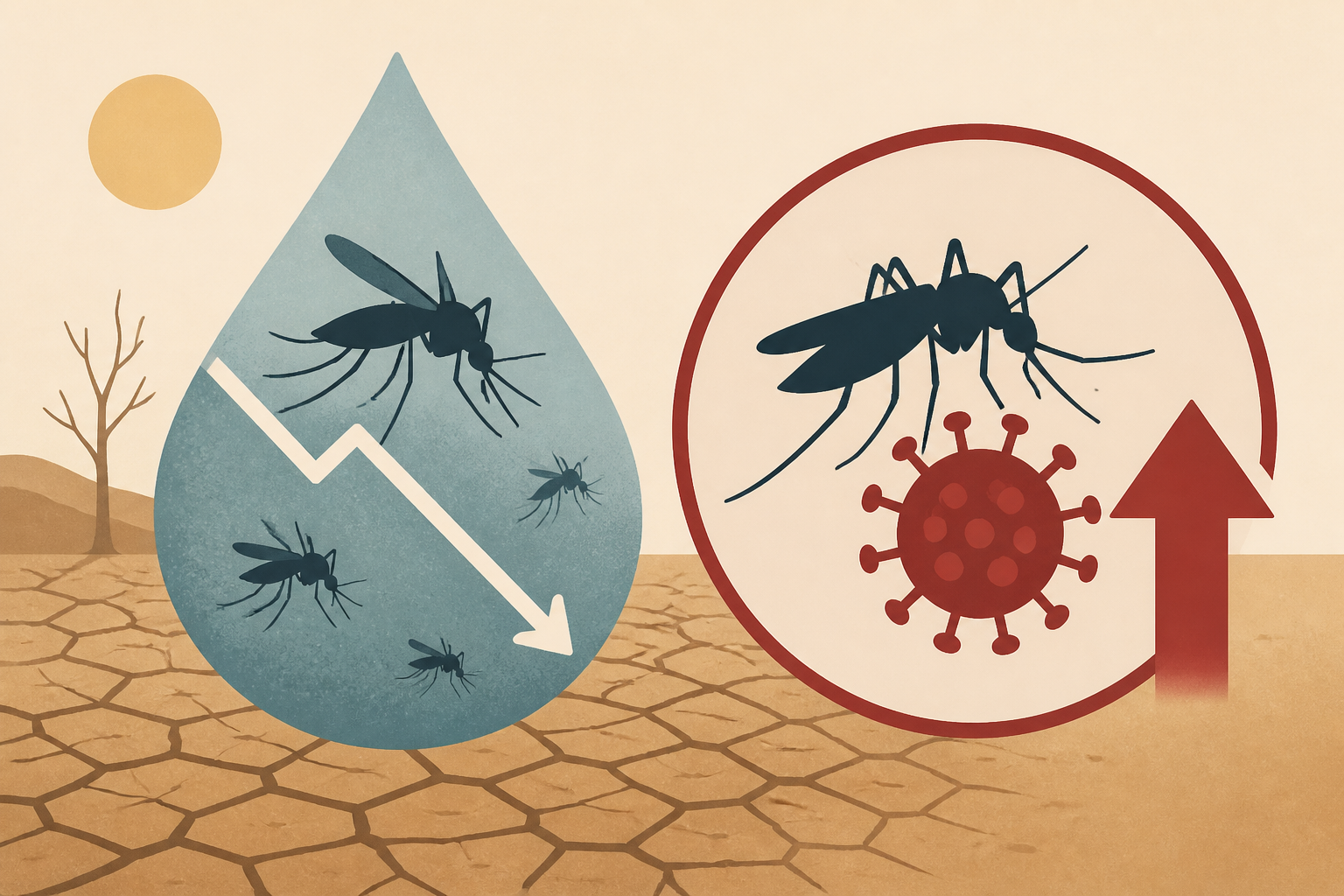
AI Generated Image
US mosquito numbers have crashed during a historic drought, but scientists say fewer mosquitoes can still mean a higher risk of West Nile virus
The Times of India • • health
Key Points:
- A severe drought across the Western and Midwestern US has caused mosquito populations to drop by 50 to 70 percent in some areas, leading to an unusually quiet mosquito season for residents.
- Despite fewer mosquitoes, West Nile virus cases have surged to levels not seen in over two decades, with states like Arizona, Colorado, and Utah experiencing significant outbreaks.
- The paradox arises because drought conditions concentrate mosquitoes and infected birds around limited water sources, increasing virus transmission even as overall mosquito numbers decline.
- Climate change is lengthening the mosquito season by about 18 days on average compared to the 1970s, potentially allowing mosquito populations to rebound quickly once drought conditions ease.
- Public health experts warn against complacency during low mosquito activity periods, emphasizing continued preventive measures as smaller mosquito populations can still pose a high risk of West Nile virus transmission.


