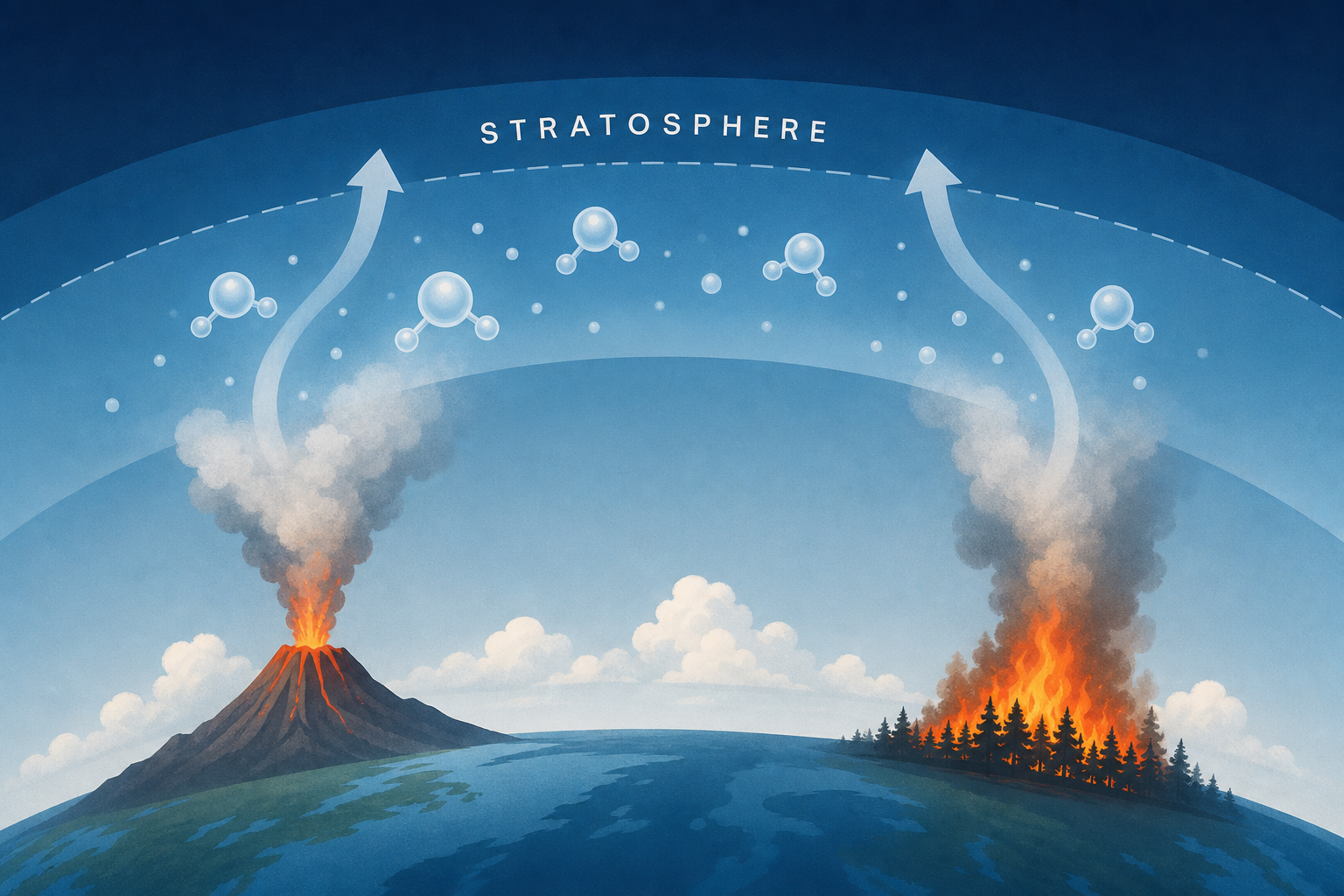
AI Generated Image
Volcanoes and wildfires are adding water vapor to the stratosphere, raising climate concerns
Phys.org • • science
Key Points:
- Moderate volcanic eruptions and extreme wildfires since 2005 have increased water vapor in the stratosphere, a greenhouse gas that traps heat and alters ozone chemistry, according to a study published in Nature.
- The research provides the first direct observational evidence and explains mechanisms behind how smaller volcanic and wildfire events cumulatively drive stratospheric water vapor (SWV) variability.
- Analysis of 17 years of atmospheric data revealed that aerosol-driven increases contributed about 36% of the rise in stratospheric water vapor between 2005 and 2021, with climate impacts comparable to global surface temperature increases.
- Two mechanisms were identified: warming of the tropopause by aerosols increasing moisture capacity, and aerosol self-lofting from wildfire smoke carrying water vapor directly into the stratosphere.
- The study highlights the need to include these aerosol-driven processes in climate models to better predict ozone layer changes, future warming, and stratospheric composition as extreme fires become more frequent.


