AI Image
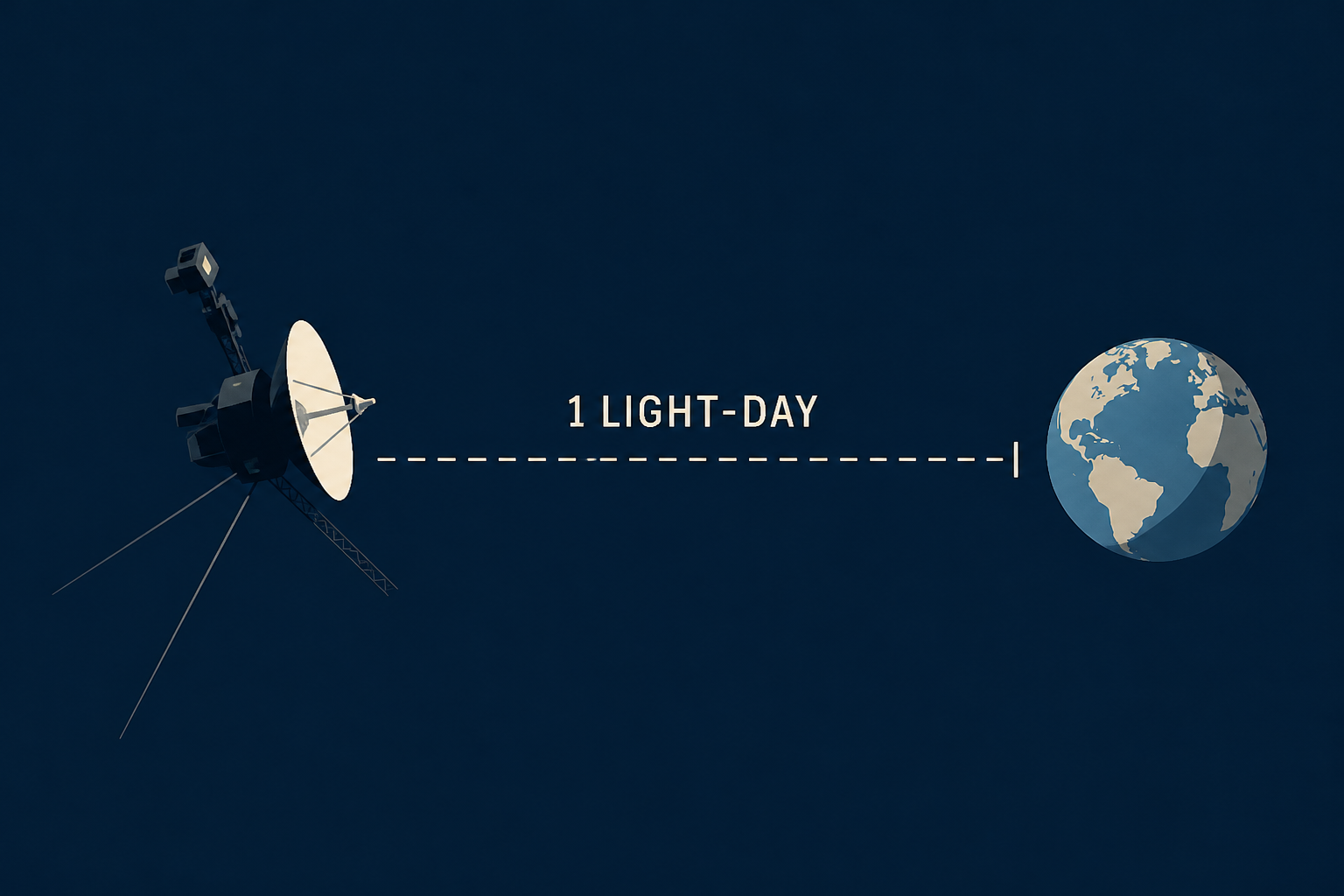
Voyager 1 reaches a milestone nearly 50 years in the making: One light-day from Earth
WRAL • • general
Key Points:
- On November 18, Voyager 1 became the first human-made object to cross the one-light-day distance from Earth, traveling over 16 billion miles (25.9 billion kilometers) away, making radio signals take a full day to travel each way.
- Despite its extreme distance, Voyager 1 continues to send data back to Earth, though its signals are incredibly weak—about 100 attowatts—and its data transmission rate is very slow at roughly 40 bytes per second.
- The spacecraft operates on diminishing power from its radioisotope thermoelectric generators, with NASA engineers managing its limited electricity by shutting down instruments to extend its operational life.
- Voyager 1 carries a golden record containing sounds, music, and greetings from Earth intended for any potential extraterrestrial finders, with a copy displayed at the Smithsonian's National Air and Space Museum.
- Traveling at approximately 38,000 miles per hour toward the star Gliese 445, Voyager 1 will take about 40,000 years to come within 1.7 light-years of it, continuing its mission to study the interstellar medium and magnetic fields beyond our solar system.


