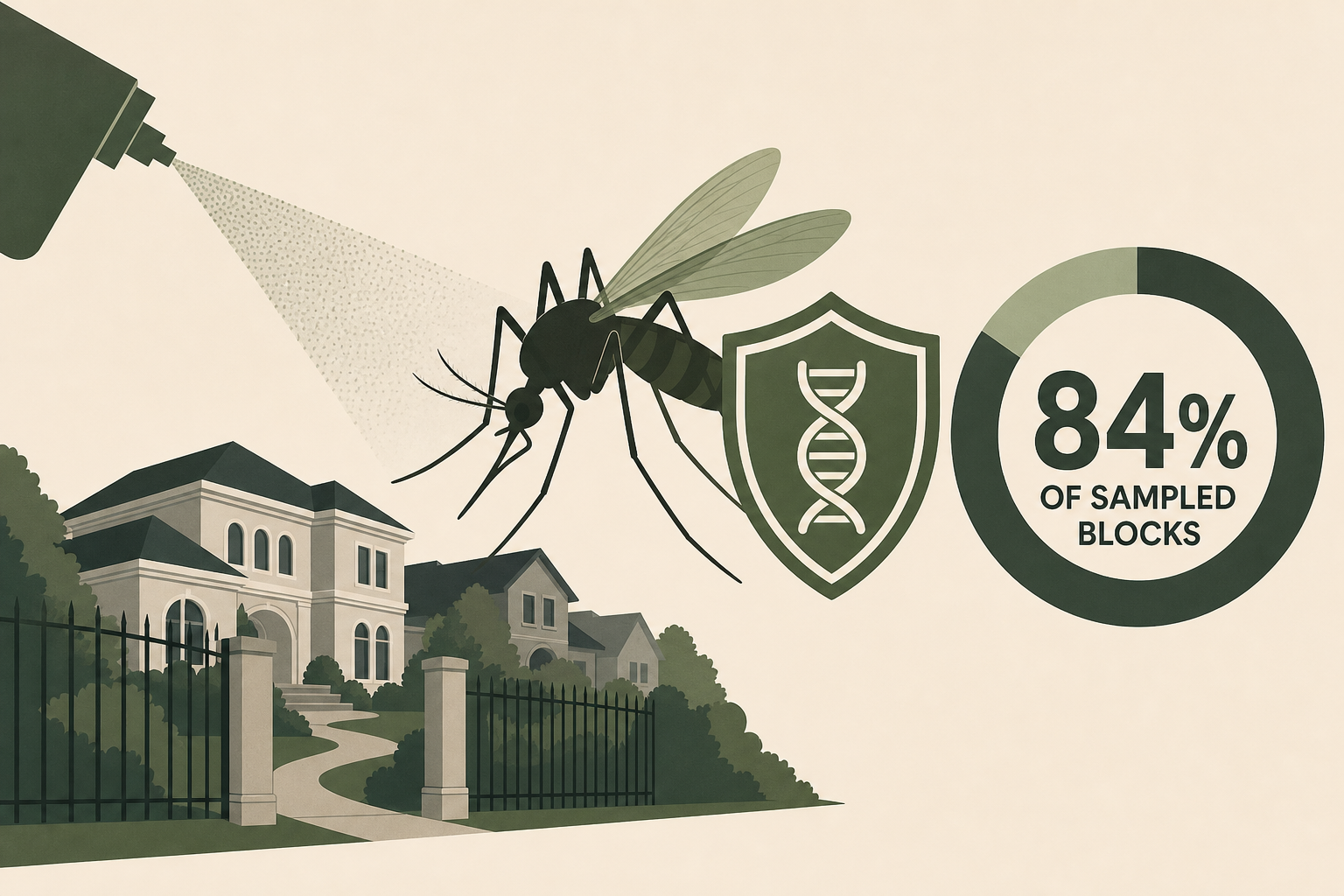
AI Generated Image
Wealthy US neighbourhoods paid to spray mosquitoes: By 2023, the insects had evolved resistance across 84% of sampled blocks and know what they became capable of
The Times of India • • health
Key Points:
- New research from North Carolina State University reveals that widespread backyard spraying of pyrethroid insecticides in eastern U.S. neighborhoods is driving rapid development of insecticide resistance in Asian tiger mosquitoes (Aedes albopictus).
- By 2023, genetic markers for pyrethroid resistance were found in 84% of sampled residential blocks in Wake County, North Carolina, with resistance more prevalent in wealthier neighborhoods where private mosquito control is more common.
- The studies highlight that frequent use of chemical sprays by homeowners creates strong local selection pressure, enabling resistant mosquitoes to survive and reproduce, which undermines long-term effectiveness of these insecticides.
- Researchers recommend integrated pest management strategies focusing on eliminating breeding sites and using physical or biological controls, rather than relying solely on chemical insecticides, to sustainably manage mosquito populations.
- The findings raise concerns about community-wide impacts of individual pest control choices, suggesting a need for coordinated mosquito management approaches to prevent widespread resistance and maintain public health protection.


