AI Generated Image
Webb telescope finds signs of ancient disaster for Neptune's moons
Yahoo • • science
Key Points:
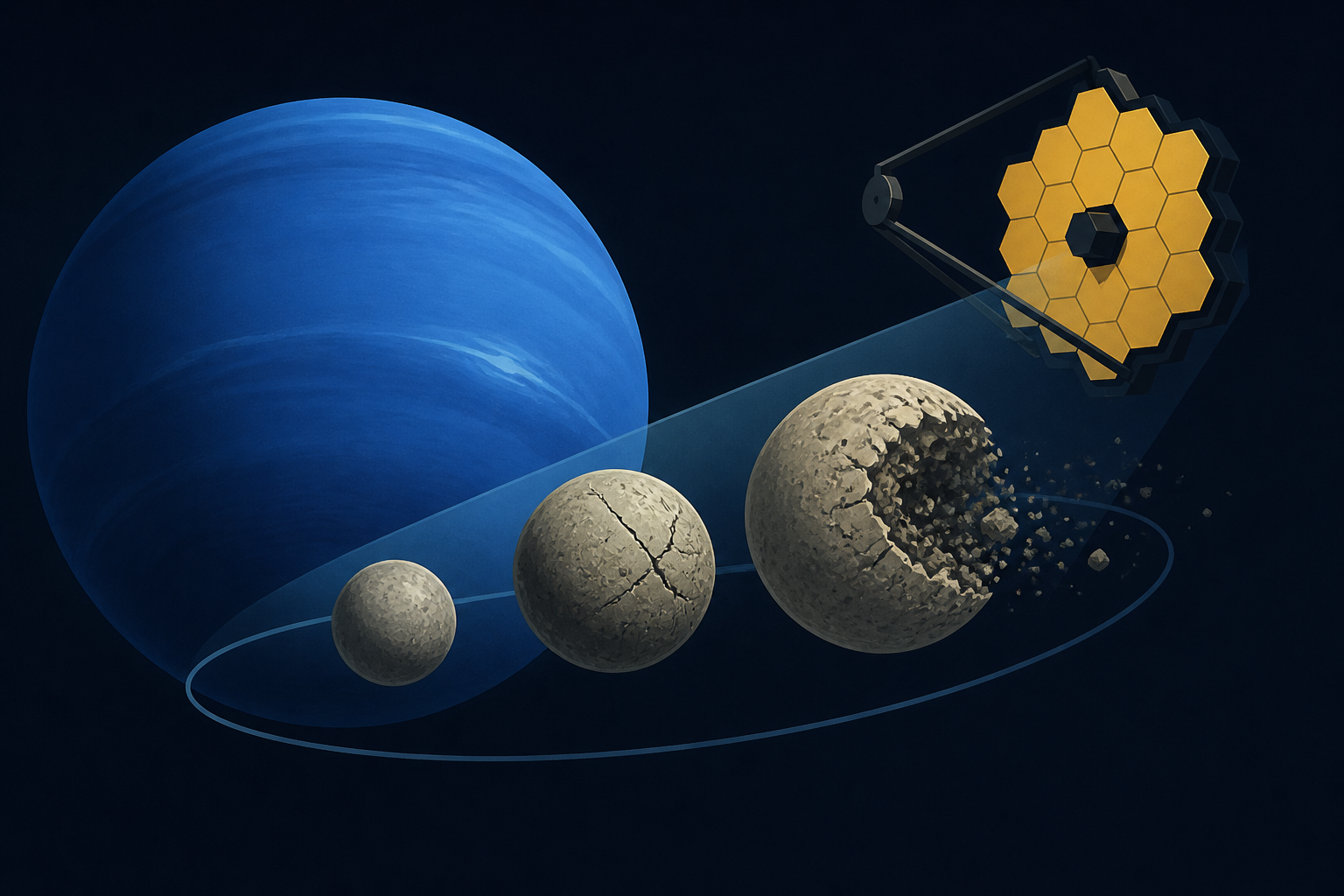
- NASA's James Webb Space Telescope detected clay minerals on Neptune's small inner moons and rings, indicating these materials originated from the deep interiors of larger ancient worlds destroyed in a past catastrophic event.
- Researchers believe the disruption was caused by Triton, Neptune's largest moon, which was captured by Neptune's gravity from the Kuiper Belt early in the solar system's history, leading to collisions among Neptune's original moons.
- This event exposed the interiors of icy moons, allowing direct observation of materials usually hidden beneath thick ice shells, and resulted in the current formation of Neptune's inner moons and rings from the debris.
- Triton's retrograde orbit and dominance of Neptune's satellite mass support the theory that it is a captured interloper, making Neptune unique among the gas giants for lacking an orderly system of large regular moons.
- The findings highlight the solar system's violent past and demonstrate how a single event can drastically reshape a planetary system's structure.


