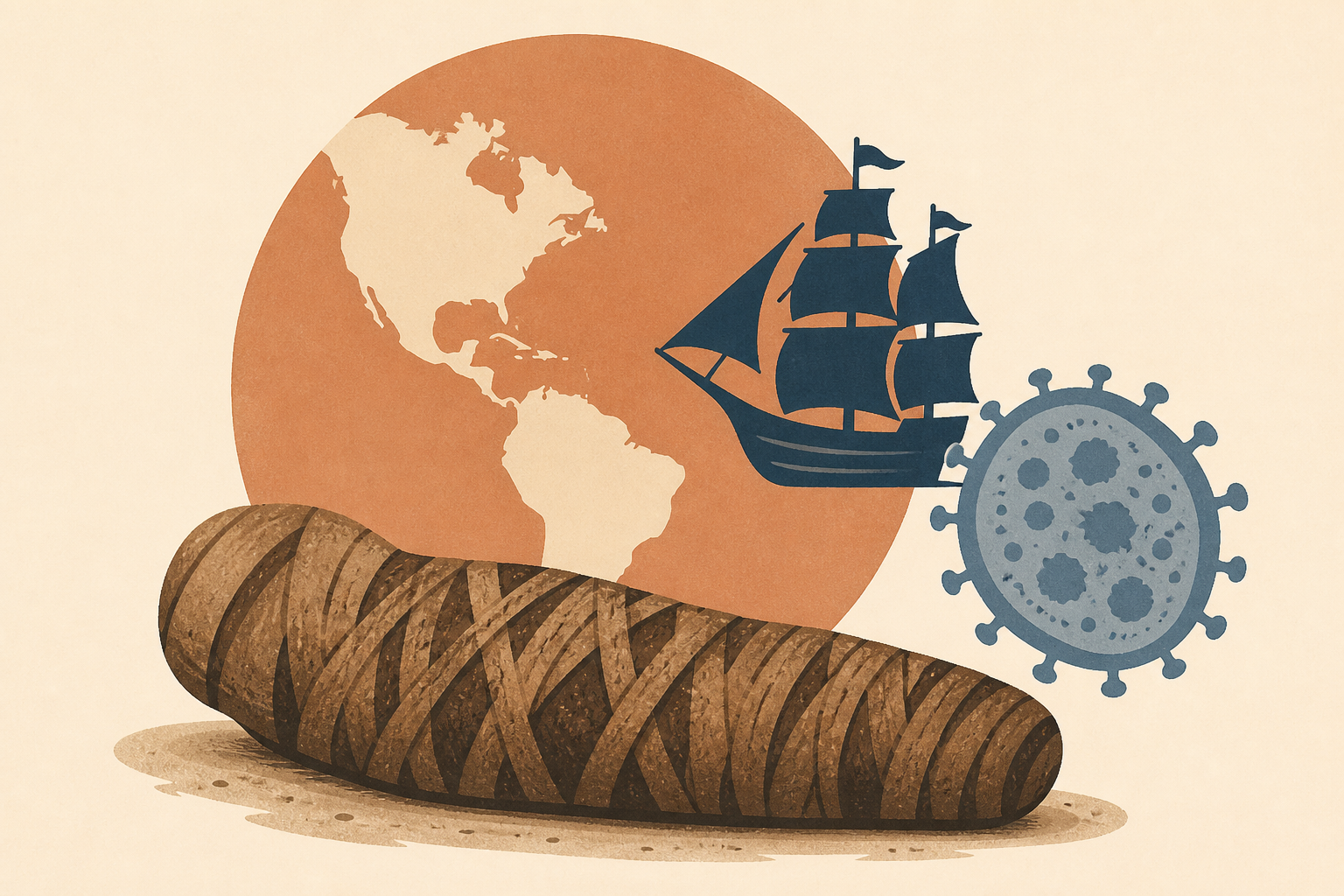
AI Generated Image
Chilean Mummies Prove Europeans Brought Smallpox to the Americas-But That’s Not All
Gizmodo • • health
Key Points:
- A new study published in Science provides the first molecular confirmation that Europeans introduced smallpox to the Americas during the colonial period, based on DNA analysis of two mummies from northern Chile dating between the late 15th and early 17th centuries.
- The mummies, likely Inca individuals, were found to carry a lost strain of the variola virus nearly identical in both, indicating they died during the same smallpox outbreak, with skin lesions previously misattributed to arsenic exposure now identified as smallpox symptoms.
- Genetic analysis revealed the virus strain lies evolutionarily between medieval European strains and later ones, showing slower evolution during colonial expansion due to the lack of immunity in Indigenous populations, which allowed the virus to spread with little adaptation.
- The study highlights how colonization, population changes, and vaccination efforts, including Edward Jenner’s 19th-century vaccine, influenced smallpox’s evolution, culminating in its eradication declared by WHO in 1980.
- Experts praised the findings for advancing understanding of smallpox’s history and evolution, emphasizing the power of ancient DNA to resolve longstanding historical questions about infectious diseases.


