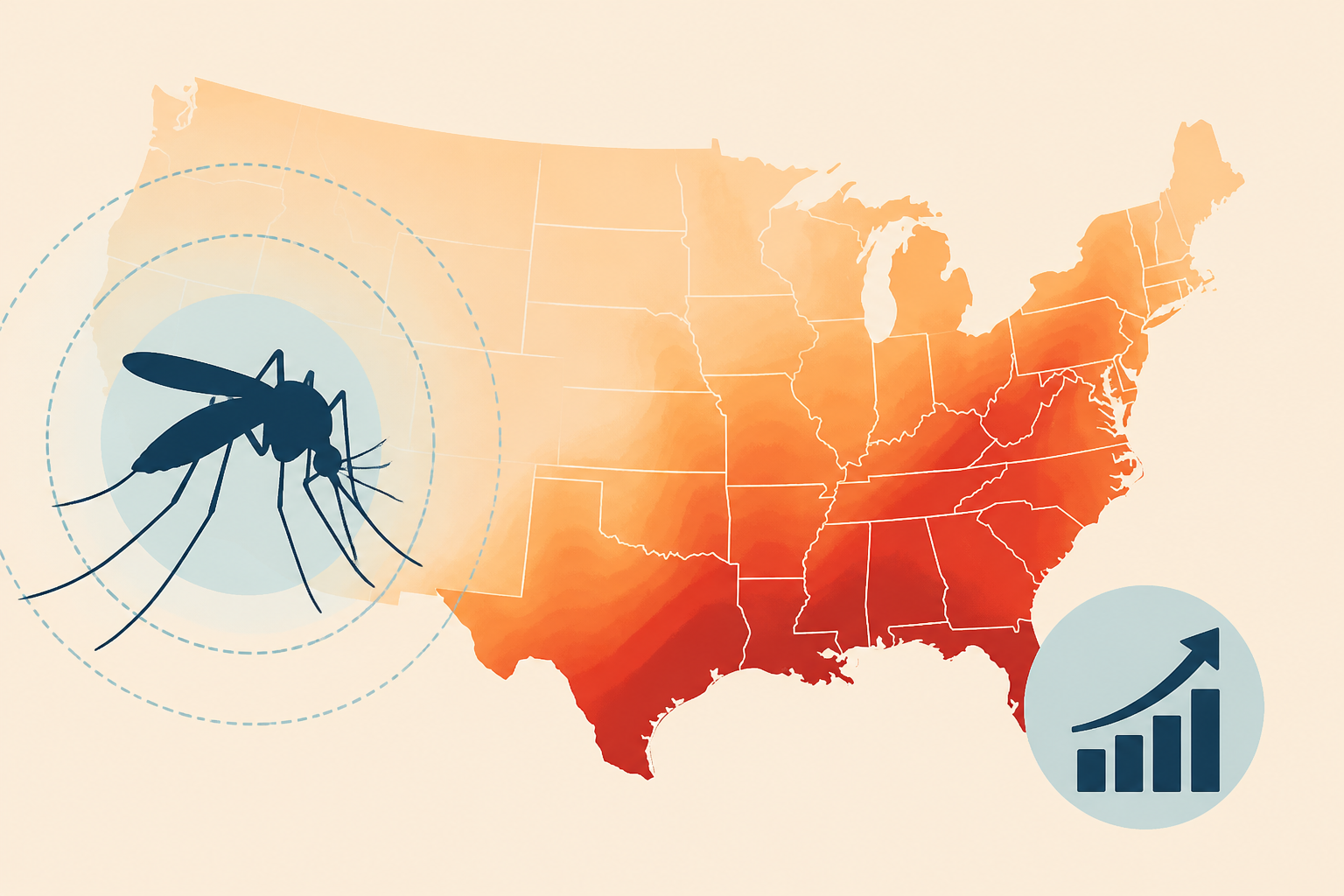
AI Generated Image
West Nile, dengue fever surged in US this summer. See where
USA Today • • health
Key Points:
- Western U.S. states are experiencing a significant rise in West Nile virus cases, reaching a more than 20-year high for this time of year, driven by warmer temperatures and longer mosquito seasons that expand mosquito activity.
- As of September 8, the CDC confirmed 504 West Nile cases across 41 states, with 363 being severe neuroinvasive cases; however, most infected individuals (about 80%) show no symptoms, and the high number of severe cases reflects reporting biases rather than increased severity.
- Dengue fever cases have surged in Florida, with 111 locally acquired cases reported by early September, nearly doubling the total from the previous year, raising concerns about the spread of other mosquito-borne diseases like chikungunya and Zika in the U.S.
- Experts highlight that climate change and habitat alterations are increasing mosquito activity and expanding their range, potentially enabling diseases once absent from the mainland U.S., such as malaria, to reemerge in favorable conditions.
- Prevention strategies recommended include using EPA-registered insect repellents, eliminating standing water to reduce mosquito breeding sites, and consulting pest control professionals for persistent mosquito problems to help curb the spread of these illnesses.


