AI Image
Westminster Abbey skeleton may belong to one of two 11th-century medieval monks
Fox News • • world
Key Points:
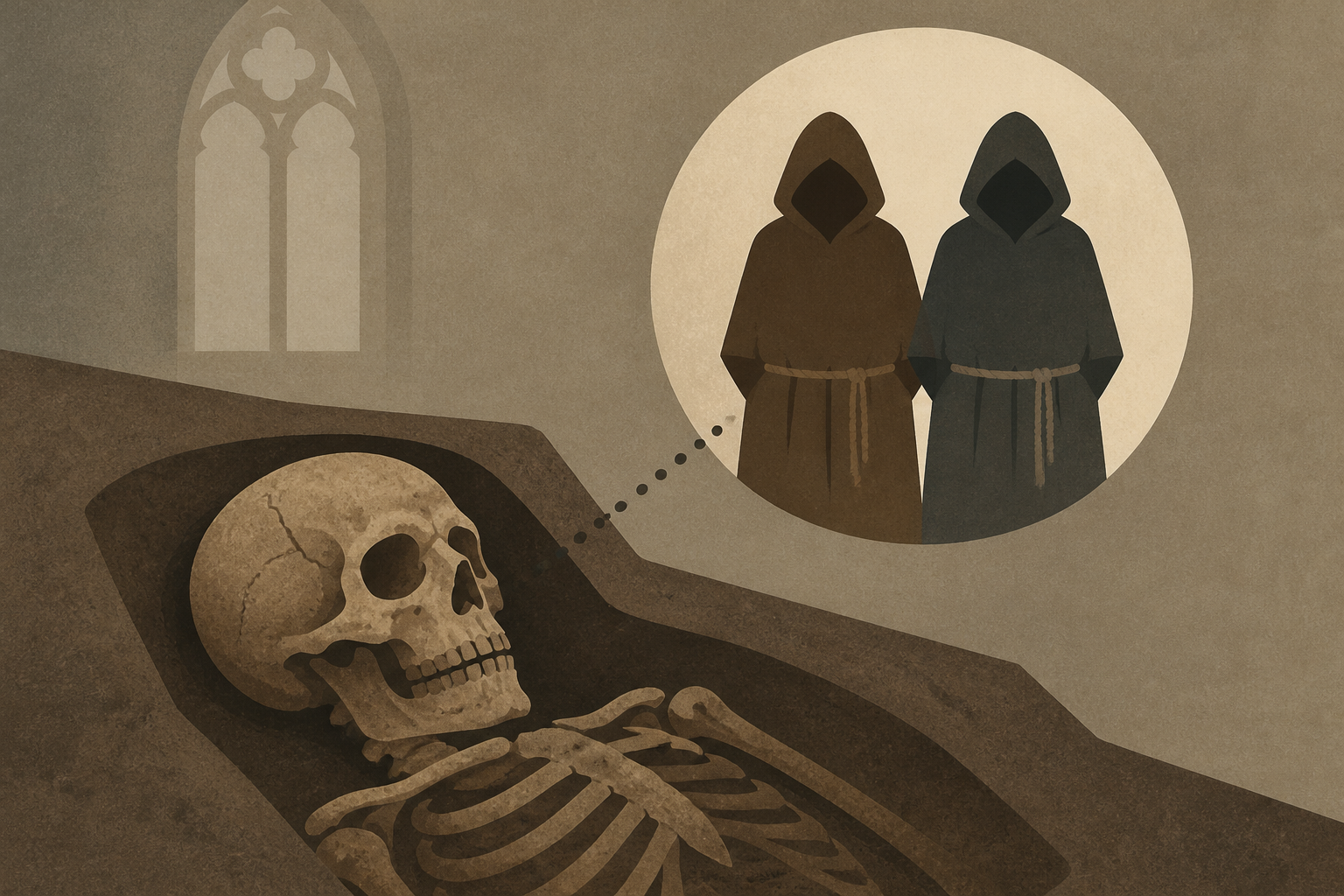
- An unidentified skeleton found in a Roman limestone sarcophagus at Westminster Abbey in 1869 has been studied, revealing it likely dates to the 11th century rather than the 4th century as initially thought.
- The sarcophagus bore an inscription for Valerius Amandinus, a wealthy 4th-century Briton, but the remains inside do not belong to him, suggesting the coffin was reused.
- Consultant archaeologist Warwick Rodwell's recent research, based on carbon dating and excavation findings, proposes the skeleton could be one of two high-ranking medieval monks, Aelfwig or Wulnoth, who died between 1020 and 1049.
- The occupant was a man aged between 35 and 49, approximately 5 feet 9 inches tall, honored with a finely crafted but recycled sarcophagus, with evidence of a wooden coffin that decayed inside the stone container.
- This discovery adds to a series of recent medieval skeletal finds in England, enhancing understanding of the country's medieval history and burial practices.


