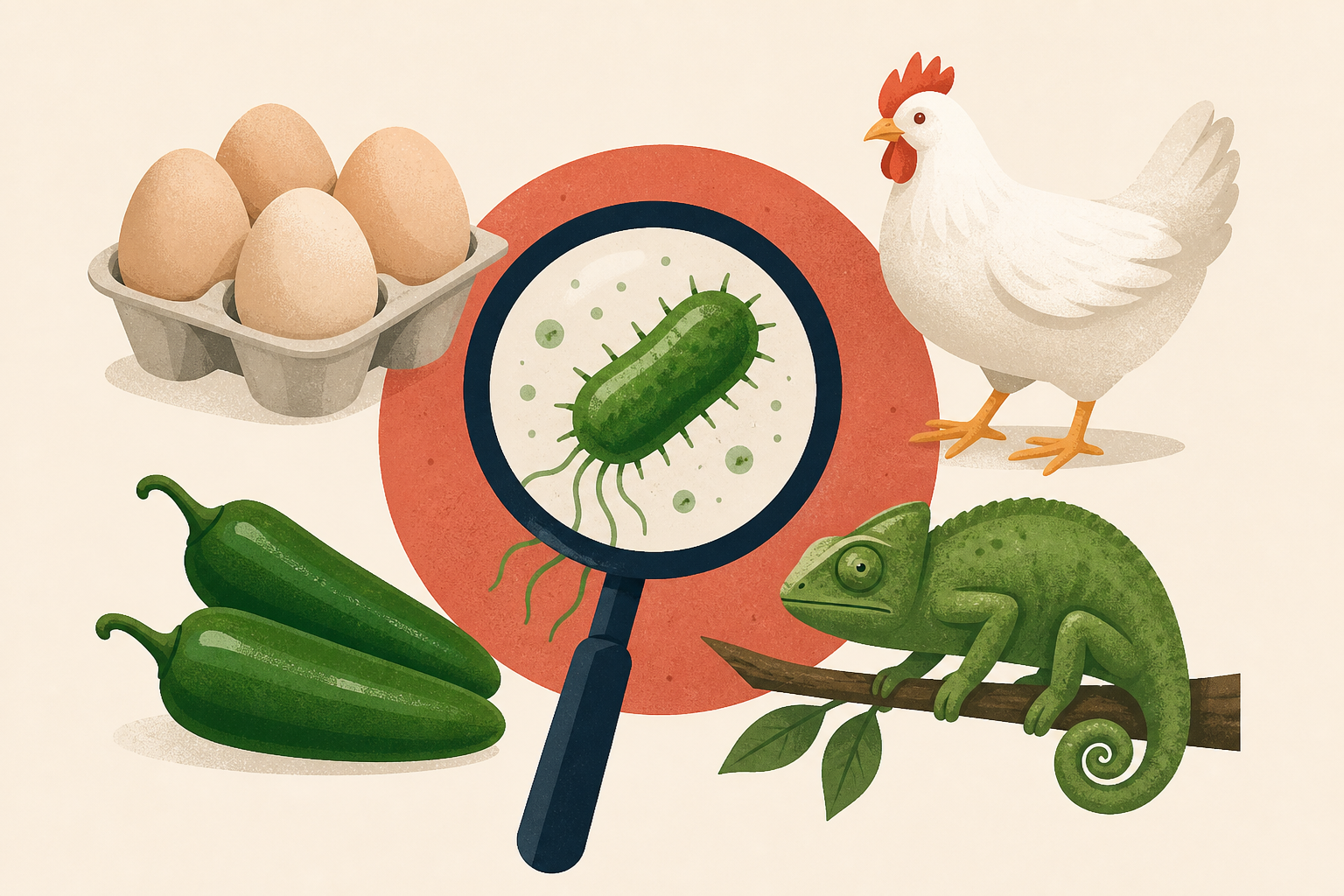
AI Generated Image
What eggs, jalapeños, chickens and chameleons have in common this summer: salmonella
CNN • • business
Key Points:
- The United States is currently facing multiple salmonella outbreaks linked to contaminated eggs from Texas, jalapeño peppers from Mexico, and contact with backyard poultry and pet veiled chameleons, resulting in hundreds of illnesses and one death.
- The egg-related outbreak has caused 98 cases across 17 states, with over 1.5 million dozen eggs recalled, while jalapeño peppers have been linked to 345 cases in 27 states, primarily affecting restaurant patrons; backyard poultry outbreaks have impacted 814 people in 44 states, with children under five particularly affected.
- Salmonella symptoms typically appear 6 hours to 6 days after exposure and include stomach cramps, fever, nausea, vomiting, and sometimes bloody diarrhea; most people recover without treatment, but severe cases may require hospitalization and, in rare instances, antibiotics.
- Prevention measures emphasize thorough handwashing, proper food handling and cooking, avoiding cross-contamination, and careful interaction with pets such as poultry and reptiles, especially for young children who are at higher risk.
- The persistence of salmonella outbreaks is partly due to fecal contamination of food and seasonal factors like warmer weather, which promote bacterial growth in food and water, underscoring the importance of food safety practices during the summer months.


