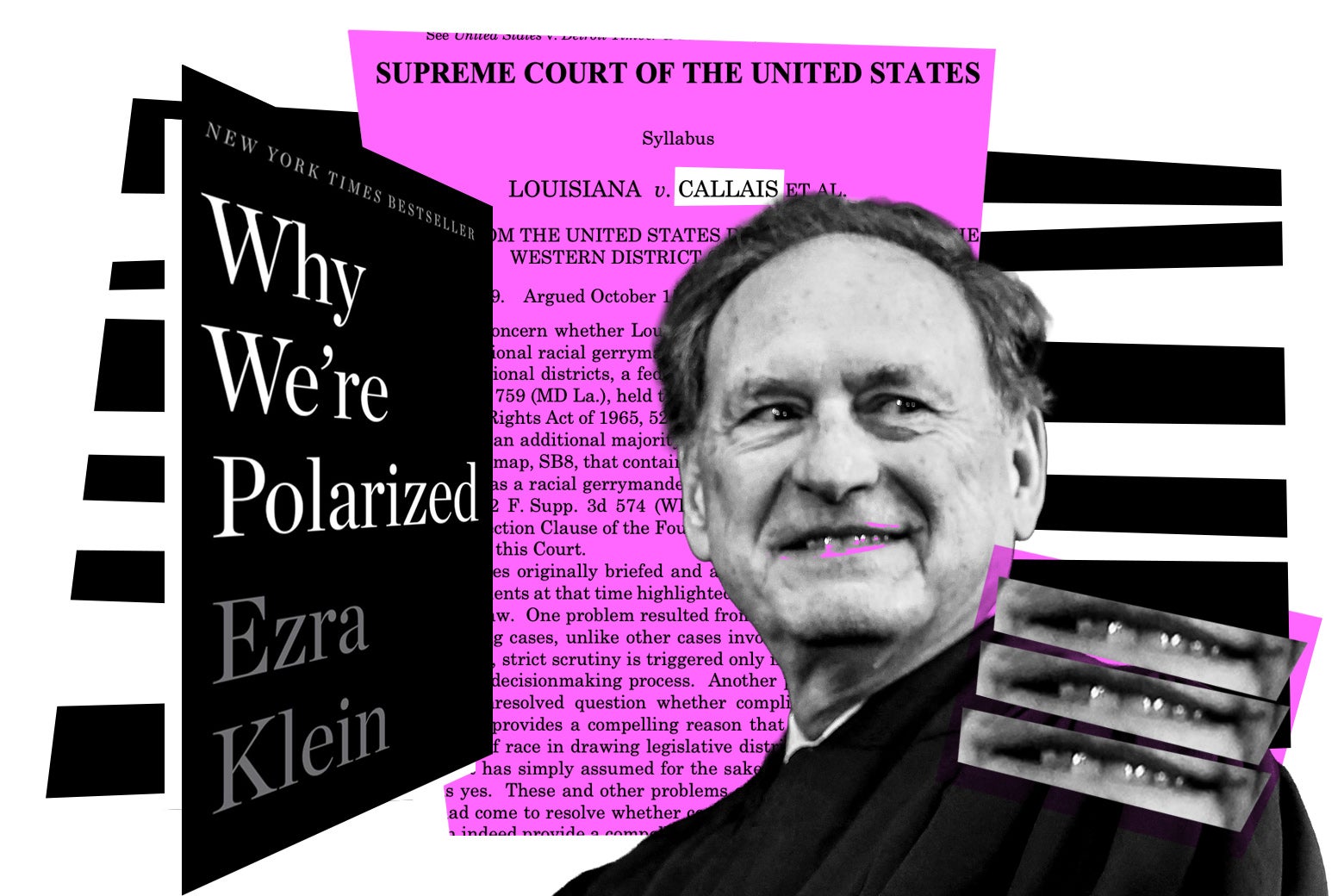
What Ezra Klein and Sam Alito have in common.
Slate • • nation
Key Points:
- The Supreme Court's ruling in Louisiana v. Callais determined that legislative districts polarized by party lines cannot simultaneously be considered racially polarized under the Voting Rights Act (VRA), effectively weakening protections against racial vote dilution.
- The court's decision relies on a flawed methodology that treats race and party affiliation as mutually exclusive factors, ignoring the historical and systemic connection between race and political alignment in the U.S.
- Intellectual efforts focused on partisan polarization have unintentionally undermined the recognition of racial discrimination, providing the Supreme Court with a framework to dismiss racial gerrymandering claims as merely partisan disputes.
- The article argues that polarization is a symptom rather than the root cause of democratic challenges, emphasizing that threats to multiracial democracy and voting rights remain central issues obscured by an overemphasis on partisan division.
- By prioritizing partisan explanations over racial ones, the ruling diminishes the effectiveness of the VRA, a key legal tool designed to combat racial discrimination in voting, potentially jeopardizing multiracial democracy and the rule of law.


