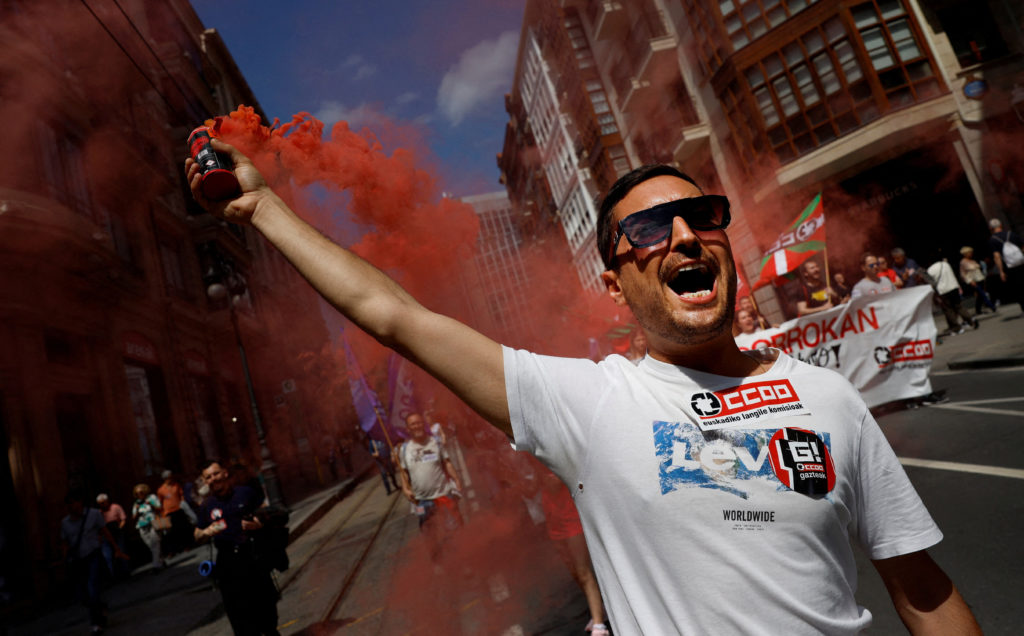
What to know about May Day as workers face rising costs due to Iran war
PBS • • world
Key Points:
- May Day rallies worldwide highlighted rising living costs, with protests in Manila against U.S. involvement in the Iran conflict and calls for higher wages and lower taxes, while Indonesia and Pakistan saw demands for stronger worker protections amid inflation and economic challenges.
- Demonstrations faced restrictions in places like Istanbul, where police detained protesters defying a government ban on gatherings at Taksim Square, and in France, unions protested to preserve May Day as a mandatory paid holiday amid government proposals to allow work in some sectors.
- Italy introduced nearly €1 billion in job incentives to promote stable employment and combat labor abuses ahead of May Day, though opposition parties criticized the measures as propaganda; meanwhile, Portugal continues to experience labor unrest over proposed laws perceived as weakening worker rights.
- In the United States, May Day activists and labor unions organized protests and boycotts opposing President Trump's policies, focusing on immigration and economic inequality, with calls for an economic blackout under the slogan "workers over billionaires."
- May Day's origins trace back to the 1886 Chicago labor movement advocating for an eight-hour workday, marked by the Haymarket Square rally and subsequent violence, which led to the holiday being designated internationally to honor workers' rights and struggles.


