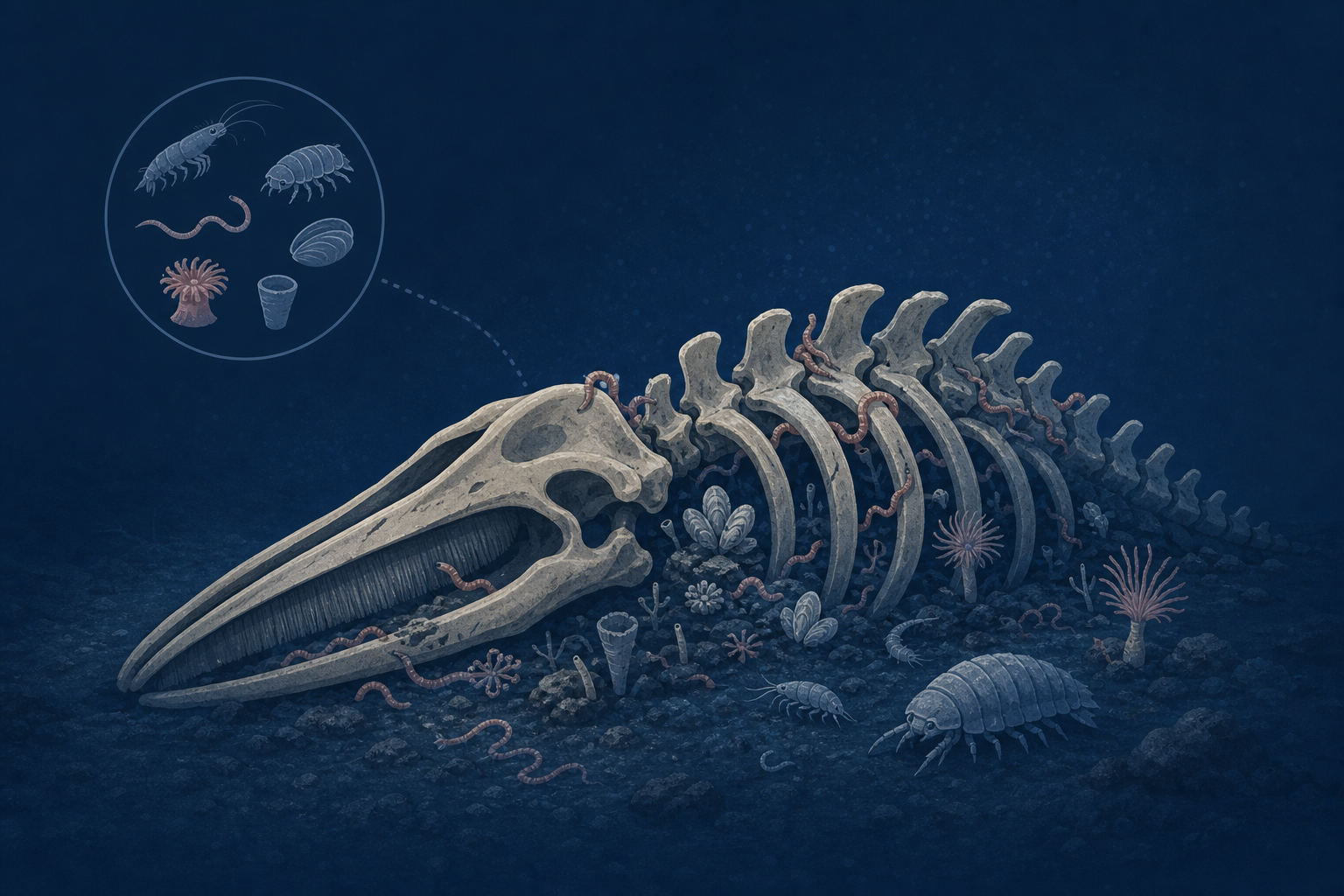
AI Generated Image
When a dead whale sinks to the seafloor, its 'whale fall' becomes an oasis feeding deep-sea life for decades — up to 190 species crowding a single skeleton, with bone-eating worms gnawing the bones fo
Space Daily • • science
Key Points:
- Whale falls occur when a whale carcass sinks to the deep seafloor, creating a rich ecosystem that can host up to 190 species of bottom-dwelling animals on a single skeleton.
- The decomposition process involves stages starting with scavengers stripping soft tissue over up to two years, followed by bacteria breaking down bone fats and releasing hydrogen sulphide, which sustains chemosynthetic communities for decades.
- A unique genus of bone-eating worms called Osedax plays a crucial role in breaking down whale bones, with individuals feeding on a single skeleton for up to about ten years.
- Despite advances in research, very few natural whale falls have been directly observed from start to finish, and recent discoveries have extended known whale-fall depths to nearly 6,800 meters in the Indian Ocean.
- Genetic studies suggest a high diversity of bone-eating worms and imply that many whale falls exist in the deep ocean, but the exact number of active whale-fall ecosystems currently sustaining deep-sea life remains unknown.


