AI Image
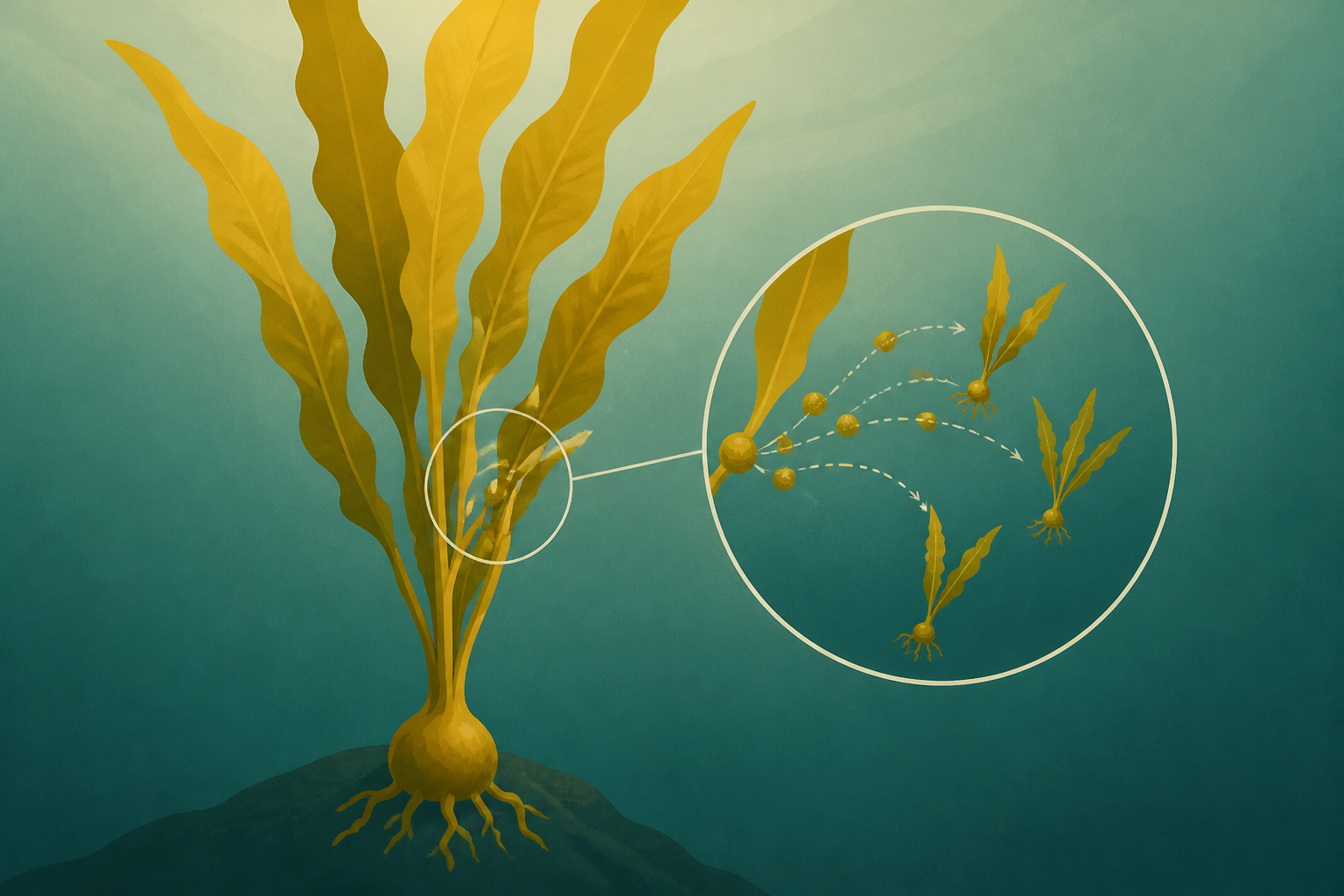
Who needs sex? Kelp reproduce asexually when no mate is nearby
Nature • • science
Key Points:
- A study published in PLoS Biology reveals that kelp, specifically Laminaria pallida, can reproduce asexually when potential mates are scarce, showcasing greater reproductive flexibility than previously known.
- Researchers found that both male and female kelp grown separately in labs could produce offspring without fertilization, with male gene expression shifting to resemble females during asexual reproduction.
- In natural environments, no clear evidence of asexual reproduction was observed, indicating that kelp prefer sexual reproduction when partners are available.
- The study suggests kelp can detect nearby mates through chemical signals and adjust their reproductive strategy accordingly, highlighting their developmental adaptability.
- This research enhances understanding of how gene activity changes enable kelp to switch between sexual and asexual reproduction, which may have implications for marine ecosystems.


