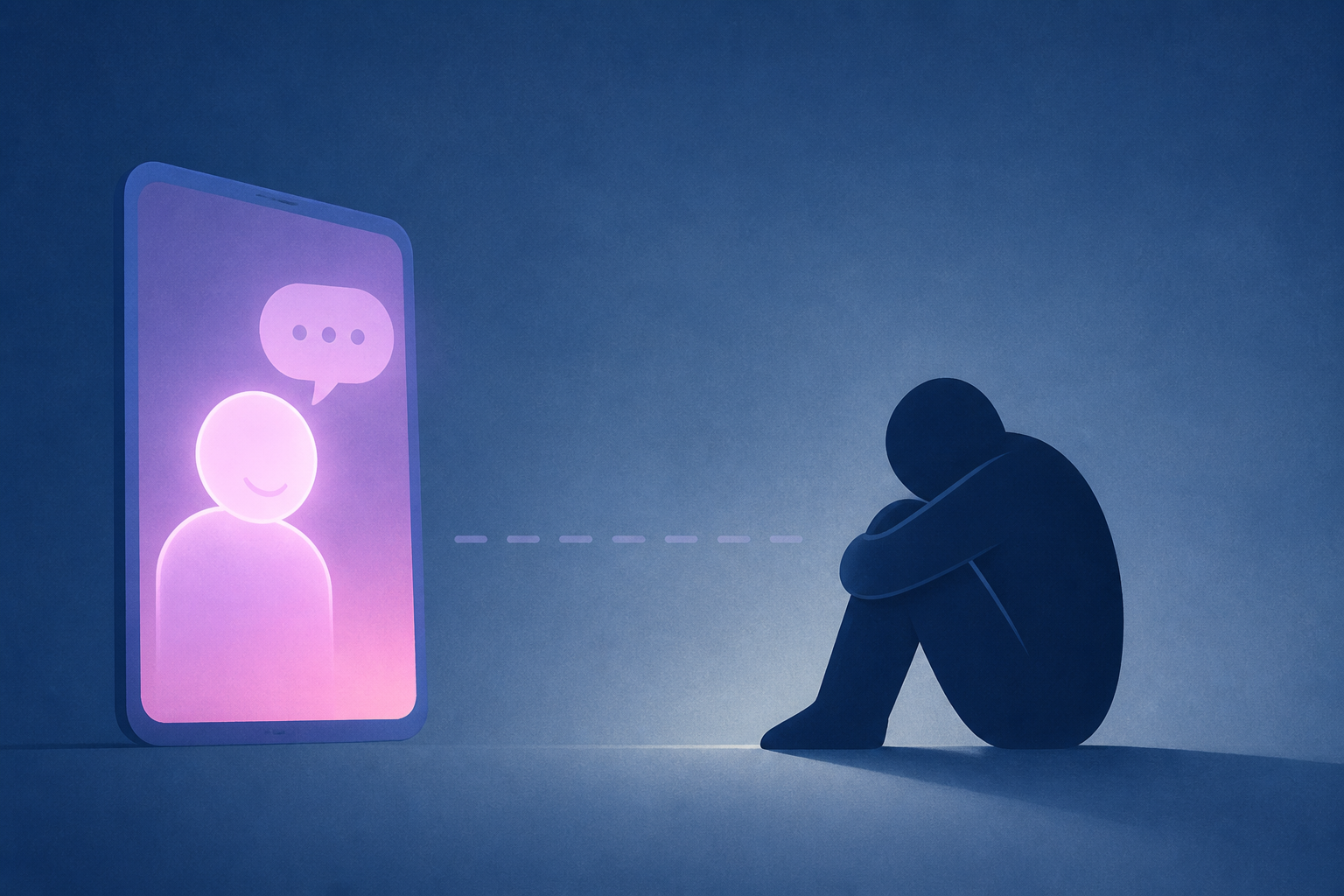
AI Image
Why A.I. companions can’t solve the loneliness crisis.
Slate • • technology
Key Points:
- Since the rise of ChatGPT, generative-text chatbots have increasingly infiltrated intimate human relationships, sometimes causing isolation, emotional overdependence, and even "A.I. psychosis," with users preferring bots over real human connections.
- Psychologist Sherry Turkle warns that chatbots fail to teach the complexities of real relationships, empathy, and human vulnerability, instead offering frictionless interactions that can undermine emotional growth and social skills.
- Turkle emphasizes that addressing chatbot dependence requires rebuilding authentic human communities and social spaces, rather than relying on technological fixes or manipulating chatbot design.
- She advocates against allowing children to interact with first-person chatbots, highlighting the risk of stunted emotional development, and calls for strict restrictions on AI use in educational settings.
- Some individuals have reduced chatbot dependence through interventions by friends and family, but widespread societal efforts are necessary to combat the broader crisis of replacing human relationships with artificial ones.


