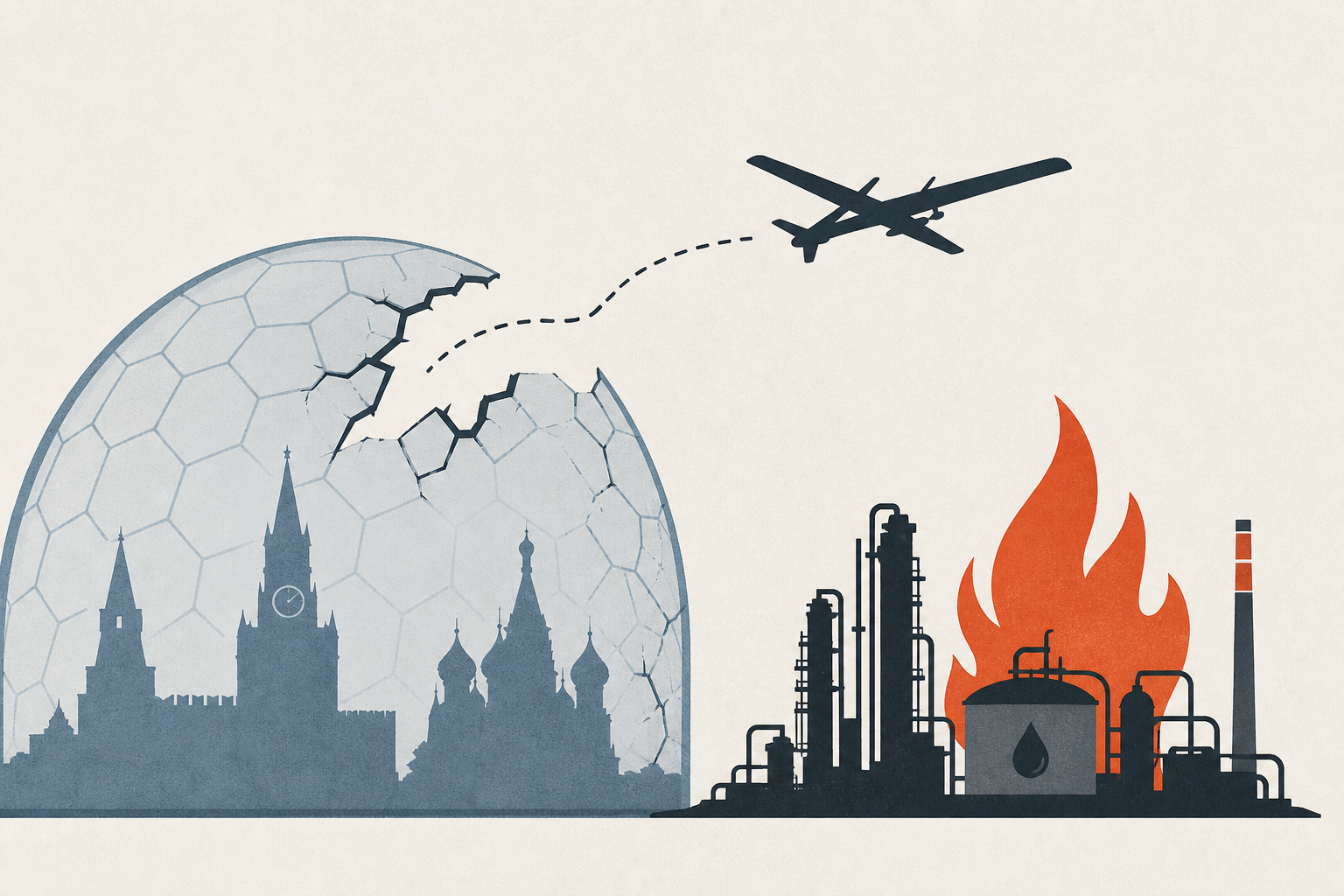
AI Generated Image
Why are Moscow’s air defenses struggling to stop drone attacks? And why are oil refineries so vulnerable to Ukrainian strikes?
Meduza • • general
Key Points:
- On June 16 and 18, Ukrainian drones successfully penetrated Moscow's southeastern defenses and severely damaged both primary oil distillation units at the Gazprom Neft refinery, causing fires and smoke over nearby residential areas.
- Ukraine's drone strikes focus on oil refining infrastructure due to the limited payload of their long-range drones, targeting vulnerable but economically significant facilities to maximize disruption with sustained attacks.
- The June 18 attack involved a large formation of drones, including various models, and exposed significant shortcomings in Russia’s layered air defense system, with many interceptor missiles failing to neutralize the drones.
- Russia lacks an integrated drone detection and interception system comparable to Ukraine’s multi-layered defense, relying mostly on point defenses and surface-to-air missiles designed for traditional aircraft, which are insufficient against mass drone swarms.
- Russian efforts to develop advanced drone countermeasures and integrated defense networks are ongoing but remain in testing phases, leaving critical time for Ukraine to expand its drone strike capabilities and maintain pressure on Russian infrastructure.


