AI Generated Image
Why autism may not be on a ‘spectrum’ after all
The Independent • • health
Key Points:
- The term “autism spectrum,” coined by Dr. Lorna Wing in the 1980s, shifted the understanding of autism from a rare, narrowly defined condition to one encompassing a wide range of traits and experiences.
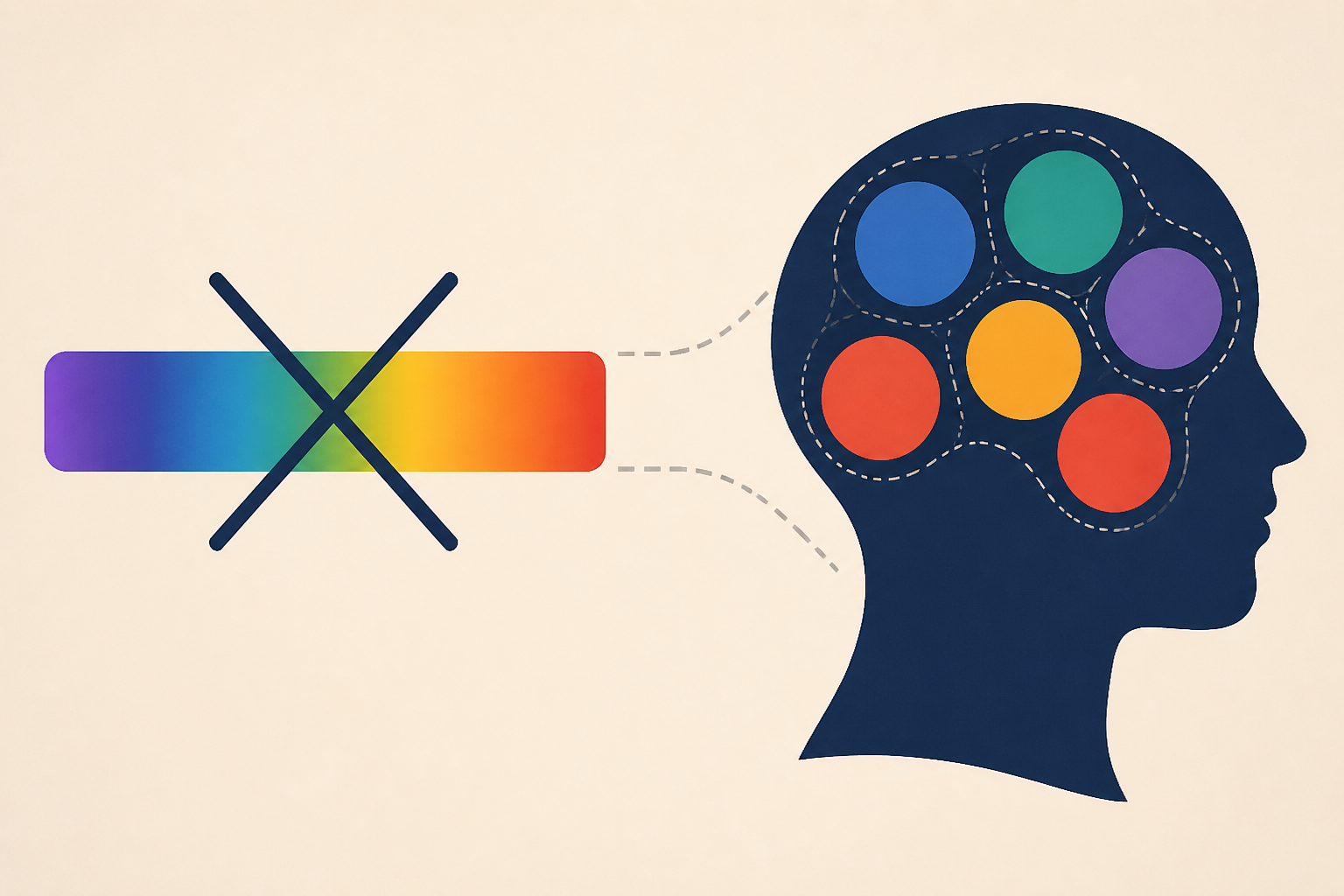
- Critics argue that the concept of a single autism spectrum, implying a linear scale from “mild” to “severe,” is misleading because autism manifests in diverse and unique combinations of traits that cannot be ranked on one continuum.
- Diagnostic categories like the American Psychiatric Association’s three levels of autism support needs are seen as vague and inconsistent, failing to reflect changes in individuals' real-world experiences or evolving support requirements over time.
- Labels such as “profound autism” and “Asperger’s syndrome” have been criticized for oversimplifying and dividing autistic people, with historical and ethical concerns surrounding the use of Asperger’s name due to its Nazi-era associations.
- There is concern that categorizing autistic people by severity risks dehumanization and harmful societal judgments, with some autistic advocates preferring direct language like “autistic” to emphasize autism as a difference rather than a defect.


