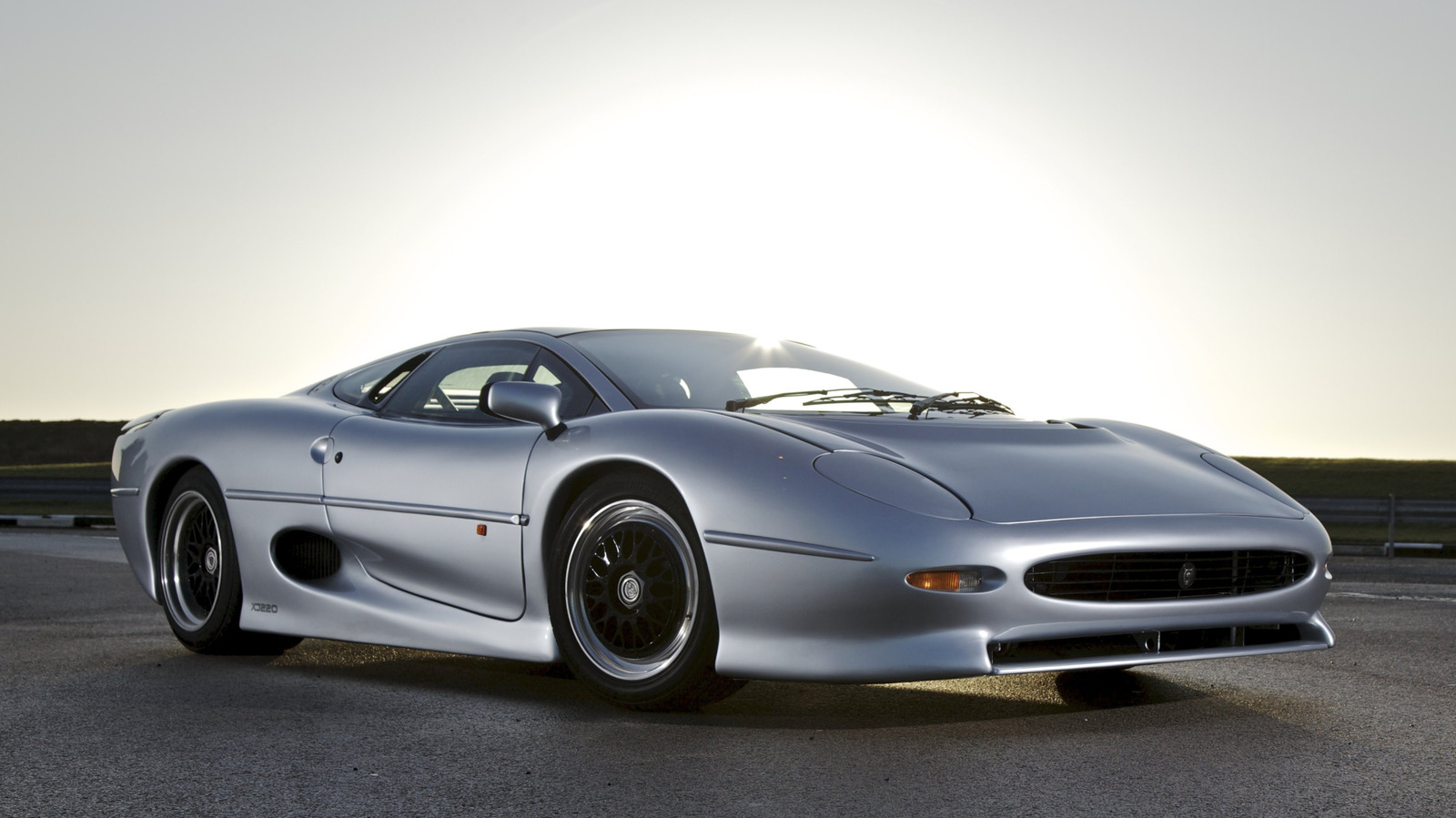
Why Did Jaguar Switch From A V12 To A Twin-Turbo V6 In The XJ220?
Jalopnik • • technology
Key Points:
- The Jaguar XJ220 was initially promised as a supercar with a powerful V12 engine, all-wheel drive, and a top speed of 220 mph, aiming to compete with icons like the Ferrari F40 and McLaren F1.
- Production models, however, featured a twin-turbocharged 3.5-liter V6 engine instead of the V12, rear-wheel drive instead of all-wheel drive, and a slightly lower top speed of 217 mph, leading to significant buyer disappointment and order cancellations.
- Due to emissions regulations, weight, and cost concerns, Jaguar stripped several planned features such as scissor doors, adaptive suspension, and four-wheel steering, producing only 281 of the planned 350 units, many of which remained unsold for years.
- Initially priced at over $1 million (adjusted for inflation), the XJ220's value plummeted within a decade but has recently rebounded, with average prices now exceeding $500,000 and top examples nearing $700,000.
- While the XJ220 never fully met its early promises, it is gradually gaining recognition as a remarkable supercar, though it remains less valuable than contemporaries like the Bugatti EB110 and McLaren F1.


