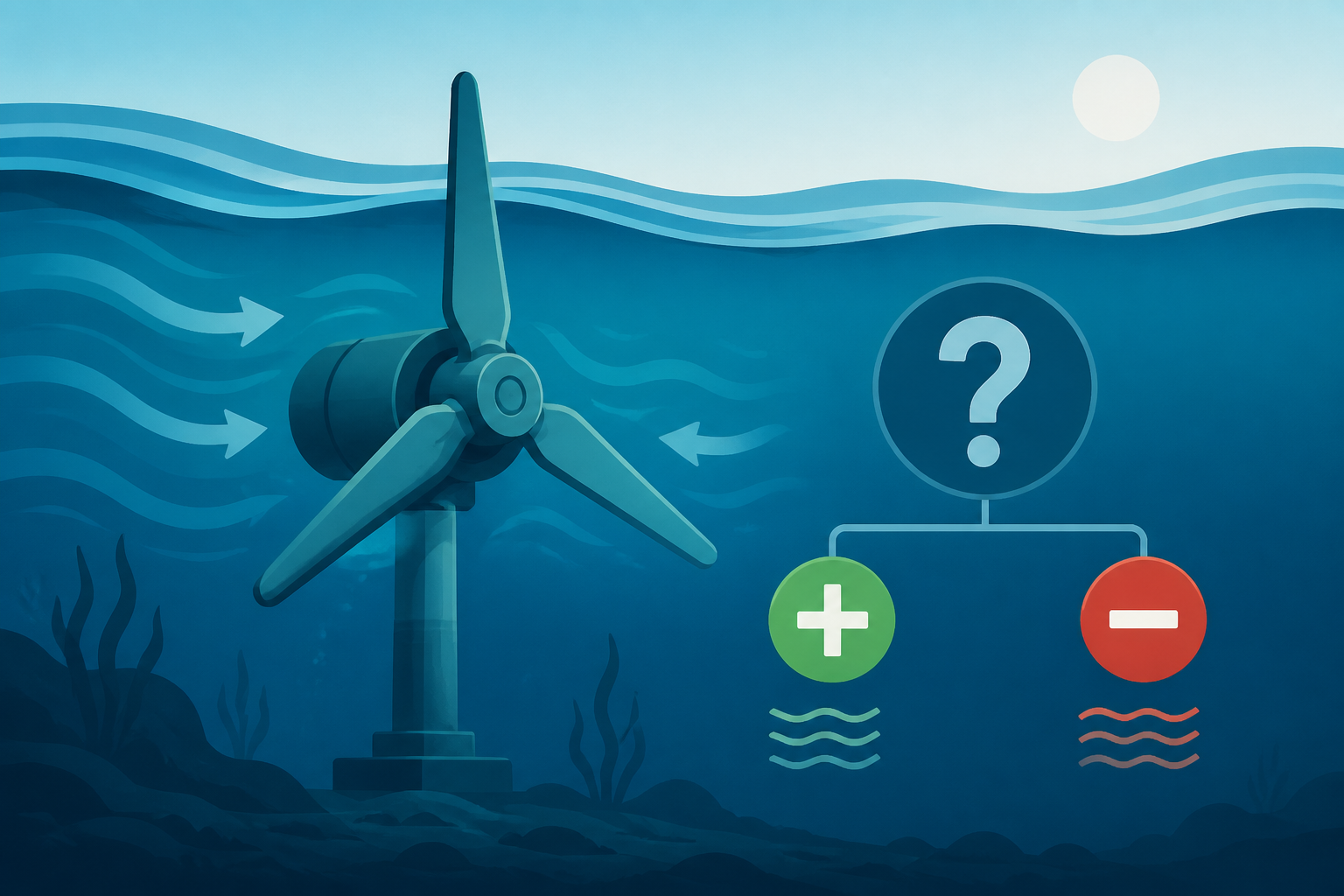
AI Generated Image
Why Don't We Put More Turbines Underwater? The Pros And Cons Of Tidal Energy
bgr.com • • technology
Key Points:
- Tidal energy harnesses the movement of ocean tides through underwater turbines, offering a renewable power source with minimal carbon emissions, similar to wind and solar energy but less commonly utilized worldwide.
- The advantages of tidal energy include its zero-carbon footprint, high power output due to water's density, and predictable tidal cycles, making it a reliable renewable resource compared to more variable wind and solar power.
- Challenges hindering tidal energy adoption include high upfront and operational costs, complex underwater installation, limited suitable coastal locations, and environmental concerns such as disruption to marine life and ecosystems.
- While tidal turbines produce substantial energy—South Korea's Sihwa Lake facility generates up to 254 megawatts—the intermittent nature of tides means tidal power cannot serve as a sole energy source and requires supplementary power or storage solutions.
- Environmental impacts from tidal turbines include displacement of marine creatures during construction, risks from turbine blades, noise pollution, and interference with marine animals' navigation due to electromagnetic fields, necessitating careful ecological consideration.


