AI Image
Why the ‘cold blob’ may collapse the weather system as we know it
The Independent • • world
Key Points:
- A large cold patch known as the "cold blob" or "warming hole" has formed in the North Atlantic south of Greenland, cooling nearly 1°C since 1900, contrary to global warming trends elsewhere.
- Scientists link this phenomenon to a slowdown in the Atlantic Meridional Overturning Circulation (AMOC), a key ocean current system that transports warm water northward and affects global climate patterns.
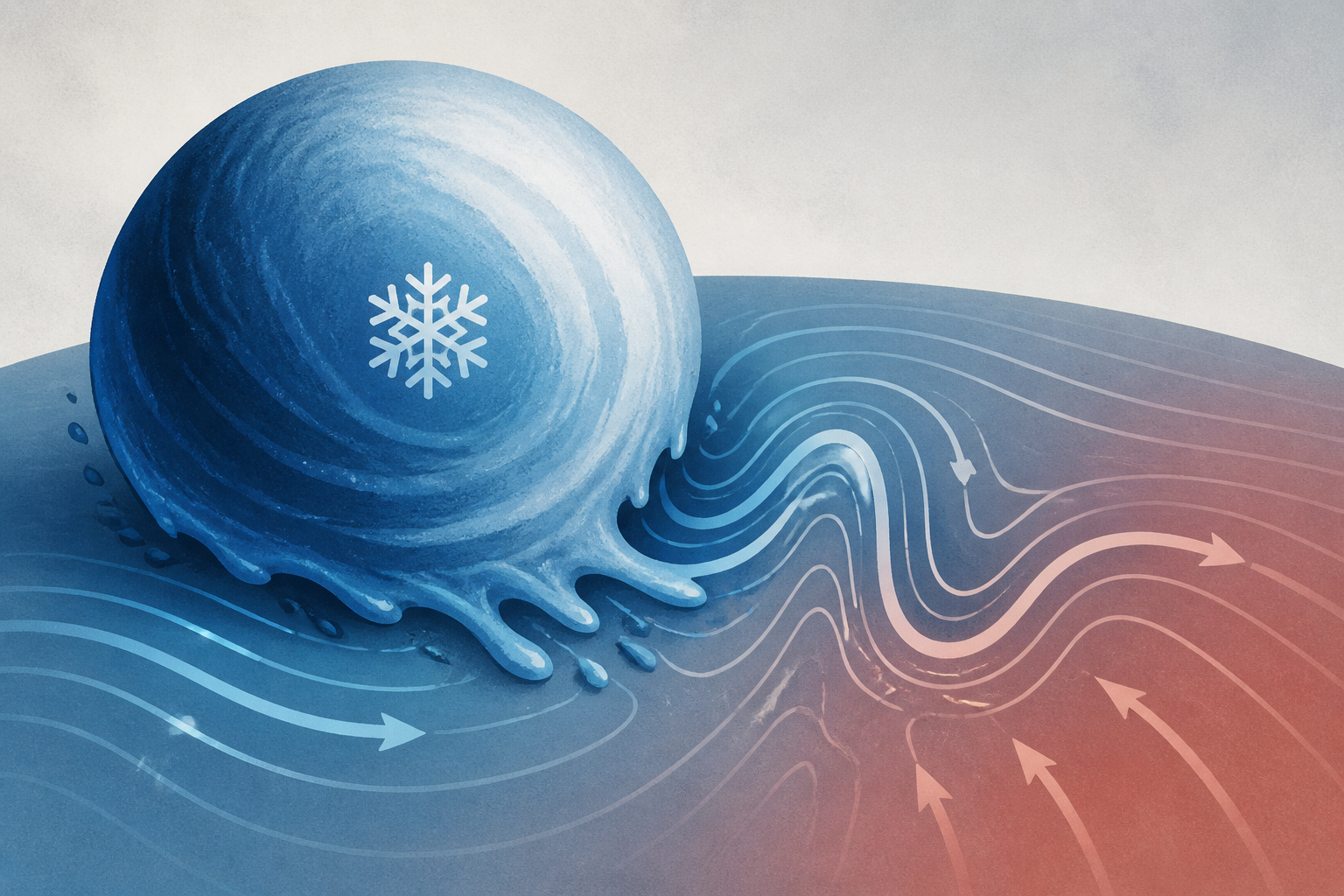
- The cold blob is influenced by melting Greenland ice, which releases cold, fresh water that disrupts the sinking of salty water, weakening the AMOC and altering weather systems, including the jet stream, leading to more extreme heatwaves and cold snaps in Europe.
- There is ongoing debate about the extent and timing of AMOC weakening or potential collapse, with climate models predicting a decline this century, but direct observational data remains limited and inconclusive.
- A collapse of the AMOC would have severe consequences, including intensified climate extremes, disrupted marine ecosystems, reduced ocean carbon absorption, and accelerated global warming, prompting scientists to urge immediate greenhouse gas emission reductions to mitigate this risk.


