AI Image
Why You Should Always Change Your Clothes After A Flight
HuffPost • • health
Key Points:
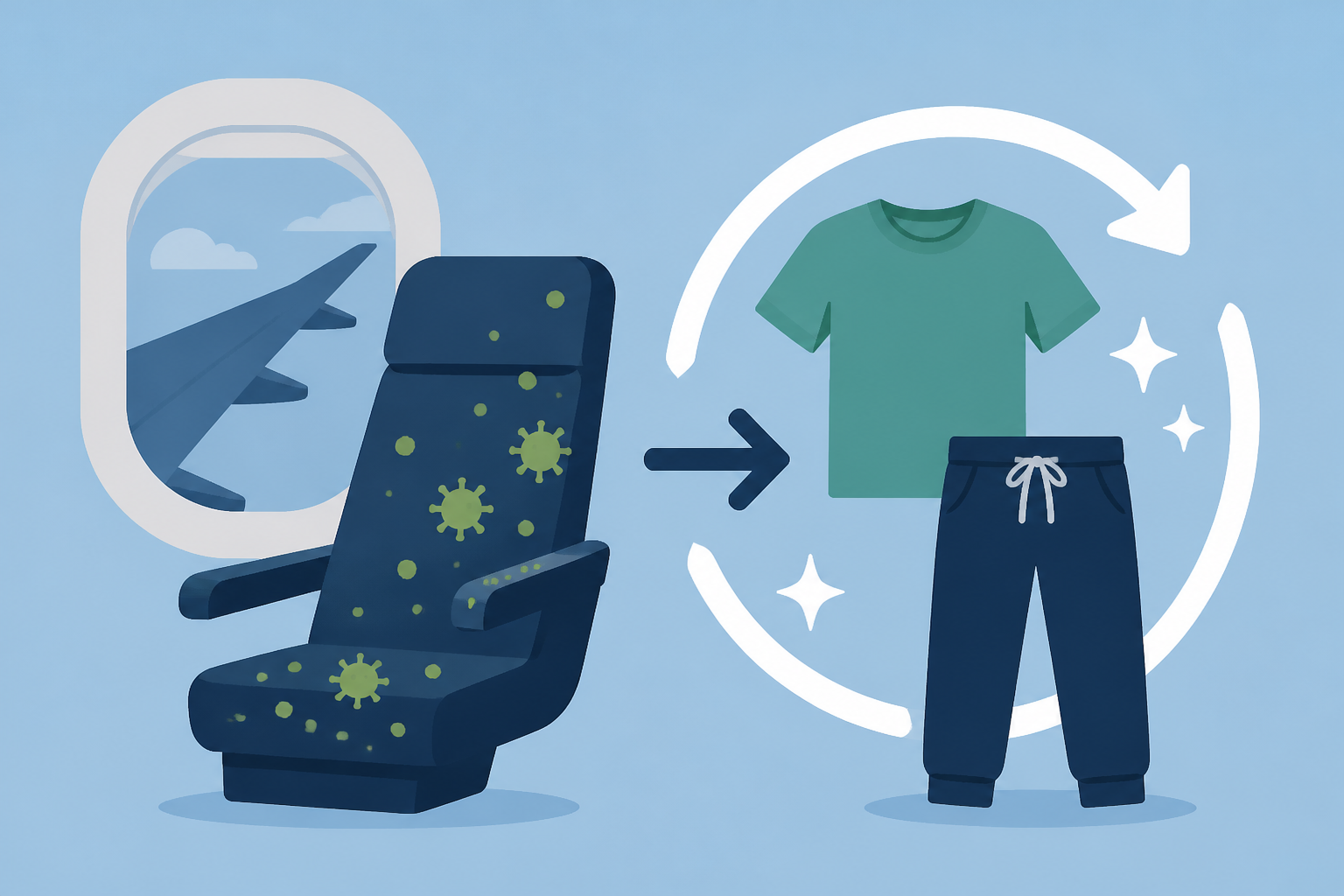
- Airplane surfaces such as tray tables, seat belts, and armrests frequently harbor microbes that can transfer to passengers' clothing, increasing the risk of germ exposure during flights.
- Despite HEPA filters on planes significantly reducing airborne particles, germs can still spread through close contact, respiratory droplets, and contaminated surfaces, especially when the air circulation is off during boarding or at the gate.
- Viruses and bacteria can survive on fabrics for hours to days, making clothing potential vectors for infection, particularly for respiratory illnesses like influenza and COVID-19.
- Experts recommend immediately removing and washing travel clothes upon returning home, using warm water and detergent, to reduce the risk of spreading germs to family members, pets, and household surfaces.
- Additional precautions include disinfecting high-touch personal items like phones and carry-on handles, washing hands frequently, showering after travel, and postponing flights if feeling unwell to minimize infection risks.


