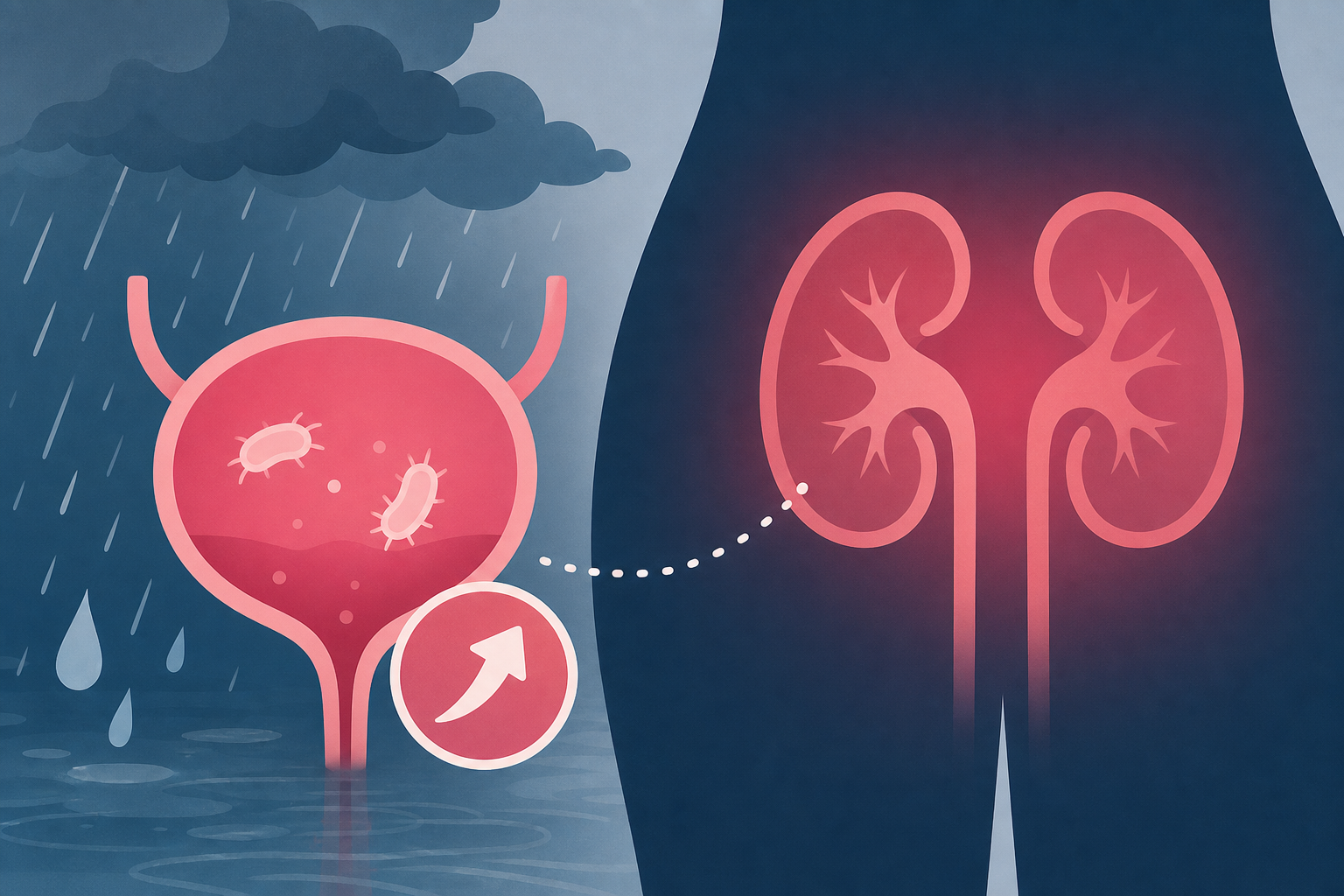
AI Generated Image
Why your risk of UTIs soars during the monsoon and how the infection could eventually reach your kidneys
The Times of India • • health
Key Points:
- The monsoon season's dampness and humidity create ideal conditions for bacterial growth, leading to an increase in urinary tract infections (UTIs), especially when combined with dehydration and delayed bathroom visits.
- Untreated UTIs can escalate into serious kidney infections (pyelonephritis), which may cause severe illness and permanent kidney damage, highlighting the importance of early diagnosis and treatment.
- People with diabetes and high blood pressure are at higher risk of complications from UTIs due to weakened immunity and stressed kidneys, necessitating careful disease management and regular health checkups.
- Preventive measures during the monsoon include staying well-hydrated, maintaining personal hygiene, changing out of wet clothes promptly, avoiding holding urine for long periods, and seeking medical attention if symptoms persist.
- Self-medication with antibiotics or painkillers without professional guidance can worsen kidney function, underscoring the need for following prescribed treatments and routine health monitoring to detect kidney issues early.


