AI Generated Image
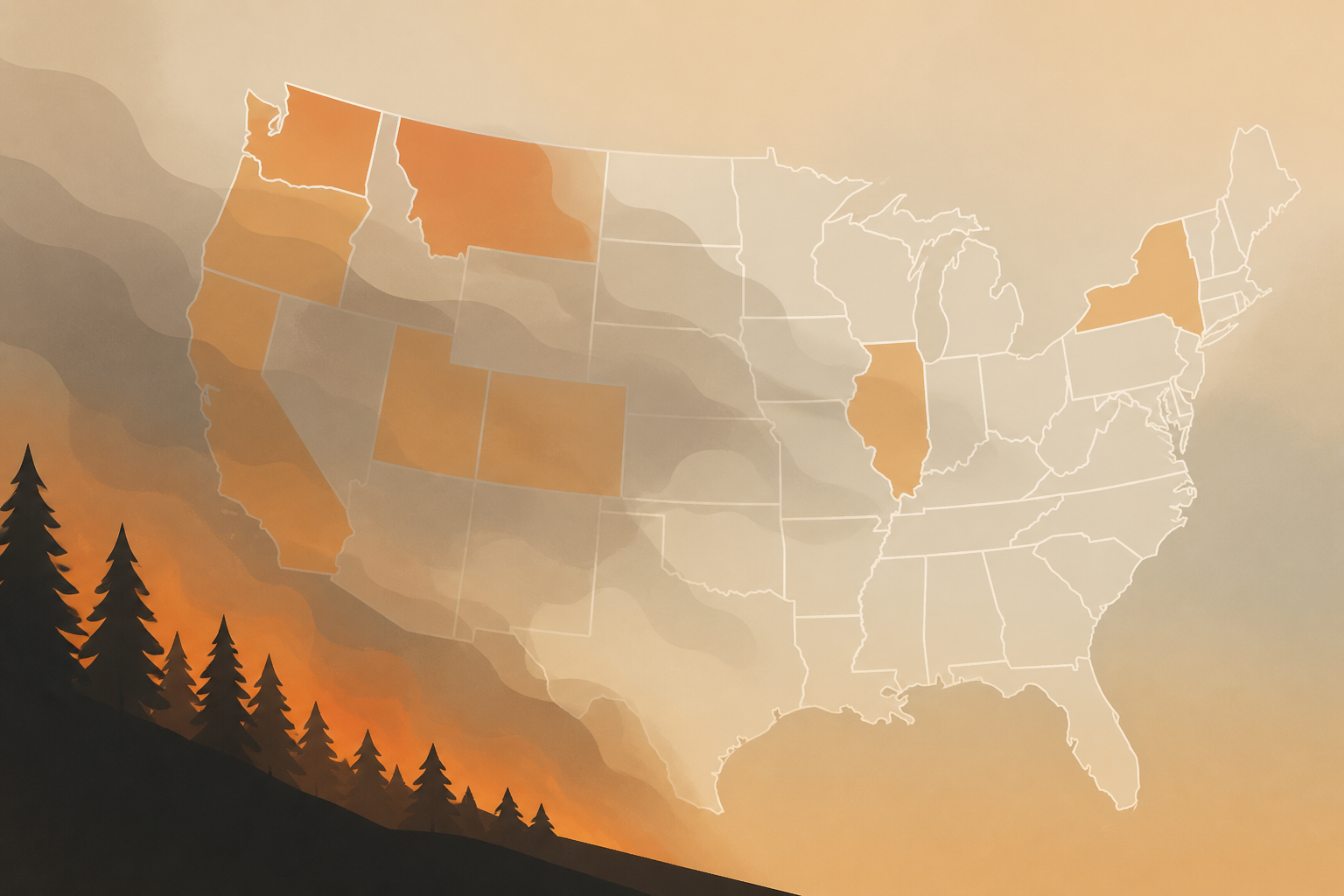
Wildfire smoke is blanketing parts of the U.S. again this week. These are the most affected states.
Yahoo • • nation
Key Points:
- Smoke from numerous large wildfires in the Pacific Northwest is causing hazy skies and unhealthy air conditions across a broad area of the U.S., with the plume expected to reach as far as Florida.
- As of Monday, 46 large uncontained fires in Oregon and Washington, plus over 17 in British Columbia, have burned more than 1.6 million acres, leading to very unhealthy air quality, especially near Boise, Idaho, and parts of eastern Oregon and southern Idaho.
- The severe wildfire smoke is driven by environmental factors including a historically warm winter, reduced snowpack, and prolonged heat waves, all contributing to drier conditions that fuel fires; climate change is considered a significant contributing factor.
- Wildfire smoke contains harmful fine particulate matter that can penetrate deep into the lungs and bloodstream, posing serious health risks, especially to sensitive groups such as those with heart or lung conditions, older adults, and children.
- Health experts recommend minimizing outdoor exposure, using N95 respirator masks when outside, keeping windows and doors closed indoors, and using air conditioning on recirculate mode or air filters to reduce smoke inhalation.


