AI Image
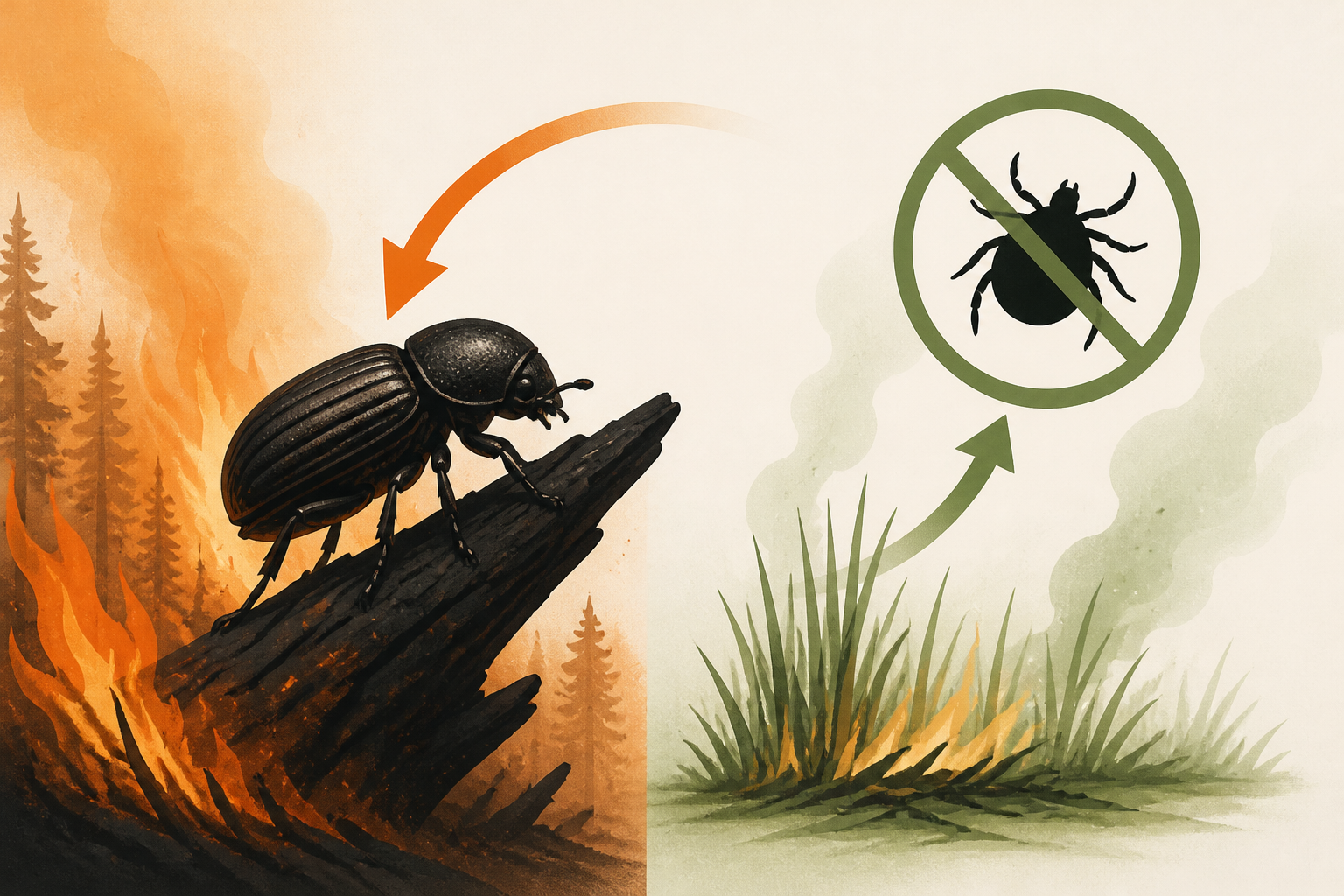
Wildfires attract thousands of these beetles while controlled burns kill ticks
FOX Weather • • science
Key Points:
- Fire beetles of the genus Melanophila are attracted to wildfires by detecting infrared radiation and use freshly burned wood to lay their eggs, often appearing in large numbers shortly after fires, as seen after the Spokane Complex fires in Washington.
- These beetles can sometimes bite humans, mistaking warm skin for charred wood, though their bites only cause stinging due to their tree-chewing mandibles.
- In contrast to fire beetles, ticks do not survive wildfires well, especially prescribed or controlled burns, which reduce the shaded, damp environments ticks need and can decrease tick populations by over 75% with repeated burns.
- Prescribed fires, conducted every two to four years over a decade or more, have been shown to reduce tick encounters carrying pathogenic bacteria by up to 98%, helping lower the risk of Lyme disease spread.
- The resurgence of ticks is linked to decades of fire suppression, which created favorable environments for ticks, contributing to a rise in tick-related emergency visits and Lyme disease cases; controlled burns offer a landscape-level method to reduce these risks.


