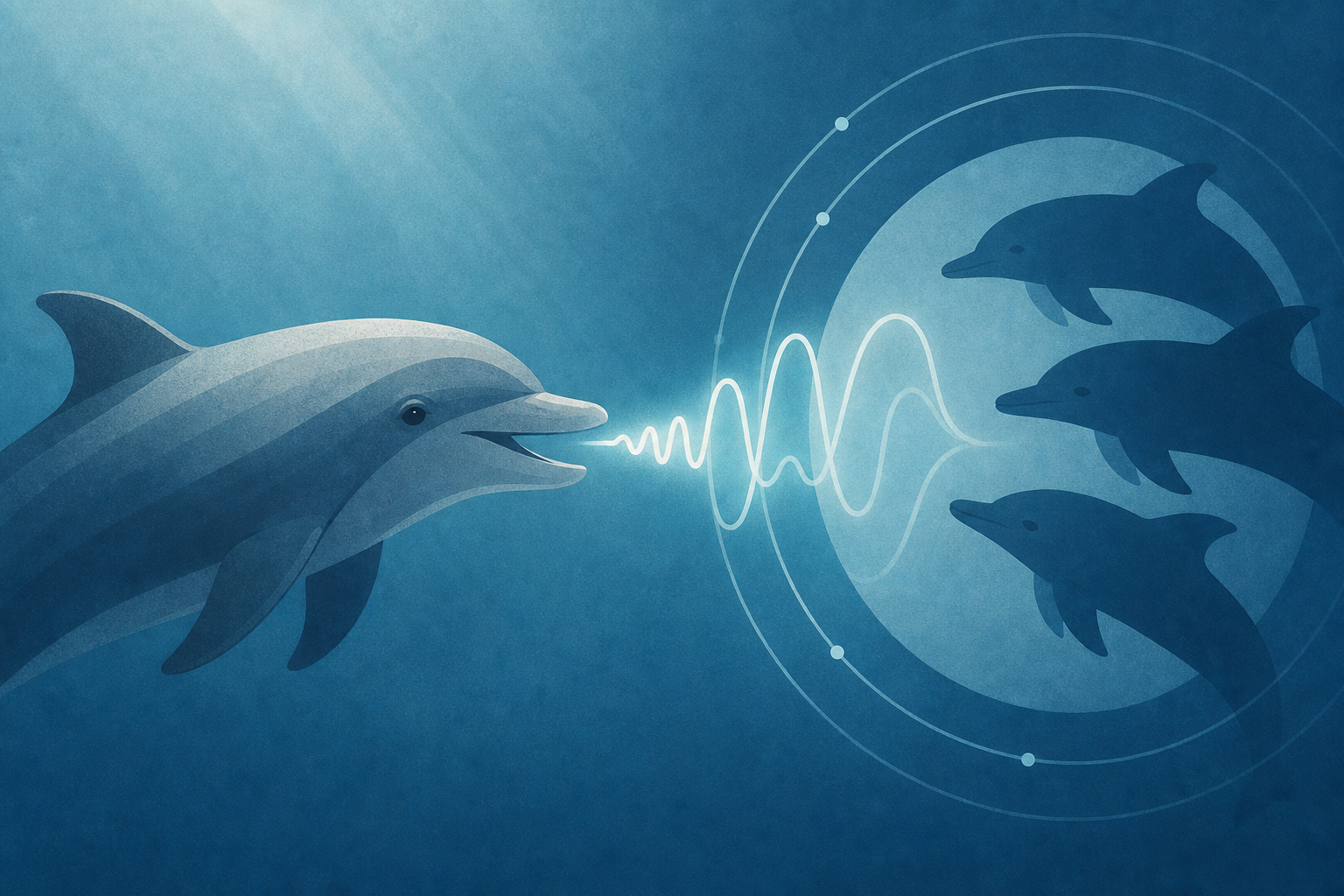
AI Generated Image
Within the first few months of life, every bottlenose dolphin invents a unique whistle that becomes its name for the rest of its life — and other dolphins learn that whistle, remember it, and use it t
Space Daily • • science
Key Points:
- Prior to the 1960s, the idea that non-human animals use personal names was dismissed because names require complex cognitive abilities thought unique to humans, including vocal learning, symbolic representation, long-term memory, social referential use, and recognition of names regardless of speaker.
- Research starting in 1965 by Melba and David Caldwell identified "signature whistles" in bottlenose dolphins—unique, stable frequency-modulated whistle patterns produced by individual dolphins, functioning as learned, deliberate acoustic signals rather than random vocalizations.
- A 2006 study by Vincent Janik and colleagues demonstrated that dolphins recognize these signature whistles as individual identity labels independent of the voice producing them, establishing that the whistles function as referential names rather than mere voice recognition.
- Dolphins primarily use their own signature whistles for self-identification and location signaling within pods, constituting about 30% of their social vocalizations; notably, they also copy others' signature whistles to address specific individuals, similar to humans calling someone by name to gain attention.
- These findings collectively establish bottlenose dolphins as the first non-human species documented to use personal names, challenging previous assumptions about the uniqueness of human naming and symbolic communication.


