AI Generated Image
World's oldest lab-grown human brains grow for seven years recording 'passage of time'
New York Post • • health
Key Points:
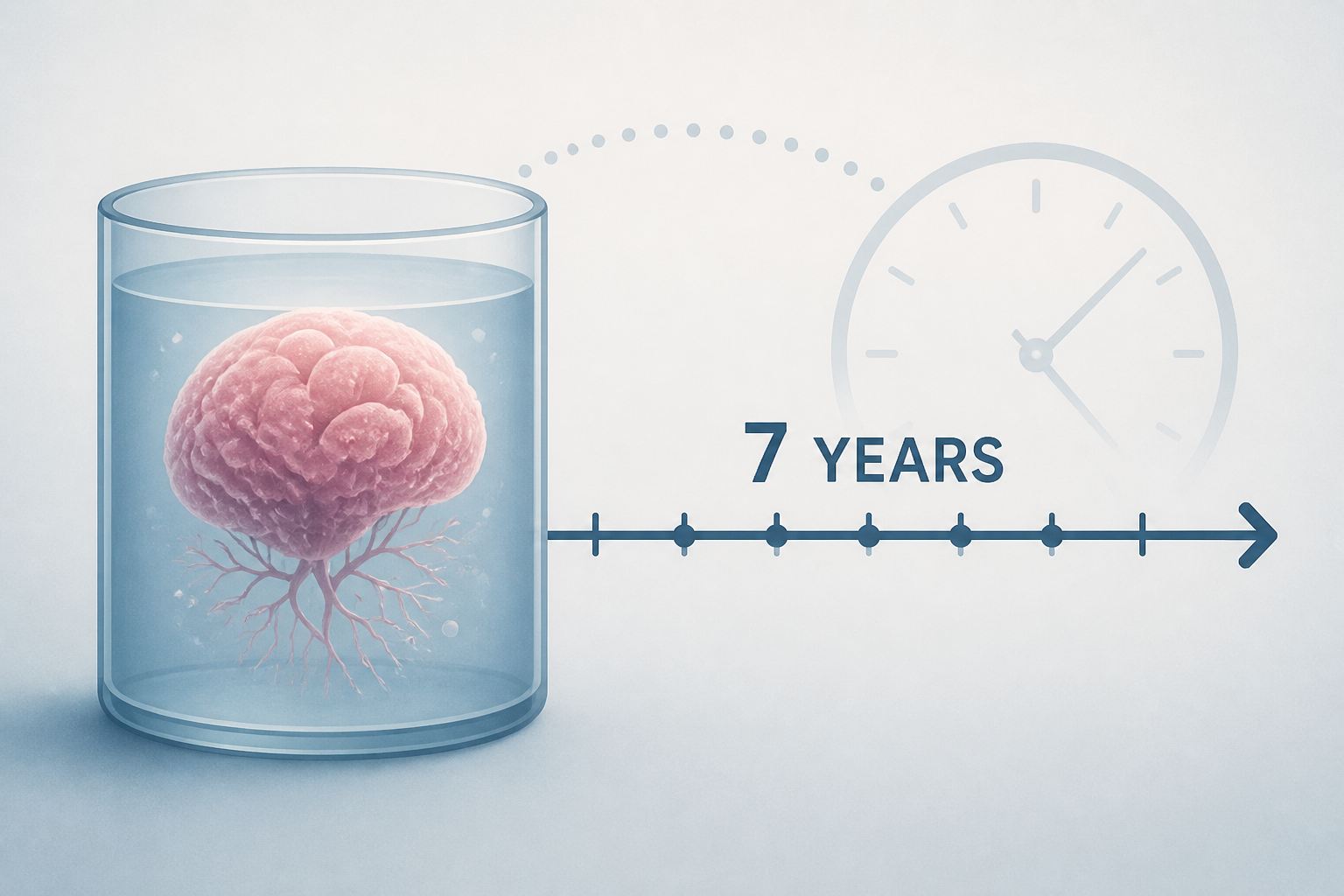
- Harvard scientists have developed the world's oldest lab-grown human brain organoids, with some cells surviving and developing for around seven years, surpassing the previous record of 694 days.
- These organoids, tiny 3D clusters of brain cells, showed developmental patterns and DNA methylation profiles similar to those of human brains, effectively "recording" their biological age.
- The research demonstrated that older cells in the organoids could accelerate development when combined with younger cells, revealing a unique "time-warping" effect in brain cell maturation.
- Typically, organoids die within two years due to lack of oxygen and blood vessels, but this study suggests potential for longer lifespans and offers a new model for studying brain development and diseases.
- The breakthrough has implications for understanding neurological conditions like Alzheimer's and schizophrenia, as organoids can be used to model disease progression and test treatments.


