AI Image
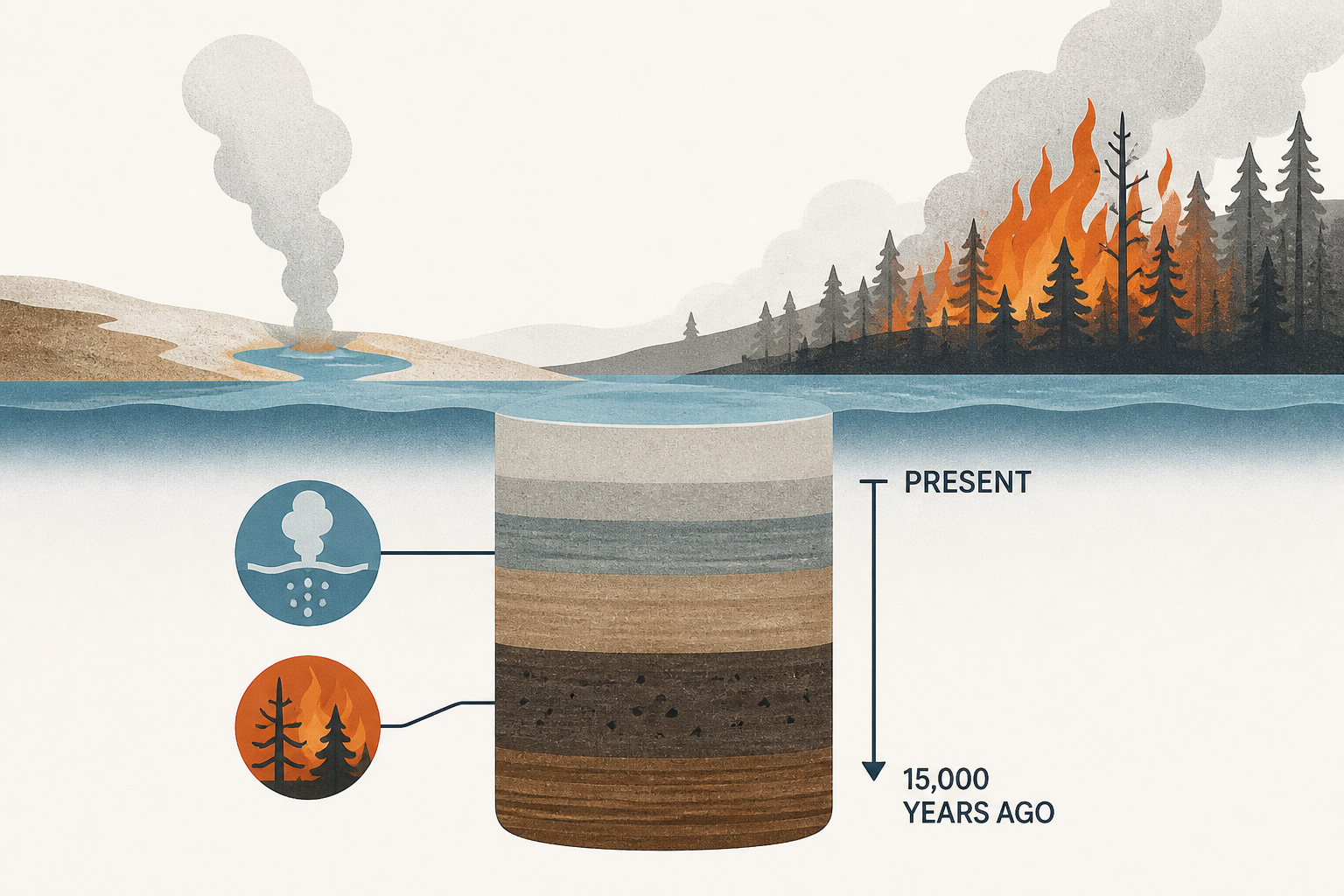
Yellowstone lake sediments reveal 15 000 years of hydrothermal and wildfire change
The Watchers - Watching the world evolve and transform • • general
Key Points:
- A study published in PNAS on August 17, 2026, reconstructed environmental conditions in Yellowstone’s largest thermal area since the last glaciation by analyzing sediment records from five lakes and comparing them with regional paleoclimate simulations.
- The research found that hydrothermal input, indicated by arsenic concentrations in lake sediments, was higher during wetter periods and lower during dry intervals with reduced snowpack, affecting the activity of Yellowstone’s hydrothermal features.
- Between 12,000 and 6,000 years ago, summer temperatures were 2.6–2.7°C warmer and moisture availability was significantly lower, leading to increased wildfire activity, as evidenced by charcoal particles in lake sediments, with the highest fire activity spanning approximately 12,000 to 4,000 years ago.
- Despite variations in hydrothermal input, wildfire activity, and lake conditions, lodgepole pine forests established around 12,800 to 11,000 years ago remained relatively stable, likely due to nutrient-poor rhyolitic soils limiting vegetation changes.
- The study highlights the influence of deglaciation and cyclical changes in Earth’s orbit on seasonal climate variations, hydrothermal activity, and wildfire patterns, but does not provide forecasts or recurrence intervals for future hydrothermal explosions.


