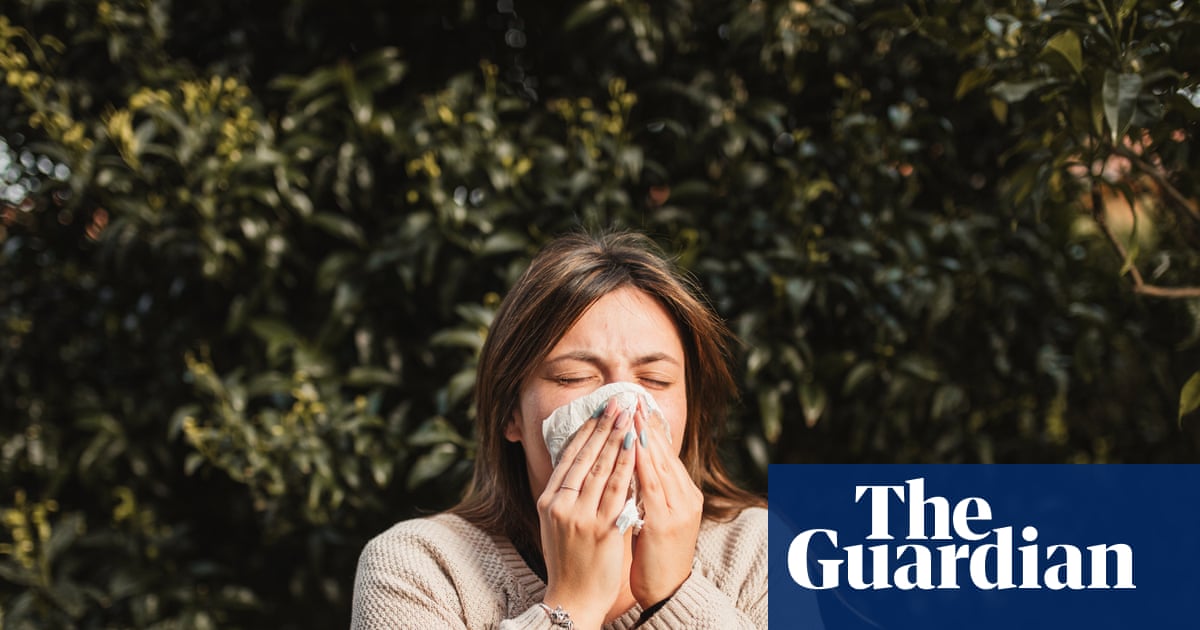
Yes, allergy season has already started. Here’s how to manage symptoms
The Guardian • • general
Key Points:
- Allergy seasons are becoming longer and more intense due to warmer, shorter winters and climate change, resulting in earlier and extended pollen release from plants; pollen seasons in North America are now 20 days longer than in 1990.
- Seasonal allergies, affecting about 26% of adults in the US and UK and significant percentages of children, cause symptoms such as itchy eyes, sneezing, nasal congestion, and respiratory irritation, with new allergies potentially developing even in adulthood.
- Over-the-counter treatments like antihistamines, decongestants, nasal sprays, and eye drops can help manage symptoms but require proactive and consistent use; misuse of decongestants can worsen symptoms and should be used cautiously.
- Lifestyle measures to reduce pollen exposure include keeping windows closed, using air conditioning and purifiers, wearing masks outdoors during high pollen counts, and changing clothes and showering after being outside.
- If symptoms persist despite these measures, consulting an allergist is recommended, as they can offer advanced treatments such as allergy immunotherapy for longer-term relief.


