AI Image
You can see another galaxy with the naked eye - here's how to find it
Space • • science
Key Points:
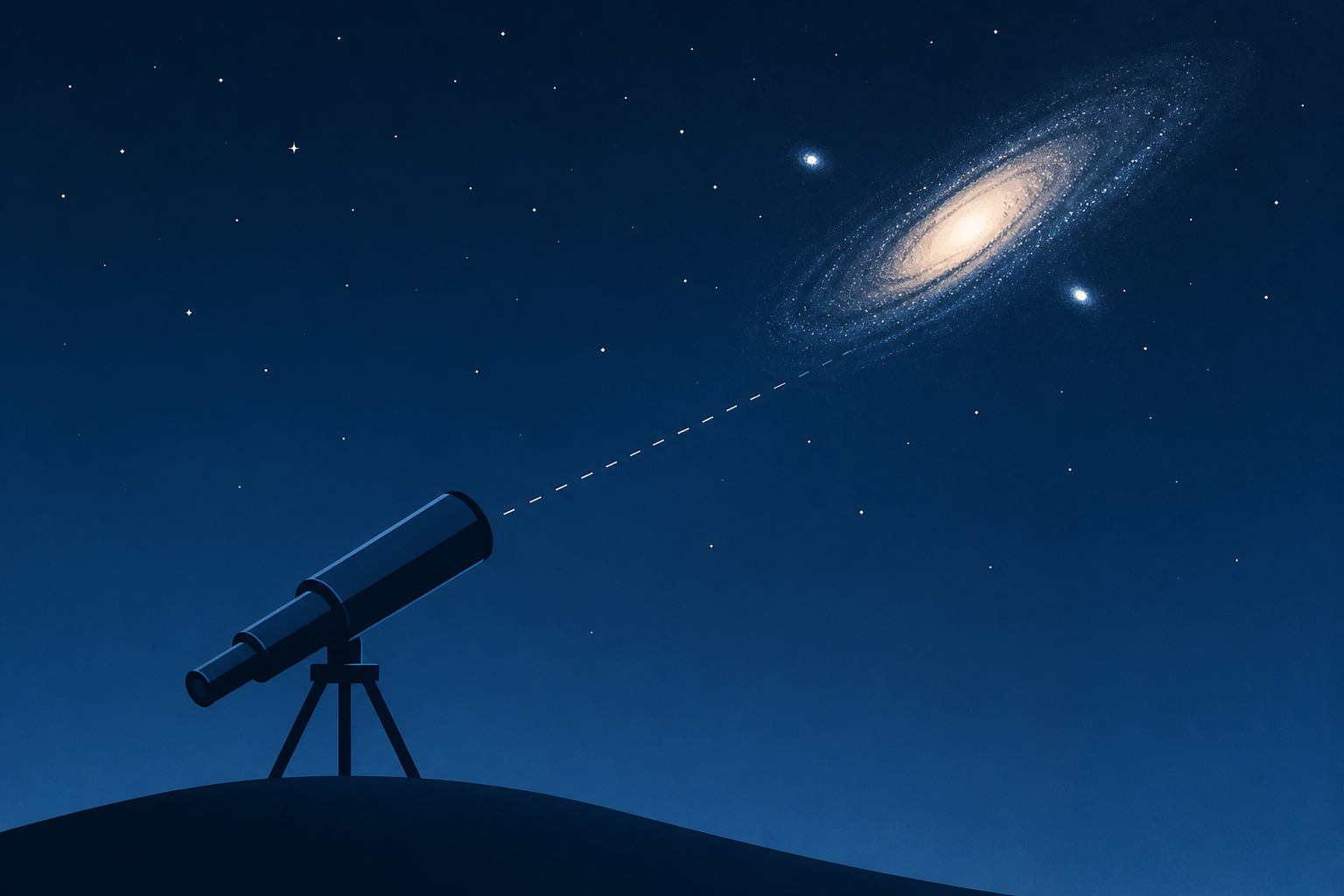
- The Andromeda Galaxy (M31), the closest giant galaxy to the Milky Way, appears as a faint, grayish smudge to the naked eye or through binoculars, contrasting with its vivid photographic images; this light has traveled approximately 2.5 million years to reach observers.
- Early November is an ideal time to observe M31 from the Northern Hemisphere, especially around the New Moon on November 9, when darker skies enhance visibility of faint deep-sky objects.
- To locate Andromeda, stargazers can start from the Great Square of Pegasus or the W-shaped Cassiopeia constellation, using star-hopping techniques and binoculars to better see the galaxy's bright central region.
- Using averted vision—looking slightly away from the object—can help detect the faint light of M31, making binoculars a practical tool for observation amid light pollution.
- The week of November 6-12, 2026, offers excellent conditions for deep-sky viewing, including the Andromeda Galaxy, the Double Cluster in Perseus, and the Northern Taurid meteor shower, which peaks overnight on November 11-12.


