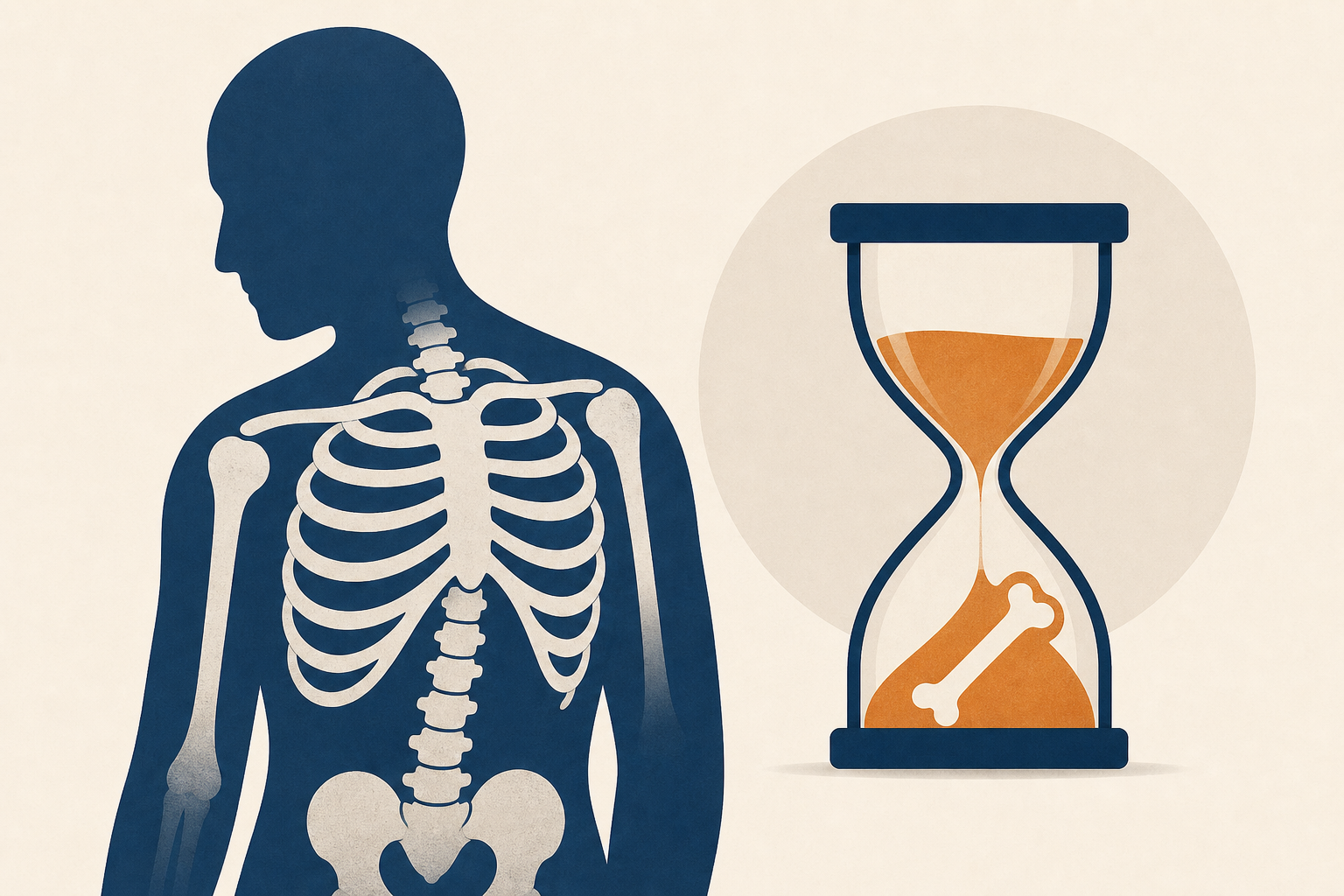
AI Generated Image
You need to think more about your skeleton before it's too late
New York Post • • health
Key Points:
- Peak bone mass is reached by the late teens to early 30s, after which bone density gradually declines, making early adulthood a critical period for bone health maintenance.
- Bone loss is often symptomless until advanced stages, with subtle signs including vitamin D and calcium deficiencies, height loss, hunched posture, and increased fracture risk in older adults.
- Postmenopausal women are at highest risk for osteoporosis due to estrogen decline, while other risk factors include low body weight, smoking, heavy alcohol use, inactivity, corticosteroid use, inflammatory diseases, and family history.
- Preventing bone loss involves a healthy lifestyle with adequate protein intake, resistance and weight-bearing exercises, avoiding smoking and sedentary habits, and supplementing calcium and vitamin D if deficient.
- Bone loss prevention requires consistent long-term effort, as there is no quick fix or "magic pill" to reverse the condition once it progresses.


