AI Generated Image
3 moons of Neptune may be remnants of ice worlds shattered in a catastrophic crash
Space • • science
Key Points:
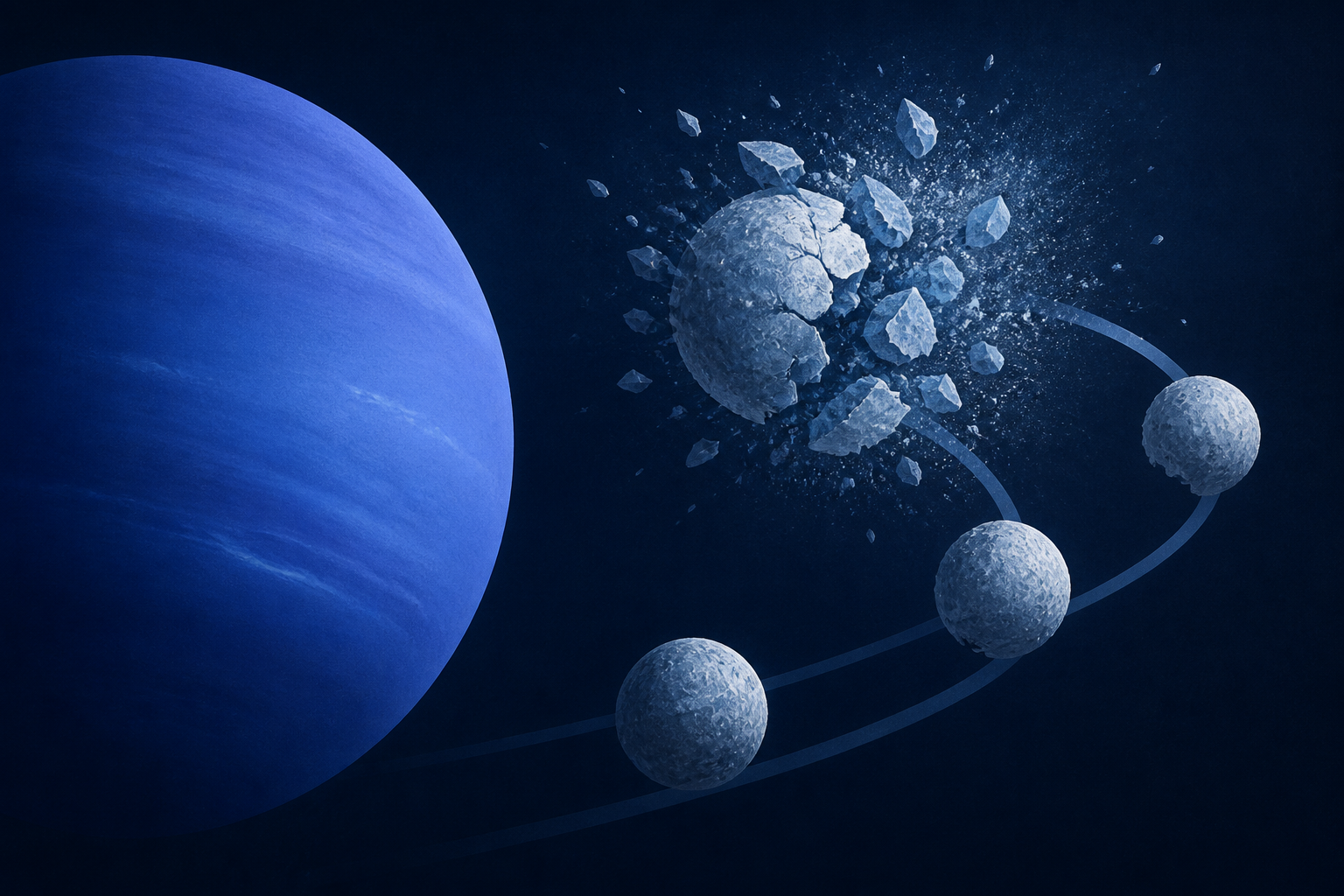
- A new study suggests that three of Neptune's inner moons—Larissa, Galatea, and Proteus—may have formed from the remnants of ancient icy worlds shattered by Neptune's largest moon, Triton, which was likely captured from the outer solar system.
- Using the James Webb Space Telescope, researchers detected magnesium-rich clay minerals on Larissa and Galatea, indicating these moons contain material from deep inside large icy bodies that underwent significant heating, a surprising finding for objects in the outer solar system.
- The presence of these clay minerals implies that Triton's capture and subsequent collisions destroyed Neptune's original moons, with debris reassembling into the current inner moons; however, no water ice was detected on these moons, raising questions about the fate of the ice.
- Proteus, the largest of the three moons studied, did not show evidence of clay minerals, possibly due to forming from different debris or later heating processes, and all three moons along with Neptune's rings contain an unidentified hydrated mineral requiring further laboratory study.
- Scientists emphasize the need for a dedicated spacecraft mission to Neptune to better understand its moons and history, as only one flyby (Voyager 2 in 1989) has occurred, and such missions are prioritized but require significant time and resources.


