AI Image
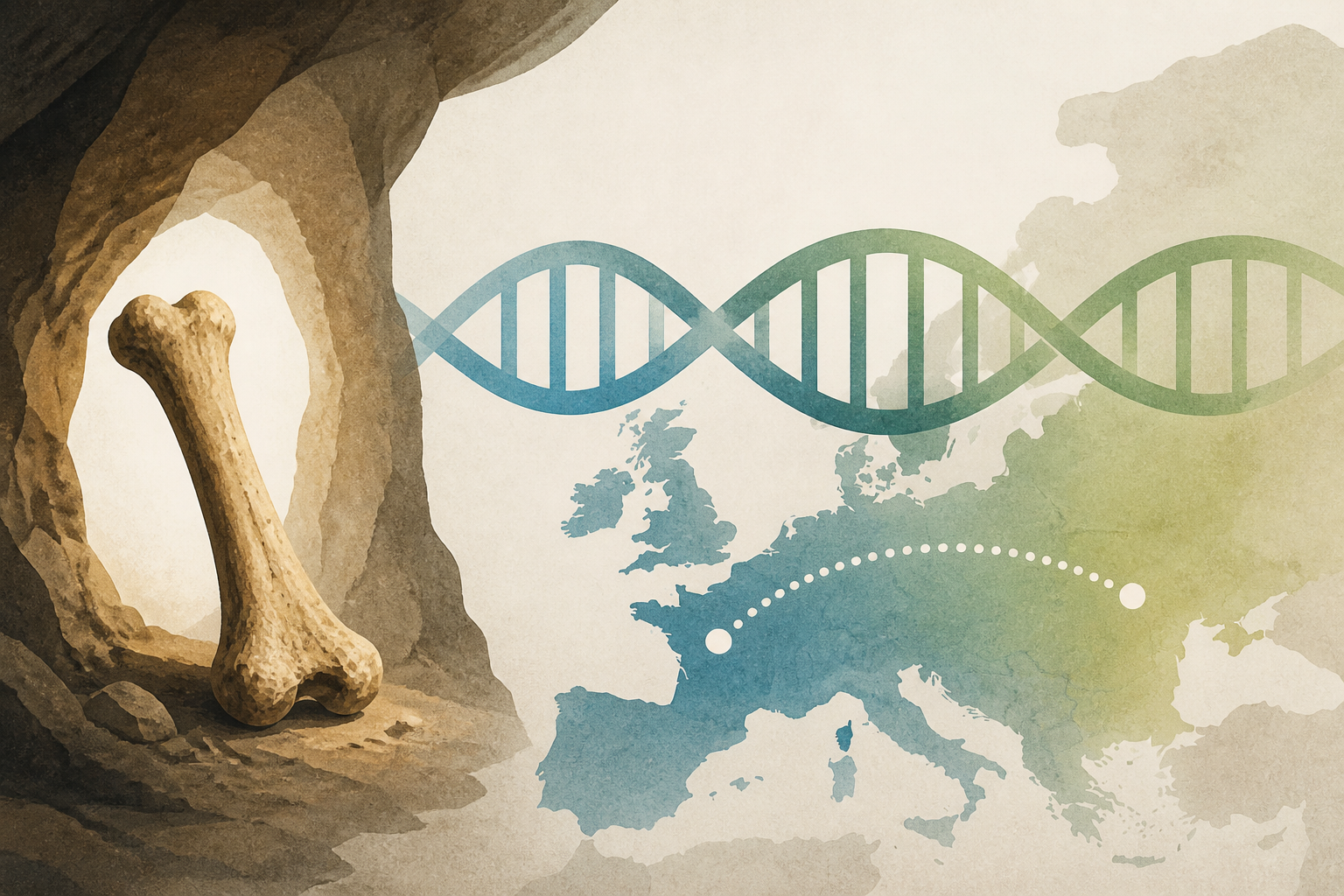
30,000-year-old bone found in French cave reveals vast genetic connections between people of Eastern and Western Europe during the Stone Age
Yahoo • • science
Key Points:
- Scientists sequenced genomes of three Late Stone Age individuals from Europe, revealing closer biological ties between Western and Eastern European groups during the Gravettian period (34,000 to 25,000 years ago) than previously thought.
- The discovery of mixed genetic ancestry in a woman from Isturitz Cave in southwestern France indicates gene flow from Eastern Europe around 31,500 to 32,500 years ago, suggesting population movements and exchanges during the last ice age.
- Isturitz Cave, occupied intermittently from 80,000 to 10,000 years ago, likely served as a critical cultural and biological hub connecting continental Europe and the Iberian Peninsula during the Late Stone Age.
- The genomes showed traits such as dark skin, hair, and eyes, and evidence that these populations avoided close inbreeding, indicating complex and dynamic population structures in Western Europe during the Gravettian period.


