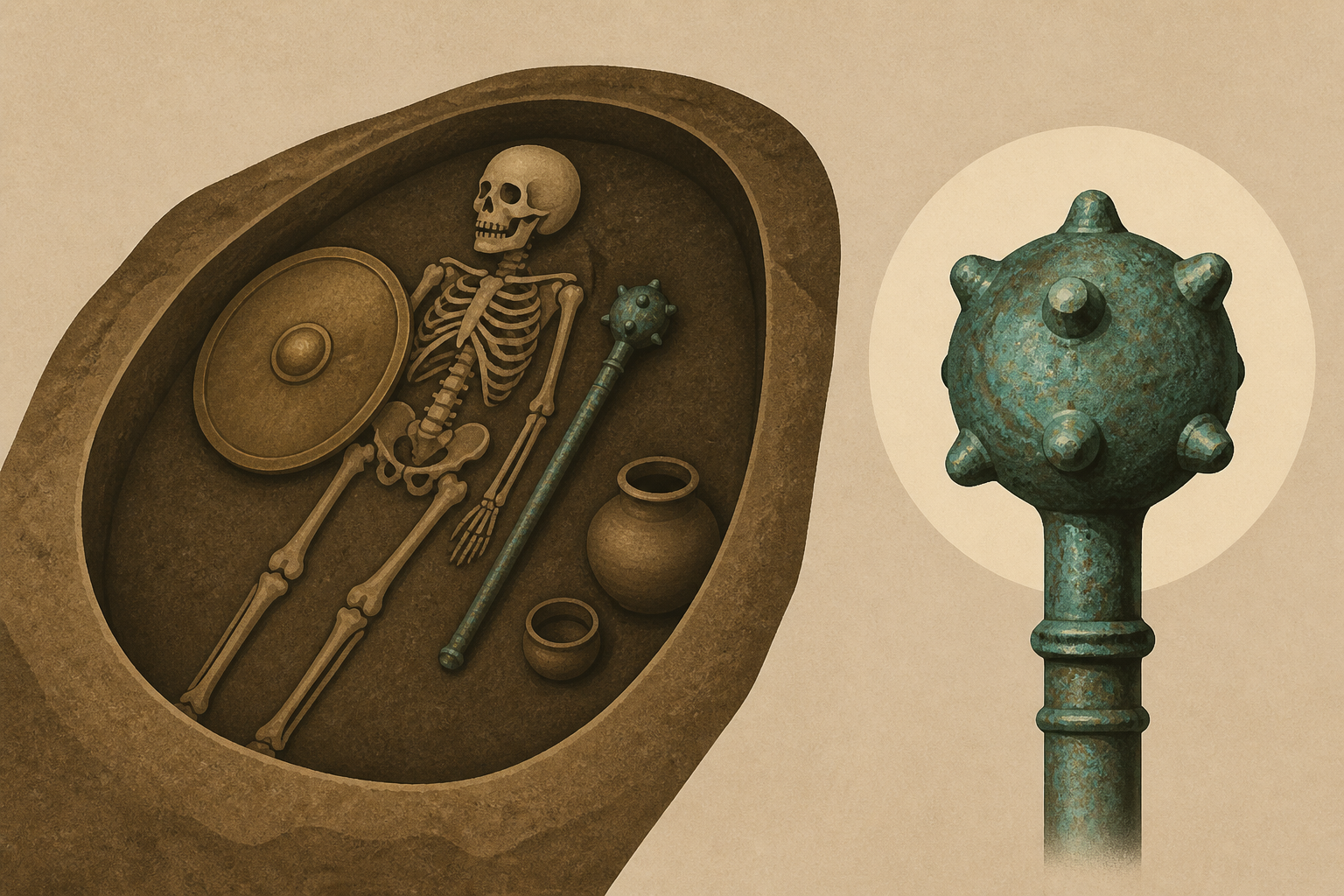
AI Generated Image
3,600-year-old burial of a high-ranking warrior with rare mace head found in Azerbaijan
Archaeology News Online Magazine • • world
Key Points:
- Archaeologists uncovered a 3,600-year-old burial in western Azerbaijan's Keshikchidagh Reserve, revealing weapons and artifacts linked to a high-ranking Bronze Age warrior dating back to the 17th-16th centuries BCE.
- Key finds include a rare diorite stone mace head, a bronze dagger, and several types of arrowheads made from obsidian and flint, indicating advanced craftsmanship and the social status of the buried individual.
- The mace head, with a drilled hole for a handle, symbolizes military leadership and elite status, reflecting both practical and symbolic roles in Bronze Age society.
- The discovery provides insights into the social and military structures of Bronze Age communities in the South Caucasus, highlighting the importance of weapons and authority symbols.
- The excavation is part of a collaborative archaeological project involving specialists and students, with plans for further analysis, radiocarbon dating, and restoration to deepen understanding of the region's ancient history.


