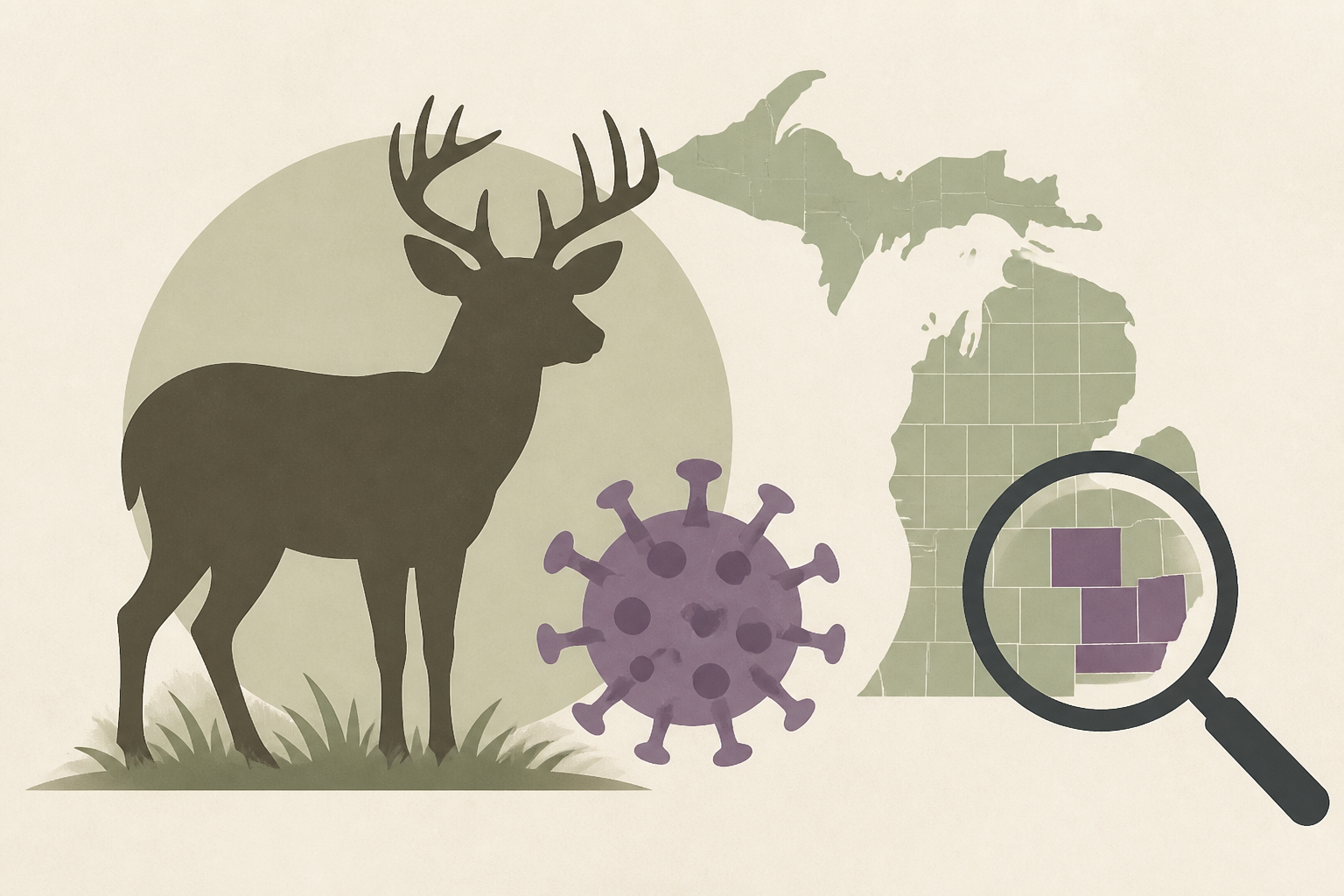
AI Generated Image
EHD virus detected in deer from 4 Michigan counties -- here’s what to know
ClickOnDetroit | WDIV Local 4 • • health
Key Points:
- The Michigan Department of Natural Resources (DNR) has detected epizootic hemorrhagic disease (EHD) virus in free-ranging white-tailed deer from four counties: Branch, Ingham, Jackson, and Lenawee.
- EHD is a viral disease transmitted by infected midges or biting flies, affecting deer primarily in late summer and early fall, with outbreaks linked to specific weather patterns.
- There is no evidence that EHD can infect humans, pets, or other wildlife, and venison from healthy deer in affected areas remains safe to eat.
- The DNR encourages reporting of sick or dead deer exhibiting symptoms such as lethargy, disorientation, or bloody discharge through its Eyes in the Field online system for testing and monitoring.
- While EHD can cause intense local deer mortality, it typically does not have a major long-term impact on overall deer populations in Michigan, as not all deer in affected areas contract or die from the disease.


