AI Image
5 ways countries stymie climate negotiations without actually saying ‘no’
The Conversation • • world
Key Points:
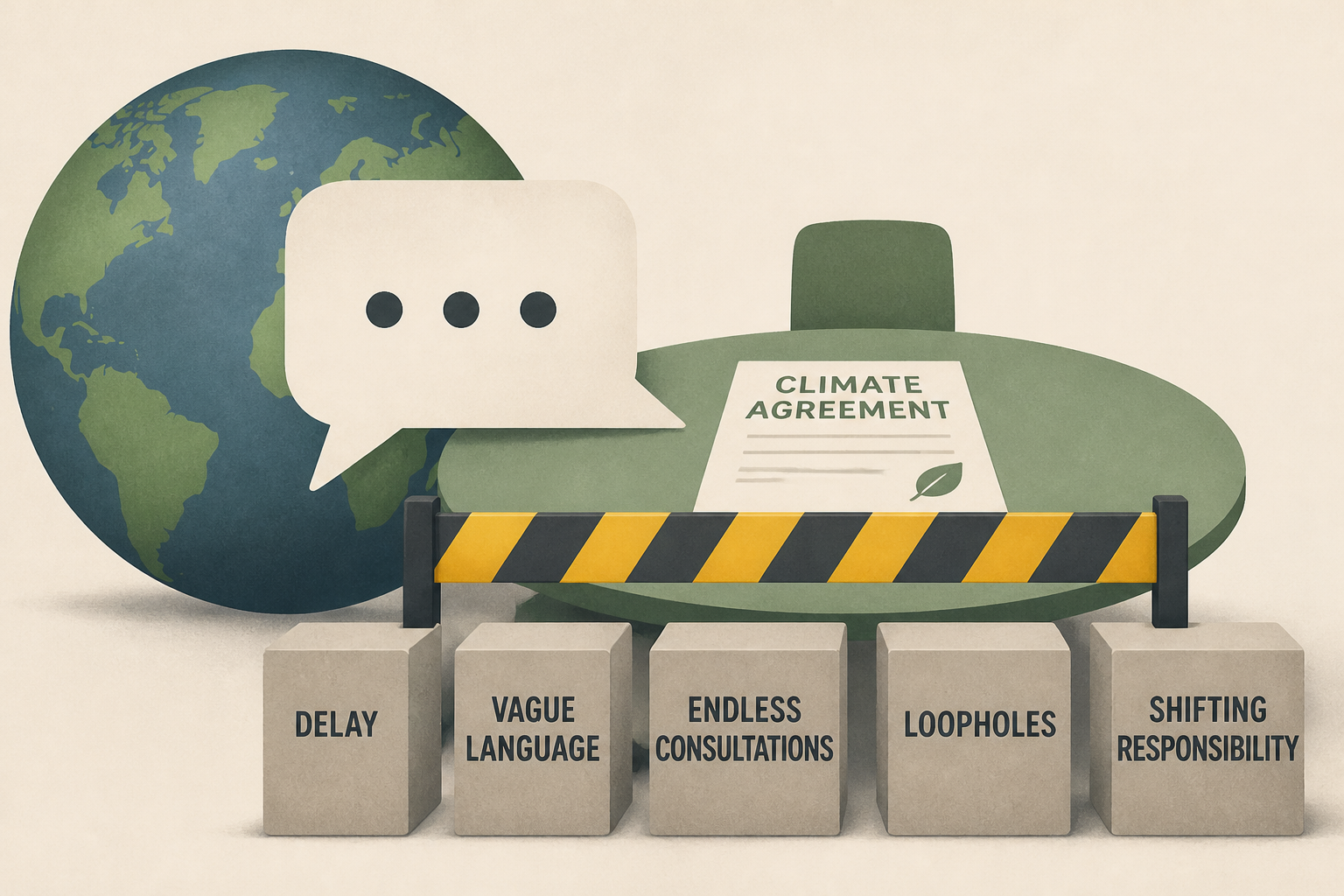
- Despite global acknowledgment of climate change as a serious issue, greenhouse gas emissions continue to rise, with international negotiations often resulting in weak commitments due to obstructive tactics by some countries.
- Wealthy nations frequently claim financial constraints to avoid fulfilling large climate aid promises to developing countries, despite evidence of substantial spending on fossil fuels and military budgets that contradict these claims.
- Common tactics at climate talks include relying on future technological fixes to delay emissions cuts, watering down binding language on fossil fuel reduction, making unfulfilled financial pledges, and excluding key voices by rushing consensus decisions.
- The 2026 U.N. climate conference (COP31) in Turkey is expected to reveal ongoing struggles over financial support, the balance between technology and fossil fuel reduction, and equitable participation in decision-making processes.
- Much of the real negotiation happens behind closed doors among a few delegations, with smaller countries often unable to fully participate, highlighting the importance of transparency and vigilance in tracking the progress and setbacks of climate agreements.


